


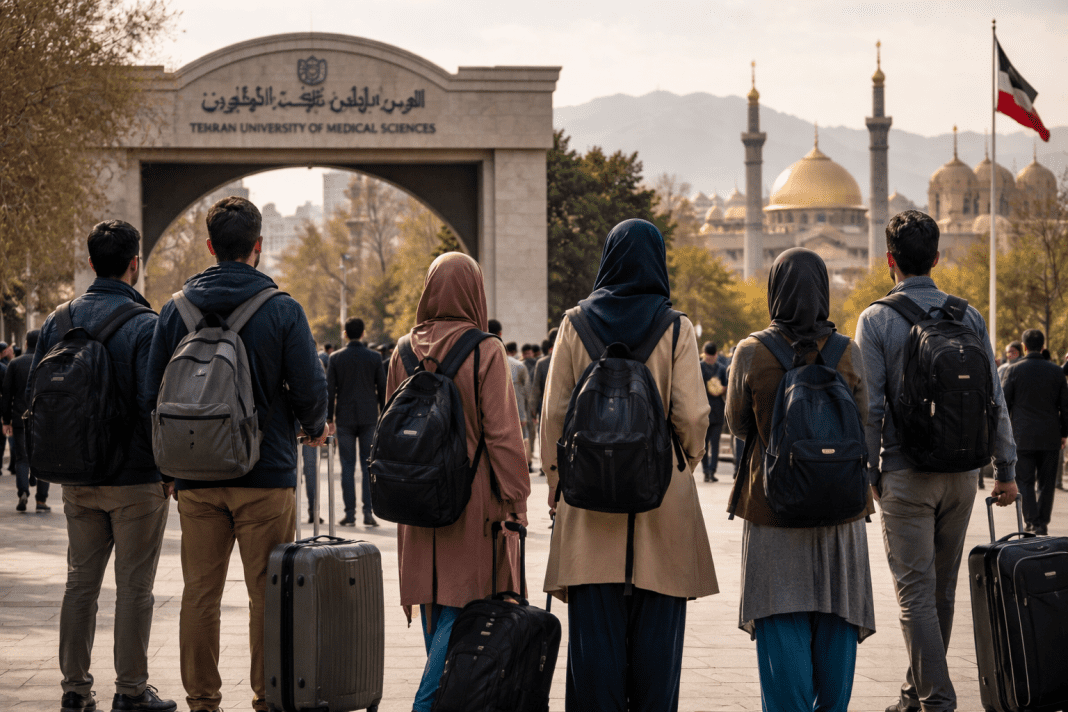


India is preparing to evacuate its citizens from Iran amid rising unrest and fears of potential US military action. The MEA has urged Indian nationals, including thousands of Kashmiri students studying medicine and Islamic theology, to leave the country after Iran closed its airspace for nearly five hours, causing panic among families.
Indian Students and Kashmiri Students in Iran
According to the MEA, as many as 10,765 Indian nationals are currently in Iran. Of these, 10,320 are Non-Resident Indians (NRIs), while the rest are Persons of Indian Origin (PIOs). Among them, roughly 2,000 Indian students, including many Kashmiri students, chose Iran for higher education in 2024 alone.
Most of these students pursue medical studies at universities like Tehran University of Medical Sciences, Shahid Beheshti University, and Islamic Azad University. Others go to the holy cities of Qom and Mashhad to study Islamic theology. Around 3,000 to 5,000 Indian students, including Kashmiri students, currently study in various Iranian universities and medical colleges.
Many Kashmiri students choose Iran because of its historical, cultural, and religious connections. The ongoing protests and government crackdowns in Iran, which have already killed over 2,000 people and injured thousands, worry families in India about their children’s safety.
The unrest has worsened as Iran cut off internet and phone services, making it nearly impossible for parents to contact their Kashmiri students. Some Kashmiri students in Tehran have faced difficulties even buying basic groceries due to inflation and disrupted supplies.
Why Kashmiri Students Choose Iran
Despite the increase in medical seats in India—from about 51,000 MBBS seats in 2014 to over 1.18 lakh in 2024—many Kashmiri students still prefer studying abroad. The competition for government medical college seats remains extremely high, and private colleges often charge tuition fees that run into crores of rupees.
Iran offers an affordable alternative with recognized medical programs. Additionally, Kashmiri students benefit from a special quota called the “pargees quota,” which allows Shia students from Kashmir to gain quicker and easier admission to Iranian universities. The reduced fees and support from Iranian institutions make it an attractive choice for families with limited resources.
Iran’s currency collapse exposes the hidden economic power of the Revolutionary Guard
Religious and cultural ties also strengthen the connection. Kashmir has long been called “Iran-e-Sagheer” or “Little Iran” because of its historical and cultural similarities. In the 13th century, Persian scholar Meer Sayyed Ahmed Ali Hamadani came to Kashmir with 200 followers, bringing crafts, trade, and religious practices from Iran. Many Kashmiri students feel a strong religious and cultural bond with Iran, which continues to influence their education choices.
Rising Concerns Among Parents
The unrest in Iran has caused deep anxiety among parents in Kashmir. Many students went incommunicado when Iran cut off internet and telephone connections, leaving families unable to reach them and fearful for their safety.
Altaf Ahmad, a resident of Kashmir, shared that his sister, an MBBS student at Tehran University, moved to Iran just a month ago and is still settling in. He said that hostel students faced injuries during the unrest and are struggling to manage basic necessities. Other parents have also highlighted the panic caused by airspace closures, which disrupted travel plans for those trying to return home.
Iran Sold Nearly $3 Billion in Missiles and Drones to Russia as Ukraine War Intensified
The government of Jammu and Kashmir has nominated senior officials to coordinate with the MEA and Indian embassy in Tehran to safeguard the welfare of Kashmiri students. An evacuation flight was scheduled to carry students back to India, but it was later put on hold after authorities confirmed that there is no immediate threat of military escalation.
Thousands of Kashmiri students continue to pursue education in Iran despite ongoing unrest because of the affordability, religious affinity, and easier admission process. Parents, however, remain anxious about their children’s safety as tensions persist in the West Asian nation.