


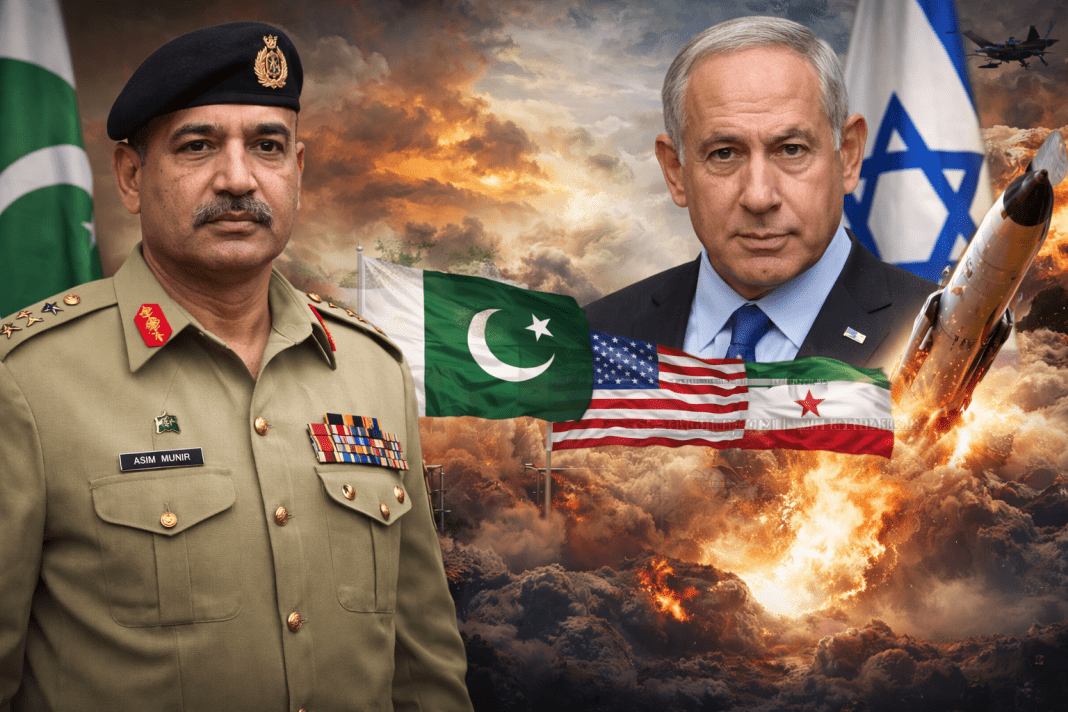


In a sharply worded diplomatic signal amid one of the most volatile geopolitical moments in recent years, Israel’s ambassador to India, Reuven Azar, has publicly questioned Pakistan’s credibility as a mediator in the ongoing ceasefire negotiations between the United States and Iran. His remarks come at a time when tensions remain dangerously high despite the announcement of a temporary truce involving United States, Iran, and Israel—a fragile arrangement already showing signs of strain.
Speaking in an interview, Azar did not mince words. “We don’t see Pakistan as a credible player,” he said, casting doubt on Islamabad’s ability to facilitate meaningful dialogue. His comments underscore growing skepticism within Israeli leadership over the evolving diplomatic architecture surrounding the ceasefire which is a process that increasingly involves unconventional intermediaries.
US Strategy Raises Questions
Despite Israel’s reservations, the United States appears to be moving forward with its strategy. Vice President JD Vance is expected to lead a high-level delegation to Pakistan in a bid to push negotiations toward a longer-term agreement. The move has raised eyebrows in diplomatic circles, particularly given Pakistan’s historically complex relations with both Washington and Tehran.
Azar acknowledged Washington’s autonomy in choosing its diplomatic partners but hinted at underlying concerns. “The United States has decided to use the services of Pakistan for their own reasons,” he noted, subtly distancing Israel from the decision while reaffirming its strategic alignment with American objectives.
Was Pakistan the messenger or was China the author? The mystery behind the U.S.-Iran ceasefire
Drawing comparisons to past negotiations, Azar pointed out that Washington has previously engaged countries like Qatar and Turkey states Israel has occasionally labeled as “problematic” to broker deals, including sensitive negotiations involving Hamas. This precedent, he suggested, may explain the current approach, even if Israel remains unconvinced about its effectiveness.
Israel’s Strategic Objectives
At the core of Israel’s position are two non-negotiable security concerns: Iran’s nuclear programme and its ballistic missile capabilities. According to Azar, the recent military campaign has already achieved significant results in weakening Tehran’s strategic posture.
“We aimed to give the Iranian people an opportunity to embrace their future by debilitating the regime,” he said, adding emphatically, “We achieved that.”
This assertion reflects a broader narrative emerging from Israeli leadership, including Prime Minister Benjamin Netanyahu, who has consistently framed the conflict as a necessary step to neutralize existential threats.
However, Azar also signaled a transition in strategy. With active military operations now scaled back, Israel is pivoting toward diplomacy albeit cautiously. “Now that our military action has been exhausted, we are moving to diplomacy,” he explained, while warning that military options remain on the table if negotiations fail.
Ceasefire Under Pressure
Even as diplomatic efforts intensify, the ceasefire itself appears increasingly fragile. Iran has accused Israel of undermining the agreement through continued military strikes in Lebanon, particularly targeting positions linked to Hezbollah.
The strikes, described as some of the heaviest in recent months, have reportedly resulted in significant casualties and triggered threats of retaliation from Tehran. Iranian officials argue that such actions violate the spirit if not the letter of the ceasefire.
From Israel’s perspective, however, the situation is more nuanced. Both Netanyahu and former US President Donald Trump have maintained that Lebanon is not explicitly covered under the ceasefire terms, creating a critical grey area that risks escalating into broader conflict.
JD Vance echoed this ambiguity, suggesting that misunderstandings were inevitable. “No ceasefire ever goes without a little bit of choppiness,” he remarked, indicating that current tensions may not necessarily signal a breakdown yet.
Nuclear Dispute Remains Central
Perhaps the most contentious issue remains Iran’s nuclear ambitions. Trump has claimed that Tehran agreed to halt uranium enrichment and even dismantle parts of its nuclear infrastructure, a claim that Iranian officials have firmly rejected.
Iran’s parliamentary speaker, Mohammad Bagher Ghalibaf, pushed back strongly, accusing both Israel and the United States of violating the terms of the ceasefire. He argued that continued military actions and demands to abandon nuclear development render negotiations “unreasonable.”
“Iran will continue enriching uranium,” Ghalibaf asserted, signaling a clear red line for Tehran and complicating any prospects for a comprehensive agreement.
This fundamental disagreement highlights the core challenge facing negotiators: bridging a gap that is not merely political but deeply strategic. For Iran, nuclear capability represents sovereignty and deterrence. For Israel, it constitutes an existential threat.
Regional Implications
The stakes extend far beyond the immediate parties involved. The Strait of Hormuz which is a critical artery for global oil supply remains vulnerable to disruption if tensions escalate further. Iran has already warned that continued hostilities could destabilize the region and impact global energy markets.
Meanwhile, Pakistan’s emerging role as a mediator adds another layer of complexity. While Islamabad may view this as an opportunity to enhance its diplomatic standing, skepticism from key stakeholders like Israel could limit its effectiveness.
The involvement of multiple actors including the United States, regional powers, and non-state groups creates a highly intricate diplomatic landscape where even minor miscalculations could have outsized consequences.
A Diplomatic Crossroads
As the world watches closely, the coming days are likely to prove निर्णative. The US delegation’s visit to Pakistan could either pave the way for a more durable agreement or expose deeper fractures in the negotiation process.
Israel’s stance, as articulated by Reuven Azar, suggests a cautious approach—supportive of diplomacy but deeply wary of the mechanisms being employed. This balancing act reflects a broader reality: while military operations may pause, the underlying tensions remain unresolved.
For now, the ceasefire holds but just barely. Whether it evolves into lasting peace or collapses under the weight of competing interests will depend on the ability of global and regional powers to navigate one of the most complex geopolitical crises of the decade.
In this high-stakes environment, credibility, trust, and strategic clarity are in short supply. And as Israel’s envoy has made clear, not all players at the negotiating table are viewed equally.