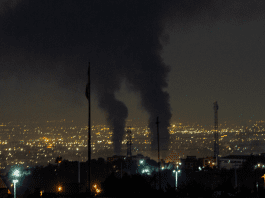

Kuwait and the United Arab Emirates have reported new drone and missile attacks despite a ceasefire in the region. Both countries say their air defense systems were activated after detecting incoming threats. Officials say they are responding as the situation continues to unfold.
Kuwait Reports Wave of Iranian Drones and Strikes
Kuwait has reported a major wave of drone attacks believed to have originated from Iran, even after a ceasefire came into effect. The attacks began around 8 a.m. local time (0500 GMT) and continued in multiple waves, according to military updates.
The Kuwaiti army said its air defense systems were quickly activated after detecting drones entering its airspace. The drones were reportedly moving in large numbers toward sensitive locations, including oil facilities, power stations, and water desalination plants that are vital for daily life.
Authorities said many drones were intercepted, with loud explosions heard during defensive actions. The total number of drones has not been confirmed. Officials also said the strikes came as a surprise following the ceasefire, and the reason for the continued attacks is still unclear.
UAE Confirms Missile and Drone Interceptions Across Airspace
At the same time, the United Arab Emirates confirmed that its air defense systems are actively responding to incoming missile and drone attacks. According to the UAE Ministry of Defense, the aerial threats are believed to be originating from Iran.
The defense systems have been placed on high alert as multiple objects were detected entering UAE airspace. These included both missiles and drones, triggering immediate interception efforts.
Military units across the country were mobilized to track and neutralize the incoming threats. Radar systems were used to monitor movement in real time, while air defense batteries worked to stop the projectiles before they could reach populated or strategic areas.
Kuwaiti oil refinery hit by Iran as Israeli strikes cause explosions in Tehran
The Ministry of Defense described the situation as ongoing, with multiple interceptions taking place across different regions. Residents in some areas reported hearing loud noises in the sky, believed to be connected to interception activity.
Authorities in the UAE have emphasized that their air defense network remains fully operational and is continuing to respond to the situation as it develops. However, detailed information about damage or impact has not yet been fully released.
The timing of the attacks has raised concern, as they appear to have taken place after a ceasefire agreement was already in place. Officials have not yet explained why the strikes are continuing despite the agreement.
Damage Reported to Oil, Power, and Water Facilities Amid Regional Escalation
Preliminary reports from Kuwait indicate that some drones managed to target key infrastructure before being intercepted. Early assessments suggest that oil facilities, power stations, and water desalination plants were among the locations affected.
These facilities are extremely important for Kuwait’s daily operations. Oil installations support energy exports and national revenue, while power stations provide electricity to homes, schools, and businesses. Water desalination plants are also vital, as they supply clean drinking water in a region where natural freshwater is limited.
Authorities have described the damage as significant in certain areas, although full assessments are still ongoing. Emergency teams have been deployed to inspect affected sites and ensure safety conditions are stable.
UAE cities not built for war says Jeffrey Sachs as he warns of airstrike risks to Dubai skyscrapers
In the UAE, air defense responses have so far prevented confirmed impact on ground targets, though military activity remains high. Interceptions are continuing as radar systems track additional incoming objects.
The situation has created widespread concern across both countries, as the attacks come during a period when military tensions were expected to ease under a ceasefire arrangement. Despite this, aerial activity has continued, leading to repeated activation of defense systems.
Both Kuwait and the UAE remain in a heightened state of alert as their military systems continue to monitor and respond to threats in real time.