


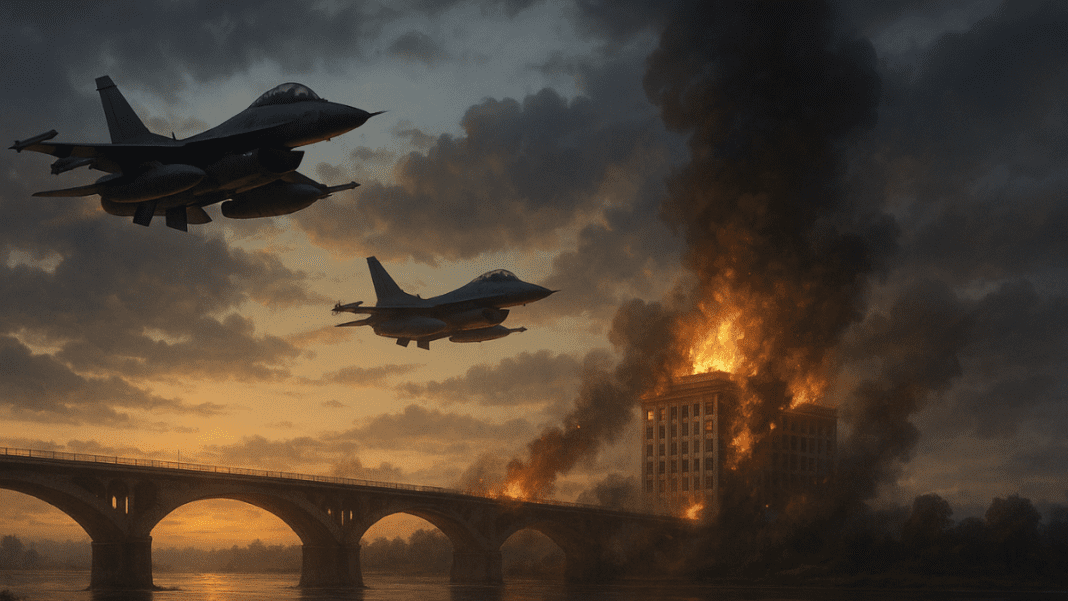


In the early hours of December 13, 2025, a major military operation took place near the Thailand–Cambodia border. At around 6:10 a.m., the Royal Thai Navy’s Chanthaburi–Trat Border Defence Force and the Royal Thai Air Force launched a coordinated action before sunrise, focusing on key military targets inside Cambodia’s Pursat province.
Thai naval units monitoring the area detected Cambodian troop movements and the reinforcement of heavy weapons near the Trat border. They raised concerns that these routes were being used to transport forces and equipment toward Thai territory.
In response, F-16 fighter jets from the Royal Thai Air Force were deployed to strike specific targets. The mission aimed to disrupt supply lines and locations believed to support military operations against Thailand. The Navy and Air Force carefully coordinated the strikes and targeted specific structures rather than broad areas.
Chai Chum Nea Bridge Hit in Early Morning Strike
One of the primary targets was the Chai Chum Nea bridge in Pursat province. The bridge was reportedly a critical transport route, used to move Cambodian troops and heavy equipment closer to the Thai border. Disabling the bridge aimed to slow or stop the flow of military resources along this path.
Thailand moves to defend border operations as Cambodia disputes claims in renewed hostilities
The attack was part of the initial phase of the mission and took place before dawn, likely to minimize response and maximize the effectiveness of the strikes. The bridge’s destruction was framed as a necessary action to protect Thailand from potential cross-border threats. The operation combined real-time surveillance, naval monitoring, and air strikes to achieve this objective.
Casino Complex Bombed After Being Used as Command Base
Alongside the bridge, a second target was a large casino complex in Thmoda, Cambodia. According to the reports, Cambodian forces had allegedly turned the building into a military command post. Cambodian forces reportedly placed heavy weapons on the high ground, allowing them to fire into Thai territory.
The Royal Thai Navy requested air support to neutralize the threat. F-16 jets from the Royal Thai Air Force carried out bombing runs targeting openings on the upper floors. The casino, believed to be eight to ten storeys tall, suffered severe internal damage. The strikes rendered it unusable as a military base, disrupting command operations and neutralizing its role in supporting heavy weapons positions.
The Thai forces carried out the casino strike as part of the same coordinated operation that targeted the bridge. They chose both sites because they played key roles in Cambodian military activity near the border. The mission demonstrated that Cambodian forces could repurpose civilian-style buildings, such as casinos, for military use in conflict zones.
The entire operation unfolded within a short timeframe in the early morning hours. It focused on disabling routes and bases actively used for military purposes against Thailand. The combination of naval detection and airpower allowed for a focused strike, limiting the scope to specific targets while addressing security concerns at the border.
The reported facts describe a single, carefully coordinated Thai military action, involving air strikes on Chai Chum Nea bridge and the Thmoda casino complex, both identified as critical military assets in the area. The operation reflects the ongoing concerns about troop movements and heavy weapon positioning near the Thailand–Cambodia border.