


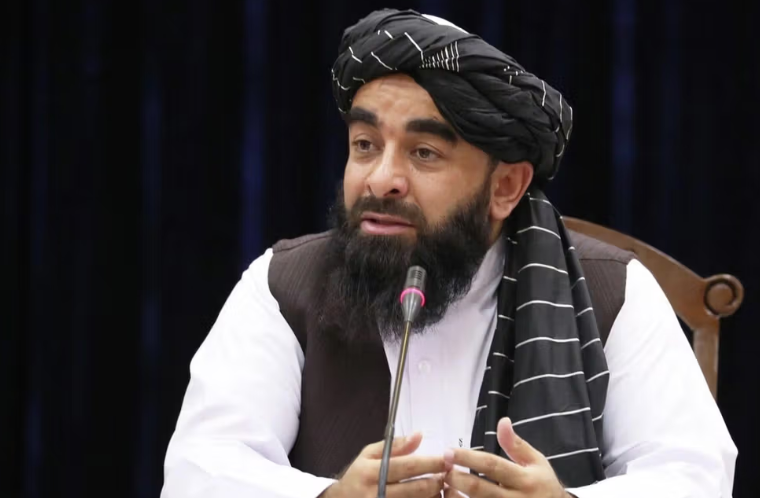


The Taliban’s chief spokesperson recently stated that Afghans could assist Iran if the United States were to launch an attack. Speaking in an interview with Iran’s Pashto-language radio service, the Taliban representative emphasized that the group does not seek war. Instead, their focus would be on helping Iran handle any consequences that might arise from external military actions.
Afghans Emphasize Peace but Offer Help
The statement was made carefully, with the spokesperson stressing that the Afghans prefer peace. However, he highlighted that the group, along with Afghans, is ready to cooperate with the Iranian people if challenges emerge from possible US military operations.
Part of this interview was published on the Pashto-language website of Iran’s state radio on Sunday, 15 February. The comments drew international attention, reflecting the Taliban and Afghans’ cautious but supportive stance toward Iran.
The spokesperson’s remarks come at a time of heightened regional tension, as questions about US foreign policy and military strategies in the Middle East continue to attract global attention. The message underscores a delicate balance: expressing readiness for Afghans to help neighboring countries while maintaining a clear position against initiating conflicts.
Taliban Highlights Iran’s Past Resilience
During the interview, the Taliban spokesperson praised Iran for its ability to withstand attacks in the past. He specifically referred to a 12-day aerial confrontation involving Israel and Iran, during which the United States also participated. The operation, described as “Operation Midnight Hammer,” targeted several Iranian nuclear facilities.
According to the spokesperson, Iran’s successful handling of previous attacks demonstrates the strength of its political system and its ability to defend itself. He said that Iran had emerged victorious during past confrontations and that this experience shows the country can continue to manage future challenges.
He also highlighted Iran’s strategic strength and resilience in protecting its national interests. These remarks suggest that the Taliban recognizes Iran’s political and military capabilities. By making this acknowledgment, the Taliban signals that cooperation with Iran is possible—but only in ways that help manage consequences rather than create new conflicts.
The comments underline the Taliban’s cautious approach to regional politics. They indicate that while the group is willing to express support, it remains careful not to appear confrontational. By stressing past victories, the Taliban frames its position as one of solidarity with Iran, focusing on assistance and collaboration rather than direct involvement in warfare.
Taliban Reiterates Non-War Stance
The Taliban spokesperson also stressed that the group does not support starting a war. Instead, their emphasis is on assisting people affected by military actions and helping countries manage the aftermath of attacks. The statement suggests that the Taliban’s potential support for Iran would likely be humanitarian or logistical in nature, rather than involving direct military engagement.
Although Iran has not formally recognized the Taliban as Afghanistan’s official government, both sides maintain ongoing contact and communication. This engagement shows that dialogue and cooperation are possible even without formal recognition. The Taliban’s approach appears to strike a careful balance between diplomacy and readiness, signaling willingness to help neighboring nations while avoiding direct confrontation.
The remarks were made amid rising regional tensions and global scrutiny of US foreign policy. By expressing potential support for Iran, the Taliban signals alignment with regional partners in situations involving external threats, while still promoting a message of caution, peace, and responsible cooperation.
The interview highlights the Taliban’s measured approach to foreign relations. By emphasizing humanitarian assistance and strategic cooperation, the group portrays itself as a cautious regional actor. It seeks to show solidarity with neighboring countries while maintaining a public stance against war, demonstrating careful diplomacy without provoking conflict.