


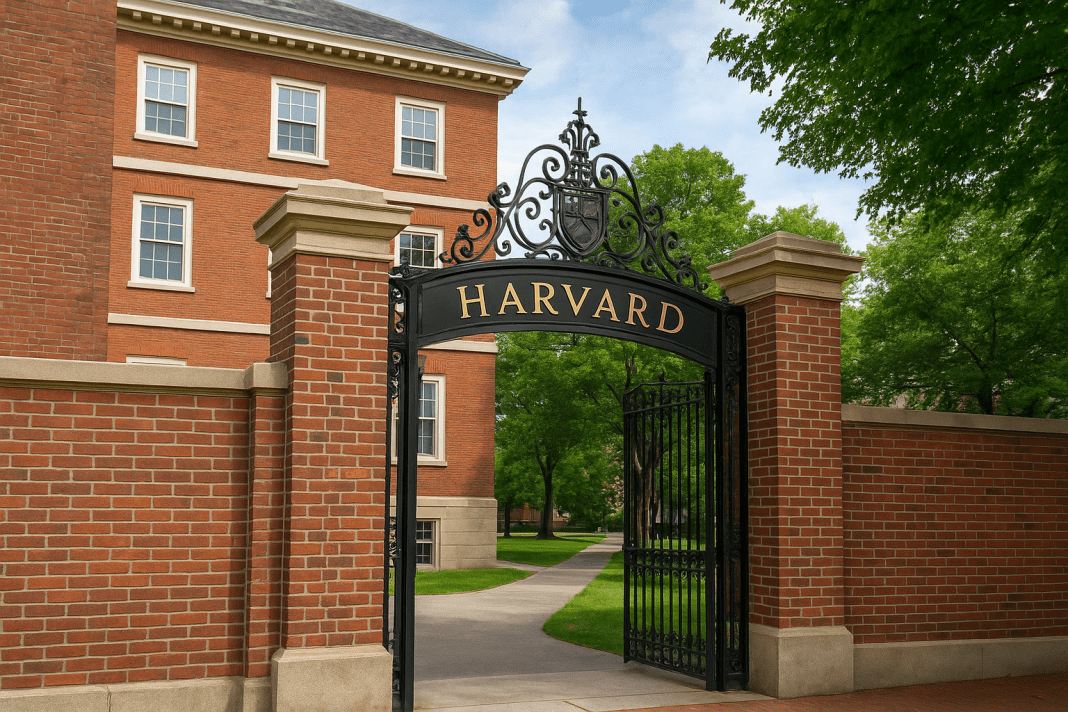


U.S. Immigration and Customs Enforcement (ICE) detained a Harvard professor following a shooting incident outside a Boston-area synagogue in October. Carlos Portugal Gouvêa, a visiting Harvard professor and a Brazilian national, was involved in the incident just before the Jewish holiday of Yom Kippur. The shocking arrest highlights strict U.S. immigration rules and the country’s intolerance for violent acts.
Incident Outside Boston Synagogue Involving Harvard Professor
The events unfolded on October 1, when Gouvêa allegedly fired a BB gun outside a synagogue in the Boston area. According to authorities, the Harvard professor later told officials he was “hunting rats.” Despite the unusual explanation, the shooting caused alarm in the local community and prompted law enforcement investigation.
Two days later, on October 2, local authorities arrested the Harvard professor. After the arrest, authorities charged him with multiple offenses, including illegal use of an air rifle, disturbing the peace, disorderly conduct, and vandalizing property. In November, Gouvêa pleaded guilty to the illegal use of the air rifle, and authorities dismissed the remaining charges. Synagogue leaders confirmed that antisemitism did not motivate the incident.
The shooting led to serious consequences for the Harvard professor’s stay in the United States. Two weeks after the incident, the Department of State revoked his temporary J-1 visa, which allowed him to work as a visiting professor at Harvard Law School.
Harvard Professor Suspended Amid Investigation
Harvard University swiftly responded to the incident. The Crimson, Harvard’s student newspaper, reported that the Harvard professor was suspended from his teaching duties while the university conducted an investigation. Harvard officials emphasized that safety and ethical standards are a priority, and no person committing violent acts could continue to represent the institution.
Gouvêa’s background shows he had a significant academic career. In addition to his visiting role at Harvard, he served as an associate professor at the University of São Paulo Law School in Brazil. He also held a leadership position as CEO of IDGlobal, a consulting firm in Brazil, and participated on the boards of multiple organizations, including the Fulbright Commission and several student and civic groups. His research contributed to major Brazilian Supreme Court decisions and documented issues such as violence against Indigenous peoples.
Despite his academic achievements, Harvard officials maintained a strict stance. The university’s response highlights that academic credentials do not exempt individuals from legal and ethical accountability.
ICE Detention and Voluntary Departure
On Wednesday, ICE Boston Enforcement and Removal Operations (ERO) detained the Harvard professor. DHS officials confirmed that he agreed to voluntarily leave the United States instead of being formally deported. In a statement, DHS Assistant Secretary Tricia McLaughlin emphasized that violent acts against law-abiding citizens are unacceptable. She stated, “It is a privilege to work and study in the United States, not a right. There is no room in the United States for brazen, violent acts like this.”
McLaughlin further added that U.S. authorities are under no obligation to allow foreigners who commit serious offenses to remain in the country. She reinforced the message that the United States strictly enforces its immigration rules when public safety is at risk.
Visa bans and threat of ICE crackdowns cast dark shadow over America’s World Cup
The case attracted significant media attention due to the Harvard professor’s high-profile position and previous leadership roles in Brazil. His agreement to leave voluntarily spares the U.S. government from initiating formal deportation proceedings, but the incident remains a reminder of the consequences for visa holders who break U.S. laws.
Harvard Law School and local authorities continue to monitor the aftermath of the case. Officials stressed that the incident did not involve antisemitic intent but acknowledged the need for strict enforcement of public safety regulations. Meanwhile, the Harvard professor’s departure marks the end of his temporary tenure in the United States following the controversial incident.