


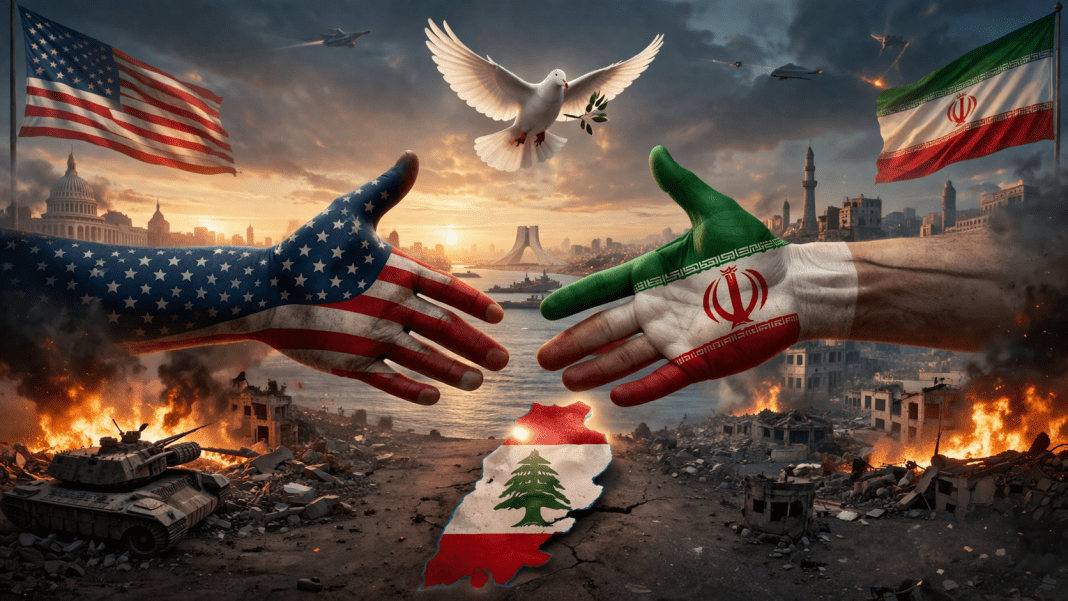


In a high-stakes diplomatic twist that could redefine the trajectory of the Middle East conflict, Iran is pressing to expand its fragile ceasefire talks with the United States to include Lebanon—even as Israeli airstrikes continue to pound targets across Lebanese territory.
The move has injected fresh uncertainty into already volatile negotiations, exposing deep fractures between regional powers and raising fears that what appears to be a pause in one theater of war could ignite escalation in another.
Iran’s Strategic Gambit: No Lebanon, No Deal
According to emerging intelligence and regional reports, Tehran has made it clear: any ceasefire with Washington must extend beyond its own borders and include Lebanon, where Israel’s military campaign against Hezbollah has intensified in recent days.
This demand represents a significant escalation in diplomatic positioning. By linking Lebanon to the broader Iran-US ceasefire framework, Tehran is effectively attempting to shield its key regional ally, Hezbollah, while simultaneously increasing pressure on Israel.
Security officials cited in Israeli media suggest that Iran views the conflict as a single, interconnected battlefield rather than isolated flashpoints. In this framework, a ceasefire that excludes Lebanon would be incomplete—and strategically unacceptable.
Israel Rejects Linkage, Maintains “Separate War Tracks”
But Israel is not backing down.
Israel Katz has previously drawn a hard line, insisting that Israel’s confrontation with Hezbollah operates independently from its conflict involving Iran. This distinction, he argues, allows Israel to continue military operations in Lebanon regardless of any parallel diplomatic developments with Tehran.
That position now places Israel on a potential collision course with both Iran and the United States, particularly if Washington leans toward accommodating Tehran’s broader ceasefire demands.
Behind the scenes, analysts say Israel fears that including Lebanon in the ceasefire could severely limit its operational freedom against Hezbollah—an outcome it considers a direct threat to national security.
Ceasefire Announced, Strikes Continue
The contradiction between diplomacy and reality on the ground could not be more stark.
Shortly after Donald Trump publicly signaled a ceasefire breakthrough—reportedly facilitated by Pakistani mediation—explosions once again rocked southern Lebanon.
Within just 90 minutes of the announcement, Israeli forces reportedly carried out at least two airstrikes. One targeted an area near a hospital in the coastal city of Tyre, while another struck the town of Machghara in the Bekaa Valley.
The timing has raised urgent questions: is the ceasefire already unraveling, or was it never fully in effect?
Adding to the tension, residents in Beirut reported the persistent presence of low-flying Israeli drones overhead—an unmistakable signal that military operations have not paused.
Civilians Caught in the Crossfire
For ordinary people in Lebanon, the ceasefire remains little more than a headline.
Hospitals are operating under strain, families are fleeing border regions, and entire communities remain on edge amid the constant hum of surveillance drones and the threat of sudden strikes.
The reported targeting of areas near civilian infrastructure, including medical facilities, has intensified international concern. Humanitarian observers warn that even limited strikes during a supposed ceasefire could undermine trust and derail negotiations entirely.
Iran’s main oil export hub on Kharg Island hit by multiple strikes as tensions peak
Pakistan’s Diplomatic Gamble
At the center of the unfolding drama is an unexpected player: Pakistan.
Acting as a behind-the-scenes mediator, Islamabad has been instrumental in bringing Washington and Tehran to the negotiating table. The proposed ceasefire framework—reportedly spanning 15 days—was seen as a crucial window to de-escalate tensions and open pathways for more comprehensive talks.
However, Iran’s insistence on including Lebanon has complicated these efforts, forcing diplomats to navigate an increasingly complex web of competing interests.
For Pakistan, the stakes are enormous. A successful agreement could elevate its status as a key diplomatic broker in global conflicts. Failure, however, could expose the limits of its influence in one of the world’s most volatile regions.
Hezbollah Factor: The Unspoken Variable
At the heart of the Lebanon question lies Hezbollah—the powerful Iran-backed force that has long been a central player in regional dynamics.
While Hezbollah has not formally commented on the ceasefire framework, its actions on the ground—and Israel’s determination to counter them—are shaping the reality of the conflict far more than diplomatic statements.
Analysts warn that excluding Hezbollah from any ceasefire arrangement could render the entire agreement meaningless. Conversely, formally including the group risks legitimizing it in the eyes of the international community—something Israel strongly opposes.
A Ceasefire in Name Only?
The unfolding situation highlights a deeper truth: ceasefires in modern warfare are rarely clear-cut.
Even as leaders announce breakthroughs, the machinery of conflict often continues to operate—driven by fragmented command structures, conflicting objectives, and deep-seated mistrust.
In this case, the gap between diplomatic optimism and battlefield reality is glaring. While officials speak of progress, bombs continue to fall, drones continue to circle, and civilians continue to bear the brunt.
All eyes are now on the next round of negotiations, expected to take place in Islamabad. The key question: can a compromise be reached that satisfies Iran’s demand for a broader ceasefire while addressing Israel’s insistence on maintaining its operations in Lebanon?
If no middle ground is found, the consequences could be severe.
A collapse of talks could trigger a renewed wave of escalation—not just between the US and Iran, but across multiple fronts including Lebanon, Syria, and beyond. The risk of a wider regional war, long feared by analysts, would rise dramatically.