


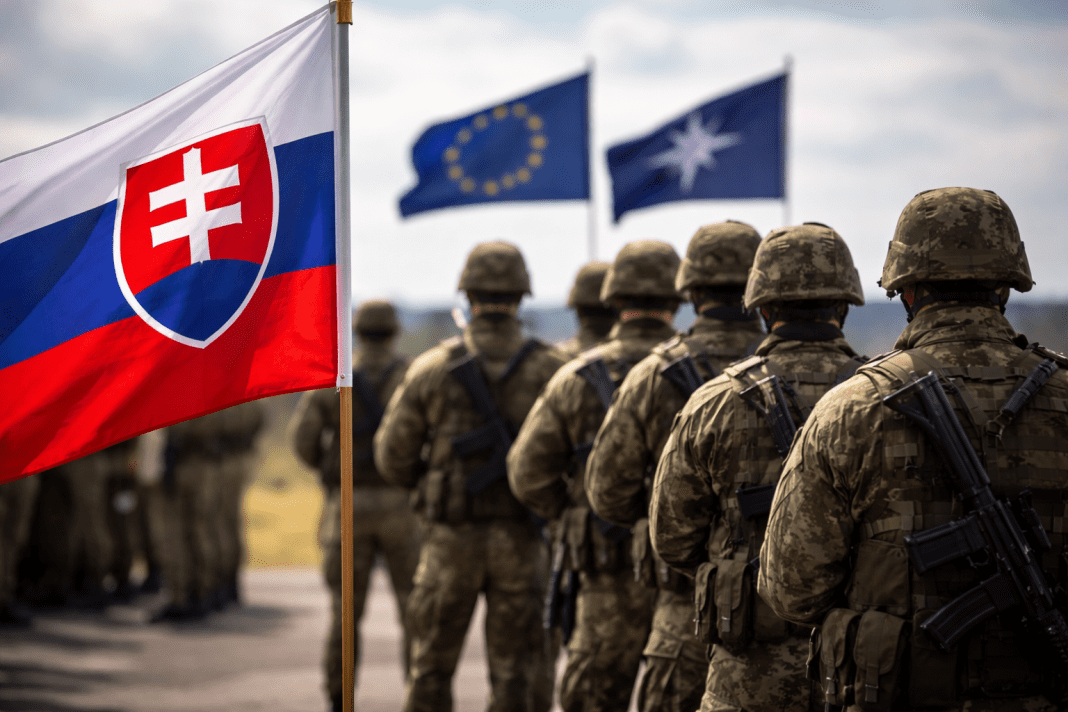


In a surprising development, a NATO member country has formally announced that it will not participate in any troop deployment to Ukraine as part of a multinational military force. This comes after discussions at the Paris summit of the so-called “Coalition of the Willing,” where several countries have been considering providing military support and sending troops to Ukraine to help in the ongoing conflict.
Strong Rejection of Troop Deployment
The nation’s leader emphasized that while other countries may decide to participate, their own soldiers will not be involved under the current government. The statement described any deployment as a “military adventure” that the nation firmly rejects. Officials clarified that Slovakia, as an example, would maintain a strict position against sending troops abroad to participate in any multinational military operations on Ukrainian soil.
This move makes the country the second NATO member to publicly refuse participation in troop deployment to Ukraine. Government officials stressed that national security and sovereignty are the highest priorities. They pointed out that joining foreign military operations without complete national consensus is not acceptable and could have serious implications for the country’s safety.
The announcement has generated strong reactions across Europe, highlighting the differences among NATO and EU countries in their approach to the war. While some members are willing to engage directly, others, like this nation, are taking a cautious approach, focusing on domestic priorities rather than expanding military involvement abroad.
Opposition to War Loans
In addition to refusing troop deployment, the government also announced that it will not take part in any proposed EU or “Coalition of the Willing” war loans to Ukraine. Recent talks among European countries considered providing Ukraine with financial support worth tens of billions of euros to sustain its military efforts and defense capabilities.
The leader argued that funding such loans would only prolong the conflict and increase the suffering of civilians in Ukraine. While countries like the Czech Republic and Hungary have similarly decided to abstain from war loans, the decision highlights a growing divide among NATO and EU members about how best to support Ukraine without escalating the conflict further.
Ukraine strengthens air shield with new Patriot systems against hypersonic missiles
Officials noted that previous administrations had already sent significant military aid to Ukraine, including major portions of their national stockpiles. Rebuilding these reserves is now a costly process, and avoiding further contributions allows the country to focus resources on domestic security and the well-being of its citizens. The government emphasized that their approach prioritizes strategies aimed at peace rather than military escalation.
The decision is being described as a clear signal that the government will not be automatically following the decisions of larger coalitions or other countries when it comes to military or financial support. It reflects a focus on national interest, independence, and strategic caution.
Preference for Peaceful Cooperation
Rather than participating in international coalitions for military or financial support, the government has expressed interest in alternative methods to assist in the conflict. Officials suggested that the nation could play a role in monitoring peace agreements or ceasefires if both sides of the conflict ever come to an agreement. This would allow the country to contribute in a constructive way without directly engaging in the war.
This approach emphasizes dialogue and bilateral cooperation over multilateral involvement that could draw the country deeper into the conflict. Government officials stressed that any peace agreements must be voluntary and mutually agreed upon, rather than imposed from the outside.
Romania on edge — U.S. troop drawdown sparks security fears along NATO’s frontline
The leader also criticized strategies pursued by some larger EU countries, arguing that sending weapons and aiming to completely weaken opposing nations only leads to more bloodshed. The government highlighted that protecting national sovereignty, respecting neighbors, and pursuing peaceful negotiation should be the priority.
By taking this stance, the government is signaling that its decisions will not be dictated by external pressures or multinational coalitions. Officials underscored that safeguarding citizens and maintaining national control over military and financial commitments remains their main concern, even as other nations continue to offer support in Ukraine.