


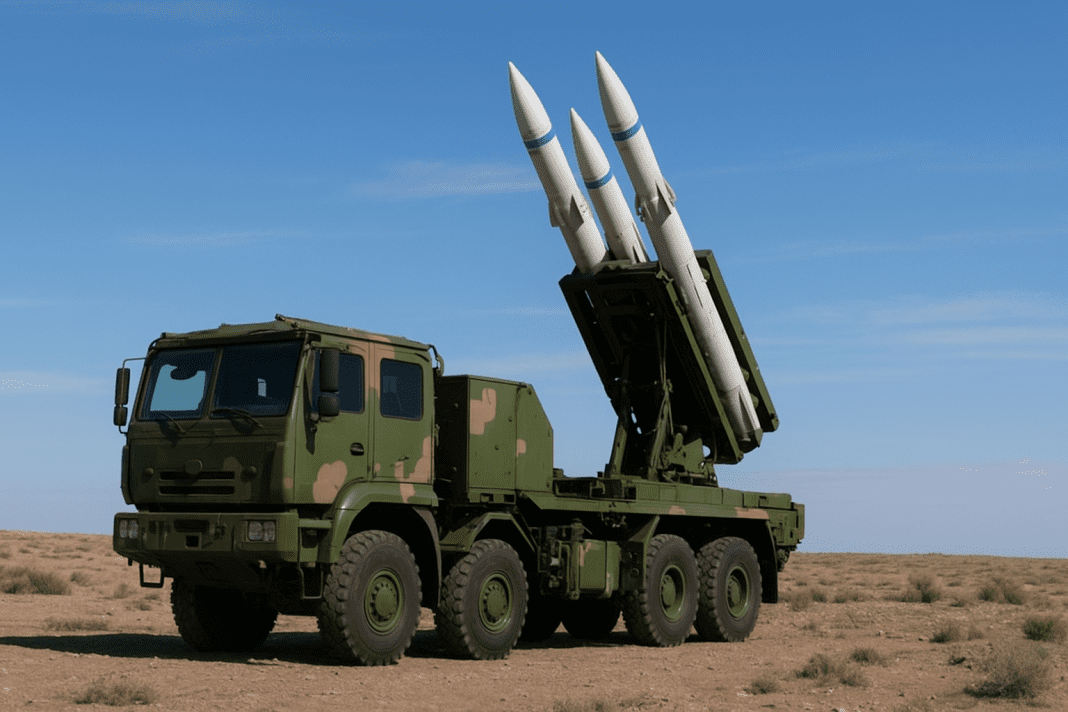


A major shift is taking place in the Middle East, and it is raising alarm across the region. A key Arab ally of the United States has reportedly deployed advanced Chinese-made HQ-9B long-range air-defense missiles in the Sinai Peninsula. This move places powerful HQ-9B missile batteries just a short distance from the borders of Gaza and southern Israel.
A Sudden and Forceful Shift in the Sinai
Reports say two full HQ-9B batteries were positioned across strategic locations in Sinai in mid-September. Satellite images point to areas near the northern coast and along the corridor leading to Gaza. These placements give the HQ-9B systems a wide view of the skies over southern Israel and even central Israel.
The HQ-9B system is well known for its long reach. It is designed to track aircraft far beyond a country’s own airspace. With HQ-9B batteries in Sinai, the Arab ally now has the ability to watch Israeli air activity more closely than ever. It also gives the country the power to challenge aircraft trying to operate in the region.
China’s new ‘Flying Halberd’ missile triggers regional panic with Mach-7 Japan-strike capability
The HQ-9B’s powerful phased-array radars can follow aircraft from long distances and collect information about their movements. This is why many experts say the HQ-9B deployment changes the balance of airpower in the area. It creates a new “no-go zone” for foreign aircraft and complicates Israel’s ability to move freely in the skies.
This shift comes at a time when fighting in Gaza has grown more intense. Missile strikes, cross-border clashes, and rising tensions in Lebanon and Syria have already stretched regional security. With HQ-9B missiles now in place, the region is facing even more pressure.
Rising Concerns Over Refugees and HQ-9B-Linked Regional Stability
The country deploying the HQ-9B systems has long worried that conflict in Gaza could push thousands of people across the border into Sinai. Officials have warned that a sudden wave of people fleeing violence would create overwhelming pressure on local communities and the country’s stability.
Decades ago, the peace agreement divided the Sinai Peninsula into zones with limits on how many troops could be deployed and what types of weapons were allowed. The agreement required the country to get approval before placing any heavy weapons close to the Israeli border. Since late 2023, the country has bypassed these limits and continues to send tanks, armored vehicles, artillery, and now HQ-9B systems into Sinai.
Reports indicate that the country has nearly doubled its troop presence in the region to around 40,000 soldiers, far exceeding the original limits. Officials argue that the buildup is necessary because the situation has become more dangerous. They fear that more unrest or a sudden breakdown in peace talks could lead to a crisis.
Trade war 2.0 — China’s rare earth dominance turns minerals into missiles in the U.S.-China rivalry
As violence in Gaza continued, this Arab ally also took on a major role in trying to mediate a ceasefire between the warring sides. It helped organize indirect talks and supported efforts to reduce fighting. However, at the same time, its military posture became stronger and more assertive with the deployment of HQ-9B missiles.
The new HQ-9B deployment sends a message to both sides of the conflict. Analysts view it as a warning that any attempt to push the crisis onto Egyptian territory will not be tolerated. The placement of HQ-9B systems so close to the border shows that the country wants to protect its land, its people, and its security interests.
Silent Tension Between Allies as HQ-9B Concerns Spread to Lebanon and Syria
The United States has relied on this Arab ally for many years as one of its most important partners in the region. The two countries share strategic goals, military cooperation, and large defense agreements. Because of this long partnership, the sudden deployment of HQ-9B missiles has caused quiet but serious concern in Washington.
Reports from the region say that leaders in Israel were unsettled by the move. They believe the HQ-9B missile batteries could interfere with their air operations over Gaza and southern Israel. Some described the HQ-9B system as “game-changing” because it could restrict flight paths, surveillance missions, and defensive maneuvers.
Despite these concerns, the United States has not issued any public statement. Experts say this silence shows how delicate the situation has become. The U.S. does not want to create friction with its Arab ally, especially at a time when it is trying to help manage the Gaza ceasefire. Yet it also does not want to weaken its long-standing support for Israel.
This diplomatic puzzle is unfolding as new threats appear across the region. Fighting has increased sharply in Lebanon. Airstrikes and clashes have also spread into Syria. These developments raise fears that a much larger conflict could erupt, stretching from Gaza to the northern borders.
World watches closely as China’s HQ-29 threatens U.S. lead in space-layer missile defense
Regional observers say the Middle East is now facing one of its most unstable periods in recent years. The arrival of HQ-9B missiles in Sinai adds a new layer of complexity. It signals that countries are preparing for scenarios that could spread beyond current conflict zones.
As tensions rise, every military move is being watched closely. Each new deployment, airstrike, or border clash could shift the balance of power yet again. For now, the region waits anxiously as multiple crises push nations into unpredictable and risky territory.