


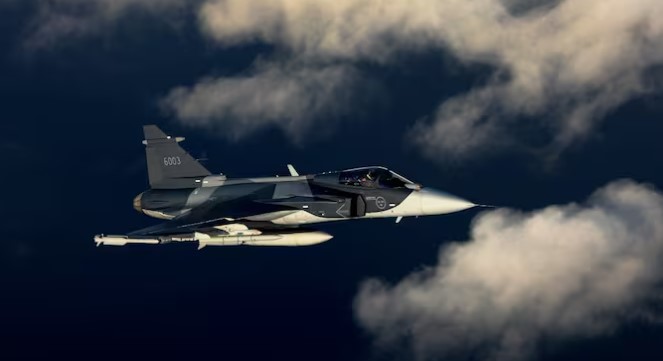


Sweden’s leading defence firm SAAB has предложed a comprehensive proposal to the Indian government that goes far beyond supplying the Gripen E fighter jet. The plan includes building a full aerospace ecosystem in India—covering design, manufacturing, software development, and long-term maintenance—to strengthen the Indian Air Force while supporting the country’s broader “Make in India” defence ambitions. SAAB argues that this approach would allow India to rapidly induct modern fighters while also developing long-term technological independence in advanced combat aviation.
Gripen E: A Game-Changing Aerospace Offer for India
SAAB emphasizes that the Gripen E is a modern and cost-effective fighter jet, featuring advanced sensors and networking capabilities. These technologies allow the aircraft to detect and respond to threats quickly, providing the Indian Air Force (IAF) with stronger situational awareness and improved combat readiness. Gripen E also delivers exceptionally high aircraft availability, allowing the IAF to have more jets ready for missions at any time and strengthening its operational edge.
Although India already operates Rafale and Tejas fighters, SAAB envisions a unique role for Gripen E. The IAF can induct the jet rapidly and in large numbers, which enables it to expand its fleet quickly when needed. This capability gives the IAF added flexibility for air operations and improves its ability to respond to unexpected threats or strategic challenges. Gripen E complements the existing fleet rather than replacing it, creating a balanced mix of aircraft with different strengths.
Ukraine–Sweden talks spotlight Gripen fighters and Meteor missiles to strengthen air defense
Another major advantage of Gripen E is its ability to continuously upgrade with the latest technology. Its systems can integrate new software, AI tools, and electronic warfare capabilities without causing long downtime for the fleet. This ensures the IAF stays ahead in modern warfare, mastering Net Centric Warfare, Electronic Warfare, and advanced kill chain operations. Overall, Gripen E offers both immediate operational benefits and long-term technological advantages for India’s air power.
Advanced Technology and Rapid Upgrades
One of the key highlights of SAAB’s offer is Gripen E’s ability to adopt new technology without causing downtime for the fleet. Unlike many other aircraft, Gripen allows the IAF to develop, test, and integrate its own software independently, without needing the manufacturer for every update. This flexibility is particularly important for modern air forces that rely heavily on advanced electronics and artificial intelligence (AI) for combat efficiency.
F-35 deal under scrutiny as Canada eyes Gripen for Arctic and NORAD missions
SAAB plans to transfer significant technology and capabilities to India. This would involve collaboration with over 300 companies, including micro, small, and medium enterprises (MSMEs). The goal is to build a strong industrial base in India, enabling local production and maintenance of the Gripen fleet. Such an approach is also intended to support India’s indigenous fighter programs, including the Advanced Medium Combat Aircraft (AMCA).
The proposal outlines a rapid delivery schedule. Aircraft could start arriving as soon as the third year after signing the contract. Production would then scale up quickly, allowing the IAF to expand its fleet options rapidly. At the same time, an Indian ecosystem of aerospace companies would grow, positioning India as a regional hub for defence manufacturing and potential exports.
Strengthening India’s Air Power
The Gripen E is a highly agile and adaptable fighter jet with advanced avionics that allow integration of customized national software and AI. This ensures the aircraft can evolve as new technology emerges, keeping the Indian Air Force (IAF) ahead of potential threats.
SAAB emphasizes that Gripen E is more than just a fighter jet—it is a platform to build long-term aerospace capabilities. Through the proposed “Make in India” approach, components would be produced and jets eventually assembled in India, creating opportunities for thousands of skilled workers and fostering advanced technology development.
The jet balances rapid deployment with technological independence. Its high availability and modern systems provide superior combat readiness, complementing India’s existing fleet of Rafale and Tejas fighters.
The program also opens avenues for regional defence exports. The industrial ecosystem would enable Indian companies to manufacture components for export while retaining control over key technologies.
SAAB highlights the role of Indian engineers in continuously upgrading and modernizing the Gripen fleet, helping build long-term expertise in aerospace technologies. By combining speed, advanced technology, and industrial growth, the proposal aims to deliver a capable fighter jet while establishing a sustainable aerospace industry in India, enhancing both defence and industrial capabilities for the future.