


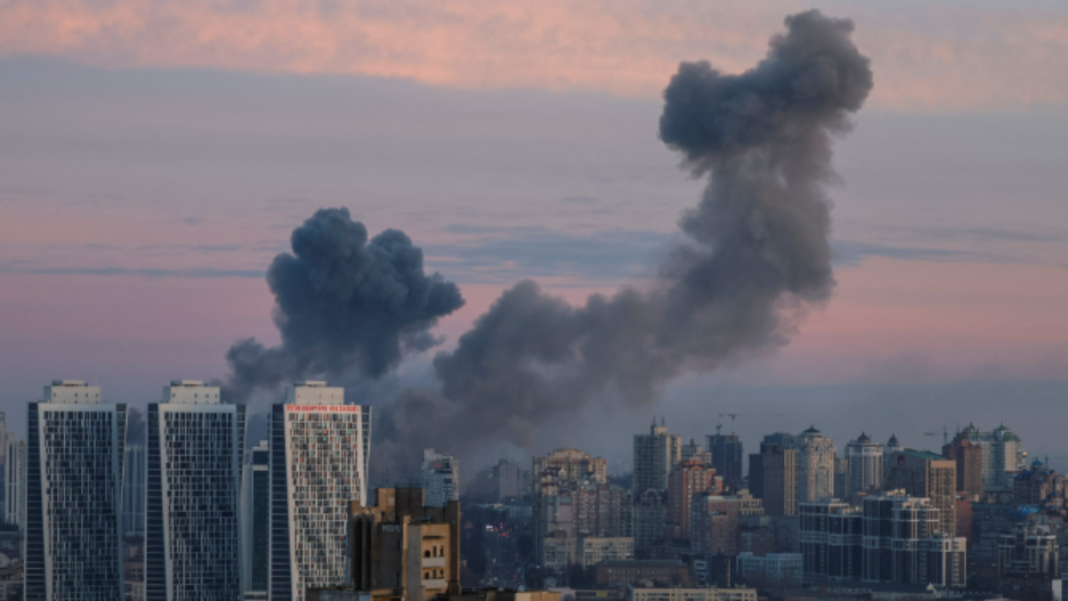


Early on February 17, Ukraine faced a large-scale missile attack, causing alarms across the country and forcing millions of residents to seek immediate shelter. Russian forces launched a significant number of cruise missiles in a coordinated assault that targeted cities and key infrastructure facilities in multiple regions. Air raid sirens sounded in many parts of the country as authorities warned of incoming threats.
Missiles Detected From Multiple Directions
The attack was detected from several directions at the same time. Missiles entered Ukrainian airspace from temporarily occupied Crimea, from the Black Sea, and through both northern and southern regions, allowing the threat to spread quickly across the country.
Civil defense alerts were issued without delay. Residents were urged to move to bomb shelters, basements, or other safe places, while air defense systems were activated almost immediately to intercept the missiles before they reached populated areas.
Ukraine Air Defense Forces shoot down 16 missiles and 197 drones during Russian attack
The scale and coordination of the attack caused serious concern among civilians. In some regions, public transportation was disrupted, and people were advised to avoid unnecessary movement while the air threat remained active.
Widespread Missile Attack and Regional Threats
The attacks began in the early morning hours. Missiles were detected entering Ukrainian airspace over regions such as Sumy and Mykolaiv. As the situation developed, additional missile routes were confirmed from other directions. This increased the level of danger across the country. Authorities said the main wave of missiles was aimed at central and western regions.
High-risk areas included Kyiv region, Odesa region, and Vinnytsia region. Nearby locations were also affected. Residents were urged to remain in shelters. They were told to strictly follow safety instructions. Officials warned that missiles could change direction during flight. This made it difficult to predict exact targets.
Ukraine’s new defense minister Mykhailo Fedorov sets shock goal of 50,000 Russian deaths every month
Missile movements were tracked continuously. Radar and monitoring systems were used. Many missiles were aimed at strategic sites. These included power stations, energy facilities, and transport hubs. Other critical infrastructure was also at risk. This raised concerns about power outages and service disruptions.
Warning sirens sounded repeatedly in towns and cities. The alerts signaled an ongoing threat. Air defense units were activated quickly. Defensive systems engaged missiles before they reached city limits. Several missiles were intercepted in the air. However, the large number of launches placed heavy pressure on air defense systems. New waves of missiles continued to appear.
Air Defense in Action and Alerts for Western Ukraine
The Ukrainian Air Force confirmed that air defense forces were actively engaging incoming missiles throughout the morning. Defensive systems worked continuously, tracking targets and launching interceptors when possible. In many cases, missiles approaching major cities were destroyed before they could cause damage.
Despite the success of several interceptions, officials stressed that the situation remained dangerous. Western regions of Ukraine were placed under special alert, as a significant number of missiles were observed heading in that direction. Critical infrastructure facilities in these regions were considered at risk, increasing the urgency of safety warnings.
Citizens were repeatedly reminded to stay in shelters until official all-clear signals were issued. Authorities emphasized that leaving shelters too early could be dangerous due to the possibility of additional missile waves. Air defense systems were reported to be operating without pause, responding to every new threat as it appeared.
The situation remained highly dynamic throughout the attack. Missiles followed complex flight paths and performed maneuvers designed to avoid detection and interception. This increased the workload for air defense operators and required constant monitoring and rapid decision-making.
The large-scale missile attack on February 17 caused widespread alarm across Ukraine. A nationwide alert was issued, and all available air defense resources were activated. Residents were urged to remain calm, follow official instructions, and stay informed through trusted channels while the air threat continued.