


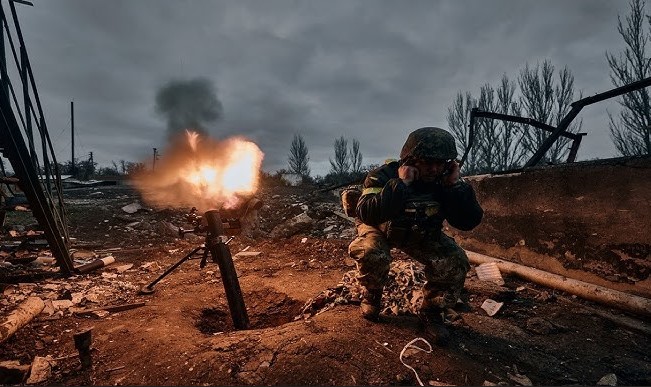


Over the past day, the Ukraine frontline witnessed a sharp rise in action, with 184 combat clashes reported across the Ukraine frontline. According to the morning briefing on December 6, the fighting stretched across many regions, making it one of the most active days in recent weeks.
Intense Battles Continue Across the Ukraine Frontline
The heaviest pressure remained in the Pokrovsk direction, where 51 attacks took place. Ukrainian forces reported battles in Mayak, Volodymyrivka, Rodynske, Chervone Lyman, Myrnohrad, Pokrovsk, Kotlyne, Udachne, Novoserhiivka, Molodetske, Kotlyarivka, Yalta, and Dachne. This cluster of settlements has become one of the most contested places along the Ukraine frontline, with forces trying to block enemy advances from multiple sides.
The Kostyantynivka direction also saw significant activity, facing 27 attacks near Oleksandro-Shultyne, Shcherbynivka, Kleban-Byk, Pleshchiivka, Yablunivka, and Rusyn Yar. Each of these areas plays a role in holding the defensive line, and even small movements can affect a wider portion of the Ukraine frontline.
Fighting was also reported in the North Slobozhansky, Kursky, South Slobozhansky, Kupiansk, Lyman, Sloviansk, Kramatorsk, Oleksandrivskyi, Gulyaypilskyi, Orikhivskyi, and Prydniprovskyi sectors. These regions continue to face artillery strikes, drone activity, and attempts at ground advances, making the Ukraine frontline highly unpredictable and constantly shifting.
The large number of combat engagements in just 24 hours shows how active the war remains. Many villages and towns have become crucial defensive points, where Ukrainian troops work to prevent deeper breakthroughs. Roads, forests, and open fields are all being used strategically, and each clash adds pressure on both sides.
Propaganda Claims Spark Confusion Along the Ukraine Frontline
As battles intensify, another layer of conflict continues: the spread of misleading information. Analysts observed an increase in propaganda aimed at creating the false picture that the Ukraine frontline is collapsing rapidly. These stories appeared near the end of November and quickly circulated online.
However, expert reviews show that these claims do not reflect real events on the ground. Instead, the goal appears to be to weaken public trust in Ukraine’s defense and influence the thinking of international partners. By suggesting sudden or dramatic defeats, propaganda attempts to cause fear, frustration, and confusion among people following war updates.
A clear example came on December 1, when Russian sources claimed they had captured Pokrovsk. But data collected from local authorities and independent observers showed that these claims were not true. Pokrovsk—now home to about 1,250 residents, compared to more than 60,000 before the full-scale invasion—remains under Ukrainian control.
Such false information spreads quickly, especially during intense military activity. When communication lines are strained, people often rely on fast updates, which makes misinformation harder to detect. This is why experts repeatedly emphasize the importance of following verified sources when tracking developments on the Ukraine frontline.
The information battle has become a major element of the conflict. While soldiers defend territory in physical battles, the public must navigate a stream of online claims, some of which are intentionally misleading. This dual pressure—military and informational—shows how complex the war has become.
Growing Pressure in Key Regions as Fighting Intensifies
Some areas have become especially worrying, with analysts noting that the threat to Gulaypole has increased. The town and surrounding villages have faced frequent shelling and attacks, pushing defenders to strengthen their positions. The pressure here reflects broader attempts by enemy forces to stretch the Ukraine frontline by launching attacks in multiple directions at once.
By forcing Ukraine to respond in many places, opposing forces try to weaken defensive positions and create openings elsewhere. This tactic increases stress on troops, equipment, and supply chains. Despite this, Ukrainian units continue to hold the line, responding to each attack as it unfolds.
Heavy clashes across the Ukraine frontline show how determined both sides remain. Even small settlements have become key battle points. Fields, river crossings, and local roads are all being used strategically, turning everyday landscapes into important military zones.
Amid these challenges, the spread of propaganda adds another layer of difficulty. Confusing or false information can influence how people view the situation, especially when updates come quickly and from many sources. Clear and verified reporting remains essential to understanding what is truly happening along the Ukraine frontline.
The past day’s fighting, combined with rising tension in areas like Gulyaypole and continuous online pressure, underscores how complex and demanding conditions remain. As clashes continue across multiple sectors, monitoring remains vital to understanding the scale and direction of activity.