


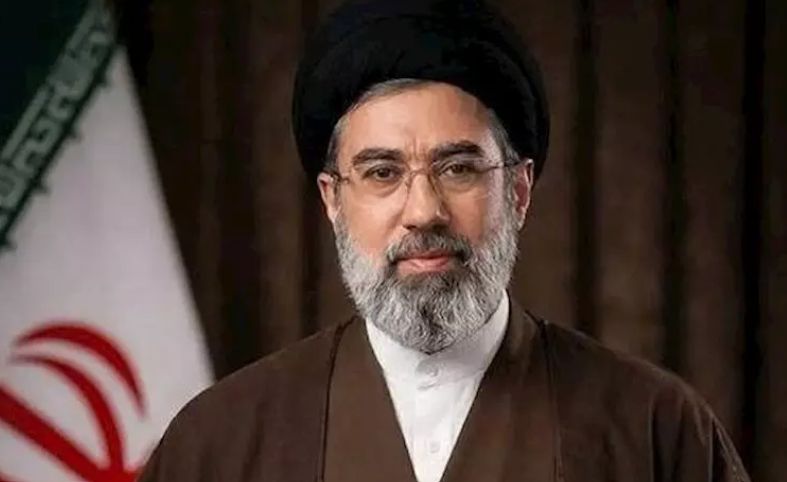


Iran has entered a new and dangerous phase of conflict after the assassination of Supreme Leader Ayatollah Ali Khamenei on February 28, 2026. In a move that shocked the world, Mojtaba Khamenei, the late leader’s second son, was elected as Iran’s new Supreme Leader on March 8, 2026. His rise comes at a time of intense military confrontation in the Middle East, and his first actions suggest that Iran is preparing for a prolonged and highly aggressive campaign.
Mojtaba Khamenei’s First Moves: Calls for Unity and Vengeance
Mojtaba Khamenei’s initial public statements as Supreme Leader were anything but conciliatory. In his first address, he called on Iranians to remain united and attend Quds Day events, emphasizing that the nation must honor and avenge those killed in the recent attacks — including his father.
Top Iranian officials, including Mohammad Bagher Ghalibaf, Ali Larijani, and Masoud Pezeshkian, pledged their allegiance to Mojtaba, showing a unified front within the government and the powerful Islamic Revolutionary Guard Corps (IRGC). Analysts say these early moves signal a leadership preparing its population for extended conflict, rather than any immediate diplomatic compromise.
Iran deploys elite black-clad NOPO commandos to guard new supreme leader Mojtaba Khamenei
The atmosphere in Iran is tense, with state media amplifying calls for retaliation. This escalation comes just days after the US-Israeli airstrike that eliminated Ayatollah Khamenei, highlighting the country’s determination to project power and resist foreign influence.
The Aircraft Carrier Controversy: USS Abraham Lincoln
In the past 24 hours, Iran claimed it struck the US aircraft carrier USS Abraham Lincoln with four ballistic missiles. The Revolutionary Guards warned that “the land and sea will increasingly become the graveyard of the terrorist aggressors.”
The United States swiftly denied the reports. CENTCOM confirmed that the Lincoln was not hit and said the missiles “didn’t even come close.” US videos show F/A-18 and F-35 jets taking off and landing normally, confirming that the carrier remains fully operational.
Iran’s navy also reported that it fired a coast-to-sea missile at the Lincoln, while US officials rejected earlier reports that drones had struck the vessel. Analysts note that Iran is combining real military operations with information warfare, making it hard to independently verify the claims amid ongoing conflict.
US urges Israel to pause strikes on Iran oil infrastructure citing risks to global energy supply
The scale of fighting is substantial. US forces have hit nearly 2,000 targets in Iran with over 2,000 munitions, destroying hundreds of Iranian missiles, launchers, and drones, and sinking more than 60 ships — including the last of four Soleimani-class warships in the Indian Ocean.
Since the conflict began, Iran has launched over 500 missiles and nearly 2,000 drones, about 40% toward Israel and 60% at US assets. Two US carrier strike groups — the Lincoln in the Arabian Sea and Gerald R. Ford in the Mediterranean — continue to operate with strong air and naval support.
Strait of Hormuz Blockade, Tanker Attacks, and Regional Escalation
The conflict has spread across nine Middle Eastern countries, with Iran striking US military bases and civilian infrastructure in Bahrain, Kuwait, Qatar, Saudi Arabia, Oman, and the UAE.
Iran’s semi-official Tasnim news agency released video of a missile hitting the US-owned oil tanker Safesea Vishnu near the Iraqi coast, showing the vessel engulfed in flames while IRGC boats reportedly celebrated. Drone incidents in Dubai and at Kuwait International Airport caused minor damage, highlighting how the war is reaching beyond Iran’s borders.
A major economic flashpoint is the Strait of Hormuz, a key global shipping route. Iran has restricted traffic, disrupting oil movement and driving Brent crude above $100 per barrel. Analysts note Iran can strike ships even without mining the strait, keeping US warships cautious. For India, about 87% of annual LPG imports pass through this route, affecting households, hotels, and restaurants.
North Korea warns of nuclear support for Iran if US or Israel targets new leader Mojtaba Khamenei
Rising fuel prices and shipping disruptions are hitting regional economies hard. Commercial and industrial operations in India, especially in states like Maharashtra, Tamil Nadu, and Madhya Pradesh, are facing immediate challenges due to gas and fuel shortages.
Day 13 of Operation Epic Fury continues with no ceasefire or surrender. Mojtaba Khamenei has assumed full command, vowed revenge, and launched coordinated military and information campaigns. The USS Abraham Lincoln remains operational, but the Strait of Hormuz is effectively blocked, creating global energy and shipping concerns.