


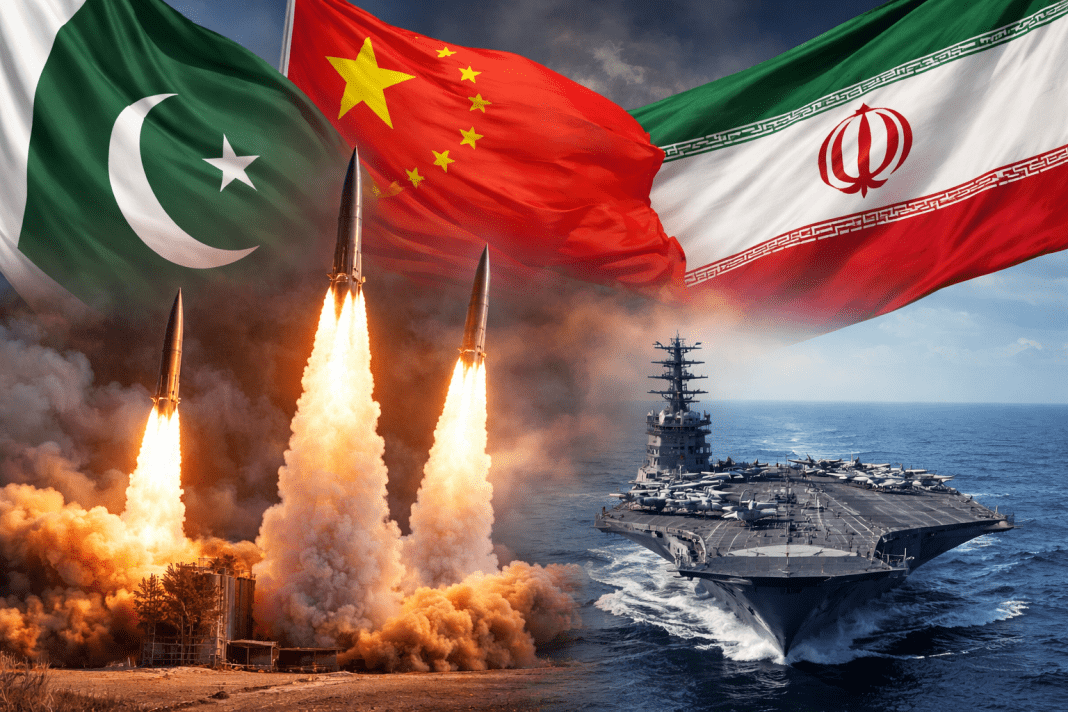


Tensions are rising after former US National Security Advisor Michael Flynn reacted to claims that Iran may have used Chinese-supplied missiles, allegedly routed through Pakistan, to target a US aircraft carrier. The unverified reports have sparked questions about regional alliances and Pakistan’s role in ongoing US-Iran peace efforts.
Flynn Questions Pakistan’s Role as Mediator
Former US National Security Advisor Michael Flynn has sparked debate after questioning Pakistan’s credibility in ongoing US-Iran peace efforts. His remarks came after online claims suggested Iran may have used Chinese-supplied missiles, allegedly routed through Pakistan, in an attempted strike on a US aircraft carrier.
Flynn, who served under former US President Donald Trump, said Pakistan’s role as an “honest mediator” would be in doubt if the allegations are proven true. The issue has emerged during a fragile two-week ceasefire between the United States and Iran.
‘They want relevance’: Israel ridicules Pakistan’s mediating role in Iran truce
The controversy began after a social media post made the claims, prompting Flynn to warn that, if confirmed, the situation could amount to an “act of war.” He also said it could seriously damage trust in Pakistan’s neutrality in diplomatic negotiations.
Allegations of Chinese Military Support to Iran
The issue gained further traction after statements from the Institute for the Study of War, a US-based defense think tank. The institute reported that China may be actively assisting Iran in rebuilding its missile capabilities following damage caused by recent US and Israeli strikes.
According to the think tank, Western media sources suggest that China has sent multiple shipments of missile fuel precursors to Iran since the conflict escalated. These materials are critical for developing and maintaining ballistic missile systems.
The report indicates that such support could undermine efforts by the United States and Israel to weaken Iran’s missile infrastructure. It also suggests that Iran has been working quickly to restore damaged facilities, including underground missile bunkers and launch systems.
India emerges as a more reliable mediator for Middle East peace over Pakistan
Iran’s military has reportedly been repairing and reactivating launch sites within hours of being struck. However, intelligence assessments cited by the institute suggest that while some systems are operational again, they may not be functioning at full capacity due to coordination issues and internal challenges.
The situation has drawn global attention as it highlights the complex network of alliances and support systems that may be influencing the conflict. Any involvement by major powers like China could significantly shift the balance and escalate tensions further.
Missile Strike Claims and Rising Security Concerns
The controversy intensified after Iran claimed it had targeted the USS Abraham Lincoln aircraft carrier using coastal cruise missiles. Iranian state media outlets, including Press TV and IRNA, reported that the operation was carried out by Iran’s armed forces.
Videos released by these outlets allegedly show missile launches aimed at the US carrier. While independent verification remains unclear, the claims have added to the seriousness of the situation.
Flynn also warned about the broader implications for US national security. He emphasized that threats from Iran and other foreign actors are “very real” and could extend beyond the battlefield. He urged US authorities to remain vigilant, especially regarding homeland security.
Was Pakistan the messenger or was China the author? The mystery behind the U.S.-Iran ceasefire
Flynn stressed in his remarks that the United States already plays a deep role in the conflict and must make decisive choices. He said that once it engages in such a situation, the country must either secure a clear victory or carefully plan its withdrawal.
He also highlighted that the conflict does not involve only the United States and Iran. Multiple countries and groups may take part either directly or indirectly, which makes the situation more complex.
The ongoing developments come amid heightened military activity and diplomatic uncertainty in West Asia. With allegations involving multiple countries, including China and Pakistan, the situation continues to evolve rapidly, drawing attention from governments and analysts worldwide.