


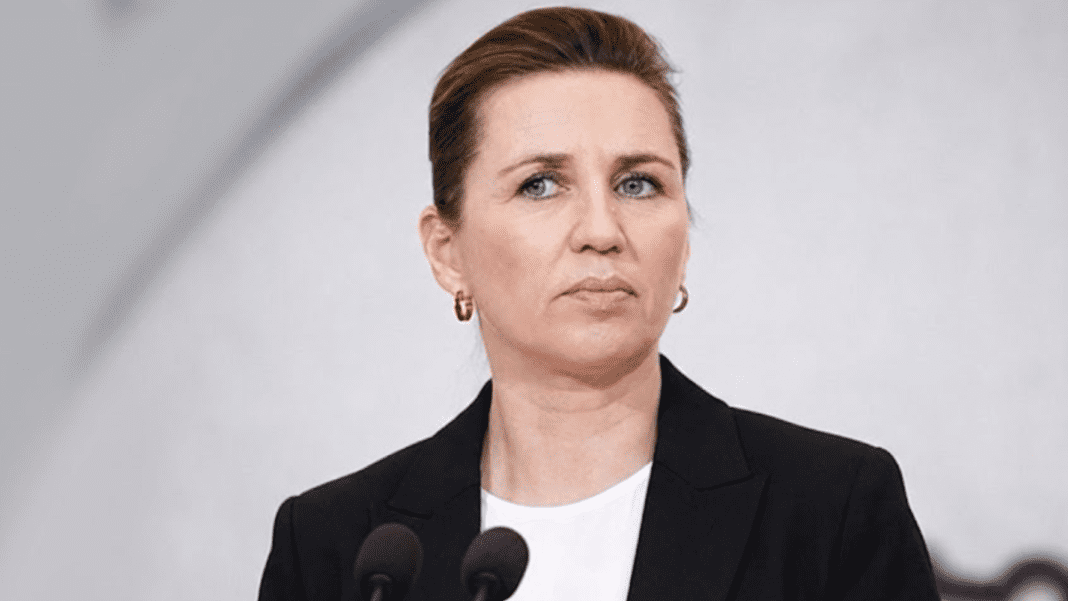


Greenland Dispute Strengthens Frederiksen’s Leadership Image
The Greenland episode reshaped the national conversation and strengthened Frederiksen’s standing. Cross-party praise followed her handling of the situation, something rarely seen in Denmark’s competitive political environment. The dispute highlighted Greenland’s importance within the Kingdom of Denmark and underscored Copenhagen’s position on sovereignty and diplomacy under Frederiksen’s leadership.
The moment reinforced Frederiksen’s reputation as a crisis leader. Observers have compared this to her leadership during the COVID-19 pandemic, when Denmark imposed strict health measures. Her growing involvement in European and security matters has also drawn notice from analysts such as Lykke Friis, who has pointed to Denmark’s increasingly active role in EU affairs.
Denmark bolsters Greenland security with military deployment amid Arctic and NATO tensions
A significant development came in 2022, when Danish voters ended the country’s long-standing opt-out from the European Union’s defense policy. This allowed Denmark to participate fully in EU defense cooperation for the first time in decades, marking a shift in its approach to European security during Frederiksen’s time in office.
While international recognition alone does not determine election results in Danish politics, it has strengthened Frederiksen’s public standing during a sensitive period.
Welfare and Pensions Move to Center Stage
As attention turns inward, economic concerns are shaping the political agenda. Food prices have been among the highest in the European Union, putting pressure on households. Although prices have started to ease, many families continue to feel the impact.
Frederiksen’s government has proposed a one-time financial payment to support vulnerable groups. Under the plan, unemployed citizens and retirees would receive about €335 tax-free. Low-income families with children could receive roughly €670. The proposal has backing within the coalition government and support from progressive parties.
Retirement age is another sensitive topic in Danish politics. Since 2006, the pension age has automatically increased in line with life expectancy. In 2023, parliament approved raising the retirement age to 70 by 2040, which would make it one of the highest in Europe.
Donald Trump backs existing Greenland defense pact as sovereignty risks unsettle NATO and markets
The Social Democrats have promised to present ideas for a revised pension model before the next election. The discussion is expected to include possible earlier retirement options for certain workers, particularly those in physically demanding jobs. In a New Year address, Frederiksen highlighted concerns that while some people leave the workforce early, many others simply watch the retirement age continue to rise.
These policy discussions reflect Frederiksen’s effort to reconnect with traditional left-leaning voters, especially after the party formed a centrist coalition with the Liberals and the Moderates in 2022.
Migration Policy Remains Firm Under Frederiksen
Despite renewed emphasis on welfare issues, Frederiksen has maintained a strict stance on migration. Immigration has long been a defining issue in Danish politics, and recent legislation confirms that approach.
A law introduced in January mandates deportation for foreign nationals sentenced to at least one year in prison. The rule applies even in cases where it may conflict with prevailing interpretations of Article 8 of the European Convention on Human Rights, which protects the right to family life.
At the European level, Frederiksen has coordinated closely with Giorgia Meloni to push for tighter migration policies across the EU. Both governments have supported efforts to modernize the European Convention on Human Rights to address evolving migration challenges. In December, 27 Council of Europe member states backed discussions on updating the convention.
Danish pension fund plans exit from U.S. Treasuries due to weak finances and Trump tensions
Recent election results show that the Social Democrats face challenges despite improved polling. The party lost control of Copenhagen in local elections after more than a century in power. In the 2024 European elections, it recorded its lowest nationwide result in over 120 years, though it retained representation in the European Parliament.
Current surveys suggest that Denmark’s next government may again require cooperation across political blocs. As election speculation continues, Frederiksen remains central to Danish politics, balancing international credibility with domestic priorities such as welfare, pensions and migration control.