


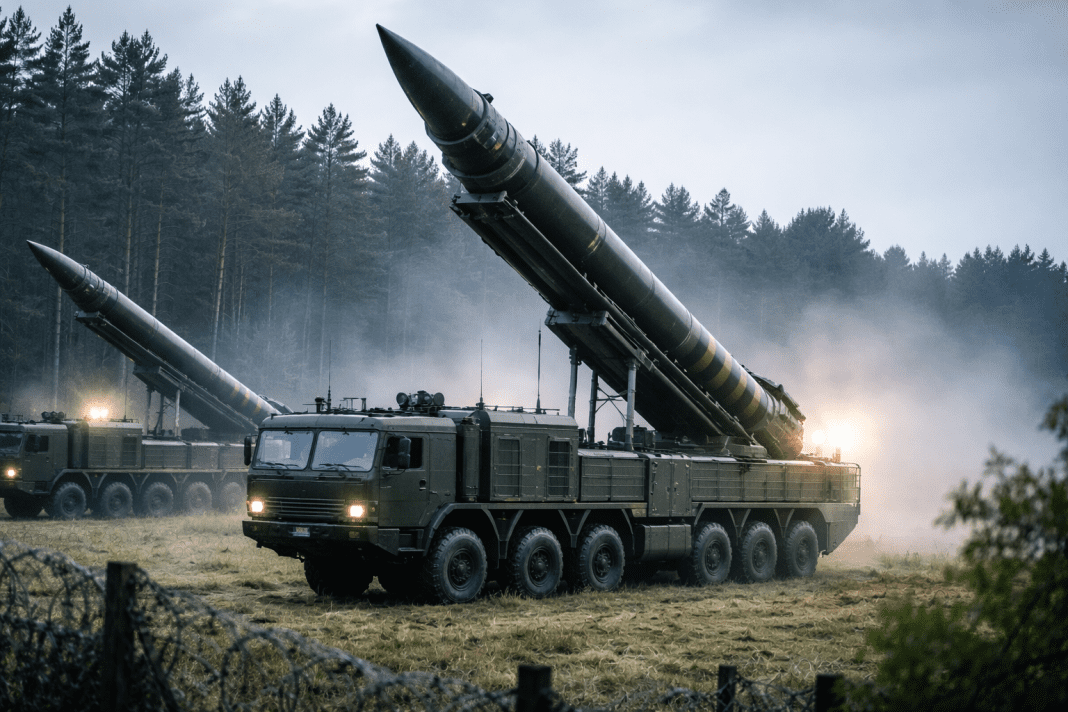


Belarusian President Alexander Lukashenko has confirmed that Russia has deployed its newest nuclear-capable missile system, known as Oreshnik, to Belarus. The announcement comes at a highly sensitive moment, as international efforts to negotiate an end to the war in Ukraine have entered a critical stage. The deployment highlights the deep military ties between Moscow and Minsk and raises concerns across Europe and beyond.
Russia Moves Oreshnik Missiles to Belarus Amid Ukraine War Talks
Belarusian President Alexander Lukashenko said Thursday that Russia has deployed its new Oreshnik missile system to Belarus. The missiles arrived Wednesday and are now operational, though he gave no details on numbers or locations. The announcement drew global attention because the Oreshnik can carry nuclear warheads.
A day earlier, Russian President Vladimir Putin also addressed the missile system during a meeting with senior military officials. Putin said the Oreshnik would officially enter combat service this month but provided no further details. He used the meeting to warn that Russia would seek to expand its gains in Ukraine if Kyiv and its Western allies reject Moscow’s demands in ongoing peace talks.
The announcement comes at a sensitive time, as the United States is leading diplomatic efforts to end nearly four years of fighting following Russia’s full-scale invasion of Ukraine in February 2022. These talks have made little progress due to deep disagreements between Moscow and Kyiv.
Belarus, a close Russian ally, has played a key role in the conflict. Russian forces used Belarusian territory to launch the 2022 invasion of Ukraine, and Belarus has since allowed Russia to maintain a strong military presence within its borders.
What Is the Oreshnik Missile and Why It Matters
The Oreshnik missile, named after the Russian word for “hazelnut tree,” is an intermediate-range ballistic missile capable of traveling 500 to 5,500 kilometers (310 to 3,400 miles). Such missiles were once banned under a Cold War-era treaty between the U.S. and the Soviet Union, which both countries abandoned in 2019, allowing new development and deployment.
Russia first tested a non-nuclear version of the Oreshnik in November 2024, reportedly striking a Ukrainian factory. Since then, President Vladimir Putin has claimed the missile is impossible to intercept and warned that it could be used against NATO allies that let Ukraine strike inside Russia with long-range weapons.
According to Russian officials, the Oreshnik can carry multiple warheads traveling at speeds up to Mach 10—ten times the speed of sound. Putin has said that even conventional versions could cause destruction similar to a nuclear strike. State media has claimed a missile launched from Belarus could reach a Polish military base in 11 minutes and NATO headquarters in Brussels in 17 minutes.
A key concern is that it is impossible to know whether the missile carries nuclear or conventional warheads until impact. This uncertainty raises tensions in Europe, especially as the Oreshnik is now deployed closer to NATO’s eastern borders, intensifying fears over regional security and potential escalation.
Belarus’ Role, Nuclear Policy Changes, and Western Reaction
This is not the first time Russia has placed nuclear-related weapons in Belarus. In recent years, Moscow has deployed tactical nuclear weapons on Belarusian territory, and President Alexander Lukashenko has said the country hosts several dozen Russian nuclear arms. These deployments underline Belarus’ close military ties with Russia and its growing role in Moscow’s defense strategy.
In December 2024, Russian President Vladimir Putin and Lukashenko signed a new security pact that further strengthened cooperation between the two allies. At the signing ceremony, Putin said Russia would retain full control over the Oreshnik missile system but would allow Belarus to participate in selecting potential targets. He said that if Belarus targeted nearby locations with the missiles, they could carry heavier payloads, making them even more destructive.
Lukashenko warns of growing threats as Belarus modernizes defense with Oreshnik systems
Russia recently revised its nuclear doctrine and warned that it would treat any conventional attack supported by a nuclear-armed country as a joint attack. The policy also places Belarus under Russia’s nuclear protection umbrella, meaning Russia would consider an attack on Belarus as an attack on itself.
Belarusian leader Alexander Lukashenko, in power for over 30 years, has faced Western sanctions over human rights abuses and backing Russia’s war in Ukraine. At the same time, he has made limited outreach to the West, including releasing 123 political prisoners such as Nobel laureate Ales Bialiatski in exchange for eased U.S. sanctions.