


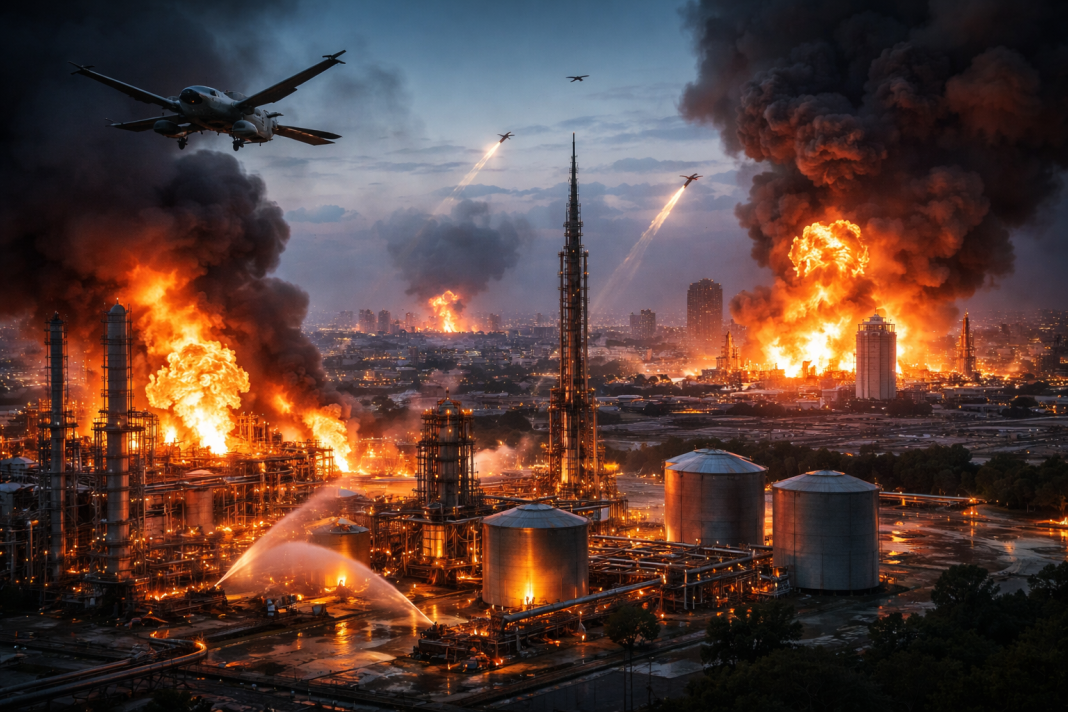


and inA major oil refinery in Kuwait came under attack as tensions in the region sharply increased. The facility, located in Mina Al-Ahmadi, is one of the largest in the country. It processes nearly 730,000 barrels of oil every day, making it a key part of global energy supply.
Iran launched the attack using drones. The strike triggered a fire inside the refinery, forcing emergency teams to act quickly. Firefighters moved in to control the flames and secure the site.
This marked the second strike on the same refinery in a short time. An earlier attack had already damaged the facility. The repeated targeting raised concerns about the safety of oil infrastructure in the Gulf region.
At the same time, sirens sounded across Israel. These alerts warned of incoming threats and pushed people to move into shelters. Authorities reported no immediate major casualties.
Israeli Airstrikes Rock Tehran During New Year
As the refinery attack unfolded, Israeli forces launched airstrikes on Iran’s capital, Tehran. Explosions shook the city as strikes hit areas in and around the capital, including locations to the east.
The attacks took place during Nowruz, the Persian New Year. Nowruz is usually a time of celebration, but the explosions spread fear and confusion among residents.
Israeli forces carried out multiple strikes within a short span. These operations followed earlier attacks on a major offshore natural gas field. That field supplies a large share of energy and supports electricity generation.
The continued targeting of such sites has increased concerns about energy security inside the country.
Israel also carried out strikes inside Syria, citing violence in a Druze-majority region.
Israel strikes inside Syria, citing violence in Druze-majority region
Conflict Spreads Across Gulf Countries
The conflict has expanded beyond two countries and now affects several parts of the Gulf region.
In Saudi Arabia, air defence systems intercepted drones targeting the oil-rich eastern region and in Bahrain, debris from an intercepted projectile fell onto a warehouse and sparked a fire.
In Dubai, air defence systems engaged incoming threats, and explosions echoed across the city. These incidents occurred early in the morning as people prepared for Eid celebrations.
The widening attacks show a shift in the conflict. Forces now target energy sites and nearby regions more frequently, increasing risks for surrounding countries.
Authorities in the United Arab Emirates disrupted a network linked to regional groups. Officials detained several individuals for activities that could threaten financial stability.
http://US shuts down alleged Iran-backed websites involved in hacking and repression
Oil Prices Surge as Energy Routes Face Pressure
The conflict has started to impact global markets, especially energy supplies. One of the biggest concerns remains the safety of oil transport routes.
The Strait of Hormuz continues to draw attention. This narrow waterway carries a large share of global oil shipments. Any disruption here can affect supply across many countries.
Recent attacks pushed oil prices sharply higher. Brent crude, a global benchmark, crossed 119 dollars per barrel before settling near 107 dollars. This marks a significant increase from earlier levels.
The price surge reflects fears of supply disruptions as strikes continue to hit oil and gas infrastructure. Markets are reacting to rising uncertainty and growing risks in the region.
At the same time, both sides continue missile launches and airstrikes. Sirens and explosions now occur frequently in affected areas, adding to the tension.
The conflict has also caused casualties and displacement across regions. Ongoing strikes on cities and energy sites continue to disrupt daily life and strain emergency systems.