


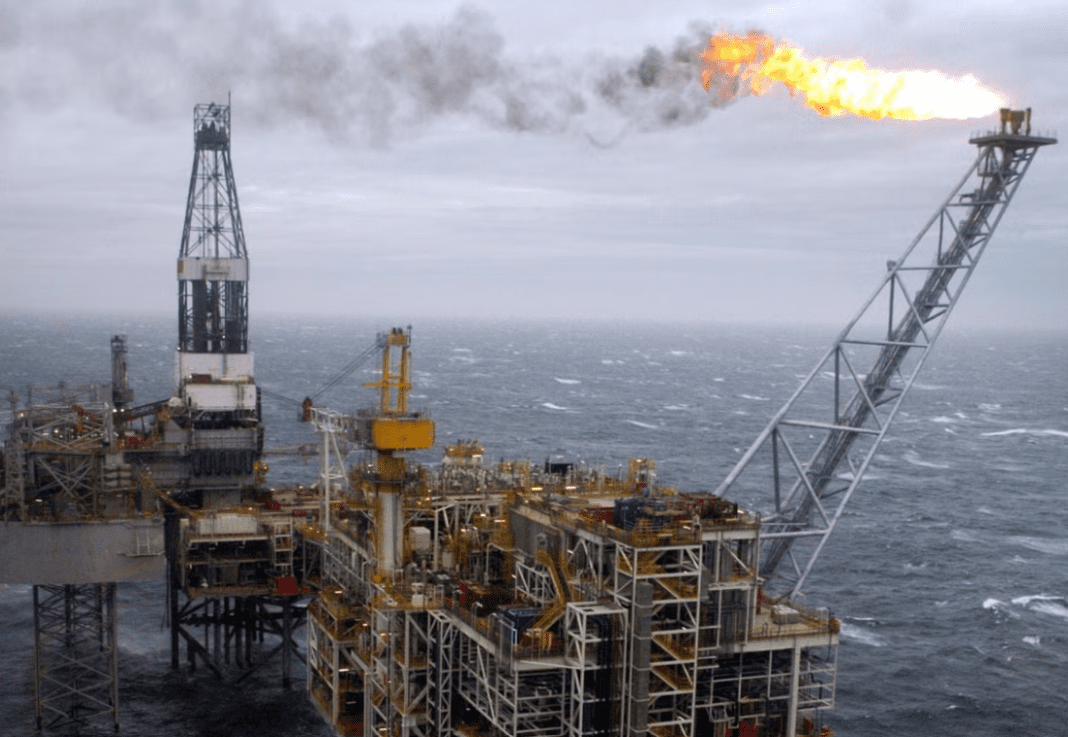


The debate over energy security in the United Kingdom has intensified as global oil prices climb amid ongoing tensions in the Middle East. The opposition Conservative Party has renewed its push for expanded oil and gas drilling in the North Sea. Their calls closely mirror statements made by Donald Trump, who has repeatedly urged countries to rely more on their own natural resources.
This renewed political push has sparked a wide discussion among experts, policymakers, and environmental groups. While some argue that increasing domestic production could improve energy security, others warn that the reality is far more complex.
Why Conservatives Are Calling For More Drilling
The Conservative Party, the main opposition in the UK Parliament, is preparing legislation to remove barriers to oil and gas exploration in the North Sea. The move aims to boost domestic energy production as the country continues to face high energy prices, putting pressure on households and businesses across the UK.
Did the United Kingdom Violate Its Own Arms Ban? F-35 Parts Reportedly Reached Israel
Party leader Kemi Badenoch has backed the plan, saying increased drilling could help lower energy bills, support businesses, and control inflation. The Conservatives have also echoed remarks by Donald Trump, who recently urged countries to rely more on their own oil instead of imports.
Meanwhile, the ruling Labour Party has pledged to halt new exploration licences in the North Sea, citing environmental concerns and climate goals, although it has recently indicated some flexibility in its overall approach.
What Experts Say About North Sea Drilling
While political leaders continue debating, many experts highlight serious limits to increasing oil and gas production in the North Sea. A key issue is that the region is already highly developed. Specialists describe it as a “mature basin,” meaning companies have explored it for decades and have already extracted most of the easily accessible resources.
Environmental lawyer Tessa Khan noted that production in the North Sea peaked in the late 1990s and has steadily declined since then. This suggests that even if new drilling projects move forward, the amount of recoverable oil and gas will likely remain limited.
British nuclear submarine HMS Anson moves into strike range of Iran amid widening Middle East war
Time is another major challenge. Experts say new drilling projects take years to develop, meaning they would not provide immediate relief during current energy price pressures. By the time production begins, market conditions could already have changed.
Analysts also stress the importance of global markets. The UK still depends on energy imports, and prices are largely set by international supply and demand. As Simon Cran-McGreehin explained, increasing domestic production does not necessarily lead to lower prices for consumers.
Alternative Energy Options Gain Attention
As the debate continues, experts are pointing to alternative ways the UK can improve its energy situation, especially by reducing dependence on fossil fuels and expanding renewable energy sources. The country already has one of the world’s largest offshore wind industries, placing it in a strong position to increase clean energy production. Developers have planned many renewable projects or placed them in approval pipelines, although grid connection challenges and infrastructure limits are delaying some of them.
Specialists note that renewable energy projects can often finish faster than companies can develop new oil and gas sites. This speed makes renewables a more immediate option for boosting energy supply, especially during periods of rising prices and global uncertainty. Faster timelines allow renewable energy to ease pressure on households and businesses sooner than traditional fossil fuel projects.
Economic factors also play a key role in the discussion. Studies suggest that the oil and gas sector may lose a significant number of jobs in the coming years as the industry matures. At the same time, renewable energy companies are expected to create jobs rapidly. A report by Robert Gordon University found that the sector could cut oil and gas jobs by half by the early 2030s, while renewable energy could nearly triple its workforce by 2035.
Recent global events, including the Russia-Ukraine conflict and ongoing Middle East tensions, have highlighted the risks of relying heavily on imported energy, keeping energy security at the center of public debate.