


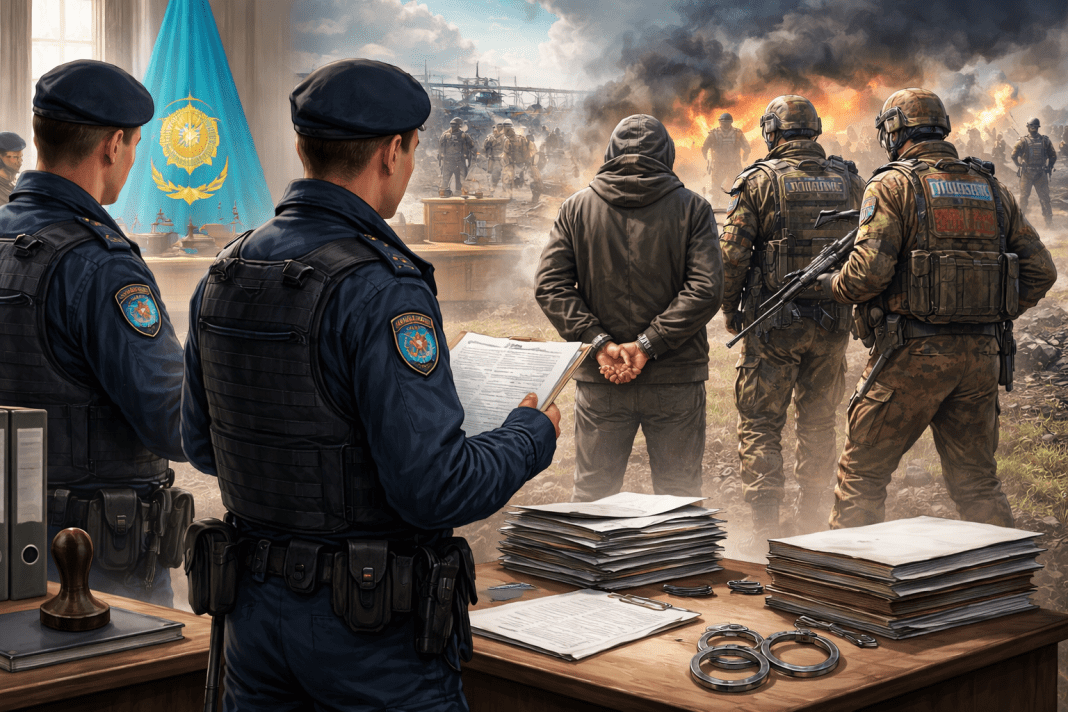


Kazakhstan has opened around 700 criminal cases in 2025 against citizens accused of fighting for Russian forces in Ukraine, its strongest response since the war began. The prosecutions focus on participation in foreign combat, which is illegal under Kazakh law regardless of affiliation.
Hundreds of Kazakhstan Investigations Opened Under Criminal Law
According to reports published on December 25, Kazakh law enforcement agencies have launched approximately 700 criminal investigations this year. These cases relate to citizens fighting on Russia’s side in Ukraine. Courts handling the cases are not making distinctions between different military structures or organizations.
This means that people who served with private military formations and those who signed official contracts with Russia’s defense structures are treated the same under the law. The key issue for prosecutors is not who they fought for. It is that they took part in an armed conflict outside Kazakhstan.
📂 Kazakhstan’s billionaire pipeline — alleged role in Epstein island and Kremlin leverage network
Kazakhstan’s Criminal Code includes clear rules on this matter. One article addresses participation in armed conflicts or military operations on the territory of a foreign state. Under this provision, individuals can face long prison sentences, with penalties reaching up to nine years behind bars.
A second and more severe article deals with mercenarism. This charge applies in cases where a person is accused of fighting for money or other benefits. If involvement in killings is proven, this article allows for extremely harsh punishment, including life imprisonment and mandatory confiscation of property.
In 2025 alone, authorities opened 709 cases under the article covering participation in foreign conflicts. An additional 28 cases were opened under the mercenarism provision. These figures make this year the most active period of prosecutions since the war in Ukraine began.
Shift in Enforcement After Names Became Public
Journalists and legal observers note that Kazakhstan’s approach has changed significantly compared to previous years. Earlier, authorities often limited their response to warnings. Citizens were reminded that joining foreign wars was illegal and could lead to criminal charges. Only a few dozen cases were typically opened each year.
That approach shifted after personal data linked to suspected fighters became publicly available. Once names and other identifying details circulated widely, law enforcement agencies moved more aggressively. Investigations increased sharply, leading to the hundreds of cases now being reported.
In addition to domestic investigations, information released by Ukraine has also played a role in bringing attention to the issue. In April and July 2025, a Ukrainian state-run project published a list of 1,200 Kazakh nationals who were said to be fighting or to have fought on Russia’s side in the war. This public disclosure added pressure and increased scrutiny.
Major energy projects in Azerbaijan and Kazakhstan escape UK sanctions until 2027
Reports also estimate that about 200 citizens or natives of Kazakhstan have been killed while fighting in Ukraine. These estimates are based on open-source information and reporting from media outlets tracking losses in the conflict. The figures highlight the human cost linked to foreign involvement in the war.
Kazakh authorities stress that their actions are based on national law and are not aimed at supporting one side or another in the conflict. Instead, they emphasize that the law prohibits citizens from taking part in armed conflicts abroad, regardless of political or military context.
War in Ukraine and Kazakhstan’s Legal Position
The war in Ukraine has created serious challenges for Kazakhstan, even as the country seeks to maintain a careful diplomatic balance. Under Kazakh law, citizens are strictly prohibited from taking part in foreign military conflicts, regardless of the circumstances.
Officials say that simply participating in fighting abroad is treated as a criminal act. Courts focus on whether a person crossed borders and engaged in combat, even if they claim they were misled, pressured, or recruited under false promises.
🧨 Nuclear Shockwave: Kazakhstan Picks Rosatom Russia & CNCC China to Power Atomic Dreams
Reports indicate that Russia’s manpower shortages have increased efforts to recruit foreign nationals, often using financial incentives and misleading information. Testimonies and official statements have described these recruitment tactics in detail.
Kazakhstan’s response has shifted from warnings to strict enforcement, with hundreds of criminal cases opened in 2025. The sharp rise in prosecutions shows a stronger application of existing laws, reinforcing that fighting in foreign wars carries serious legal consequences.