


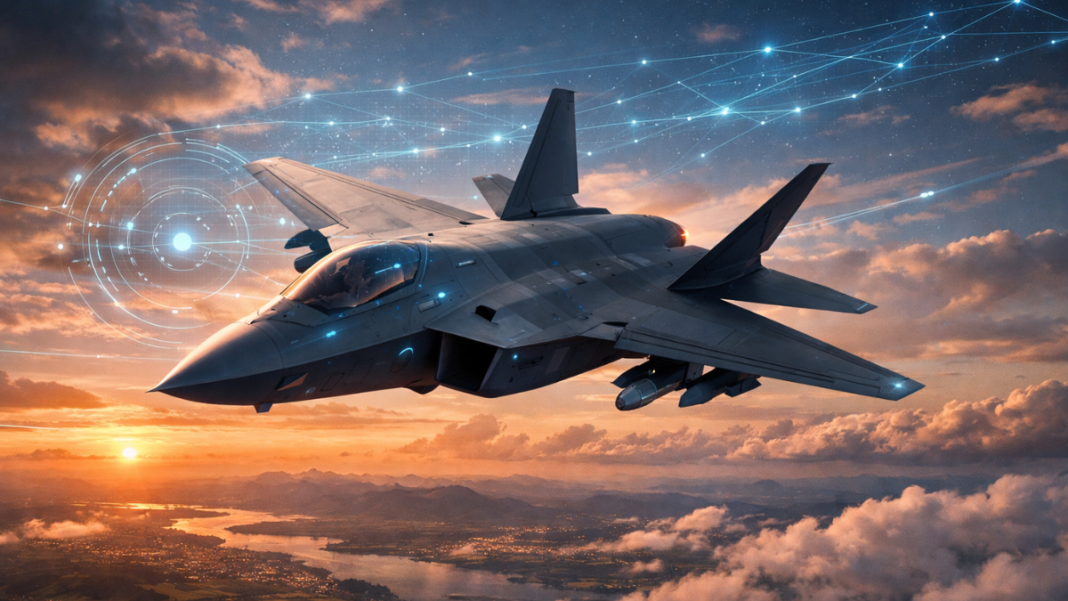


Italy is investing approximately €18.6 billion in what is being described as the most expensive fighter jet program in its history. The major defense investment reflects the country’s long-term strategy to modernize its air force capabilities and strengthen its role within NATO and European defense initiatives.
The government is directing the funding toward developing next-generation combat aircraft. Engineers are designing these aircraft to meet the demands of modern warfare. The investment highlights Italy’s focus on advanced military technology and long-term defense planning.
The program centers on building highly advanced fighter jets that go far beyond traditional aircraft. Modern combat jets are no longer just fast planes carrying weapons. They function as highly connected flying systems capable of managing large amounts of battlefield information.
Advanced Stealth and AI-Powered Systems
A key feature of the next-generation fighter jet program is advanced stealth design. Stealth technology helps aircraft avoid detection by enemy radar systems. This improves survivability during missions and enhances operational effectiveness.
The program also focuses heavily on AI-assisted systems. Artificial intelligence allows pilots to process complex battlefield data more quickly. In modern combat situations, information moves fast. AI helps filter, organize, and present that information in real time, making it easier for pilots to respond effectively.
Italy could turn highways into F-35 runways to counter missile and drone threats
Another major element is sensor fusion. This technology combines data from multiple sensors into one clear and simplified display. Instead of reviewing separate data sources, pilots receive a unified picture of the battlefield. This reduces confusion and supports faster decision-making.
Such advanced systems reflect how military aviation has evolved. Fighter jets today act as digital platforms in the sky. They collect and analyze information while supporting mission execution.
Network-Centric Warfare and Electronic Capabilities
The aircraft are being developed with network-centric warfare capabilities. This means they can connect and share data with other military platforms. Fighter jets can communicate with ground forces, naval units, and other aircraft. They operate as flying data hubs, enabling real-time coordination across different forces.
Electronic warfare capabilities are also part of the program. These systems are designed to disrupt or interfere with enemy communications and radar. Electronic warfare plays a critical role in modern conflicts, providing both defensive and offensive advantages.
The jets are also built for multi-domain operations. This means they can operate across air, land, sea, space, and cyber environments. Modern military operations often involve coordination across these domains. Engineers are designing the next-generation aircraft to gather, process, and distribute information across all domains.
Large-scale defense programs like this typically span years of research, development, and testing. They often involve multinational industrial collaboration. Advanced fighter aircraft development requires extensive coordination between defense industries and technology partners.
Hackers strike Olympic sites in Milan and Cortina in warning to Ukraine-backing Italy
Support, Criticism, and Strategic Significance
Supporters argue that the €18.6 billion investment secures national defense and strengthens Italy’s military readiness. Defense planners consider a modernized air force essential for protecting national airspace and supporting NATO operations.
Officials describe the funding as a boost to technological leadership. Advanced aerospace programs support high-skilled jobs in engineering and defense manufacturing. These projects often stimulate innovation in related sectors.
At the same time, critics question the opportunity cost of such a large military expenditure. They raise concerns about allocating billions of euros to defense amid economic pressures. The debate centers on balancing defense needs with other national priorities.
As global security dynamics evolve, countries are increasing investments in advanced military capabilities. Italy’s move signals a strong commitment to modern airpower in an increasingly competitive defense landscape.
The €18.6 billion fighter jet program represents a major step in Italy’s long-term defense modernization strategy. It highlights the country’s focus on advanced stealth systems, AI integration, sensor fusion, electronic warfare, and network-centric operations within NATO and European defense frameworks.