


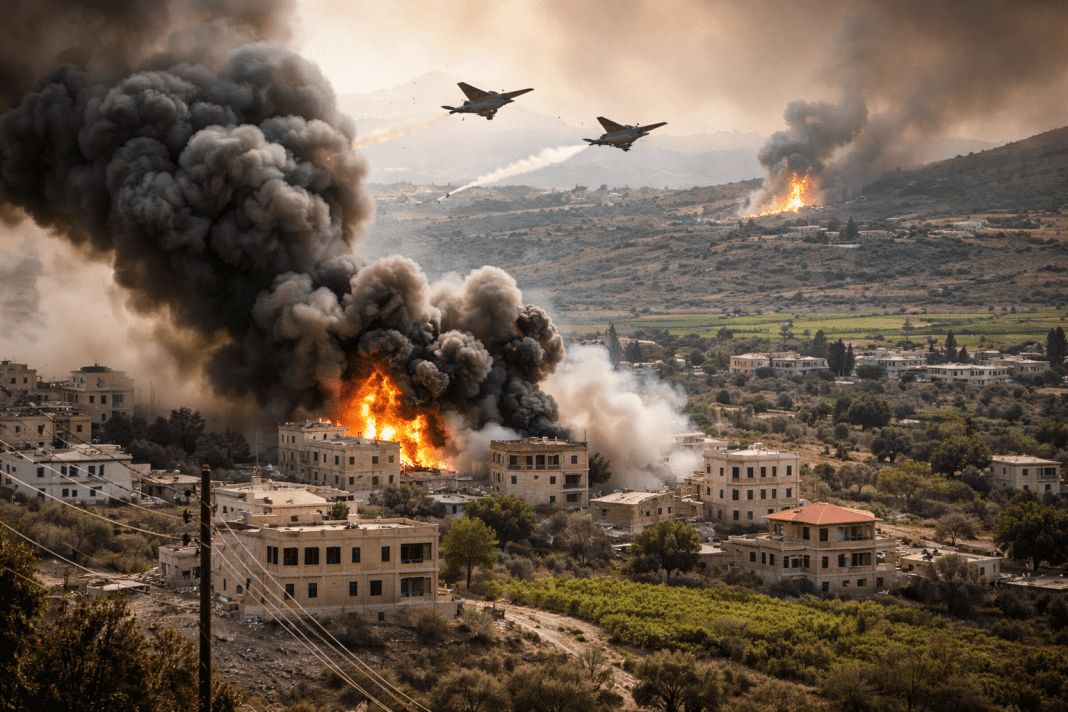


Israeli military action intensified on Thursday as airstrikes hit multiple locations in Lebanon, including missile strikes near homes in the town of Taybeh, while new ground movements were also reported across the border in southern Syria. The developments marked a widening of military activity across two countries and raised serious concerns about civilian safety, regional stability, and continued violations of existing ceasefire understandings.
Airstrikes Spread Across Southern Lebanon and Taybeh Areas
Israeli aircraft launched a series of airstrikes across southern Lebanon and the Bekaa Valley, targeting hilly terrain, river basins, and areas close to populated towns. The attacks formed part of a renewed wave of military action that continued throughout the day, raising concerns about civilian safety.
In southern Lebanon, warplanes struck the Jbour and Rihan highlands. Missiles also hit areas near the Litani River basin between Deir Siryan and Zawtar, along with additional strikes in the al-Jarmak and al-Mahmoudiya regions. These locations include farmland, roads, and nearby villages, increasing fears of damage to civilian areas and infrastructure.
Israel carries out airstrikes on southern Lebanon as ceasefire monitoring continues
One of the most serious incidents occurred in the town of Taybeh, where an Israeli drone fired two missiles near residential neighborhoods and a major roadway. The explosions were reported close to homes, causing panic among residents. The nearby road is a key transport route, and any damage could disrupt daily travel and emergency services.
In eastern Lebanon, Israeli warplanes reportedly carried out three airstrikes on the Zghrine highlands near Hermel. Further strikes were also reported near Tareya and Bodai in the Bekaa Valley, areas that include farms and scattered homes.
Observers noted that the airstrikes hit at least three different regions in a single day, highlighting the expanding scale of the military operations and deepening concern among affected communities.
Civilian Casualties Rise as Taybeh Strike Deepens Fears
The latest wave of airstrikes came after a series of deadly drone attacks earlier in the week that killed and injured civilians. On Tuesday, two Lebanese civilians died in separate incidents. One strike hit a vehicle on the Odaisseh–Markaba road in the Marjayoun district, while another targeted a vehicle in Mount Lebanon’s Chouf district, injuring five people.
Earlier, on December 14, Israeli attacks in southern Lebanon killed three civilians and wounded others. One drone strike struck the town of Jwayya in the Tyre district, damaging nearby homes and buildings. These repeated incidents have increased fear among residents, who worry about sudden attacks on roads, vehicles, and towns.
Israeli Airstrikes in Beirut Target Hezbollah’s Financial Backbone Al-Qard al-Hassan
The missile strike near homes in Taybeh added to these concerns. Civilians fear that attacks close to residential areas could lead to higher casualties if they continue. Families living near the border say they no longer feel safe even inside their homes, as drones and aircraft remain active overhead.
Local officials described the airstrikes as deliberate actions rather than isolated incidents. They said the timing and scale of the attacks sent a political message during ongoing international discussions about Lebanon’s security. The continued strikes have also raised concerns about respect for ceasefire agreements and international resolutions meant to reduce violence.
Israeli Military Activity Extends From Lebanon Into Southern Syria
While airstrikes continued across Lebanon, reports also emerged of Israeli military activity expanding into southern Syria. On Thursday, Israeli forces crossed into Syria’s Quneitra province, entering the village of Ma’allaqa with tanks and military bulldozers.
This movement followed Israeli artillery fire the previous day from positions in western Tel al-Ahmar toward areas near the village of Kodna. Residents reported hearing shelling and seeing military vehicles operating close to civilian land.
Syrian media have reported that such incursions have continued for months in Quneitra province. These actions have reportedly included the establishment of checkpoints, arrests of civilians, and destruction of agricultural land. Farming is a major source of income in the area, and damage to crops has added economic pressure to existing security concerns.
The incursions followed Israel’s occupation of a buffer zone after December 2024. Since then, residents say military presence has increased, limiting movement and affecting daily life.
Israel carries out airstrikes in southern Lebanon killing one and wounding seven
The expansion of military operations from Lebanon into Syria shows how quickly tensions can spread across borders. Airstrikes, drone attacks, artillery fire, and ground incursions have all occurred within a short period, impacting civilians across multiple regions.
As missiles struck Taybeh and warplanes hit distant valleys and highlands, ordinary people once again found themselves caught in the middle of escalating military actions across Lebanon and southern Syria.