


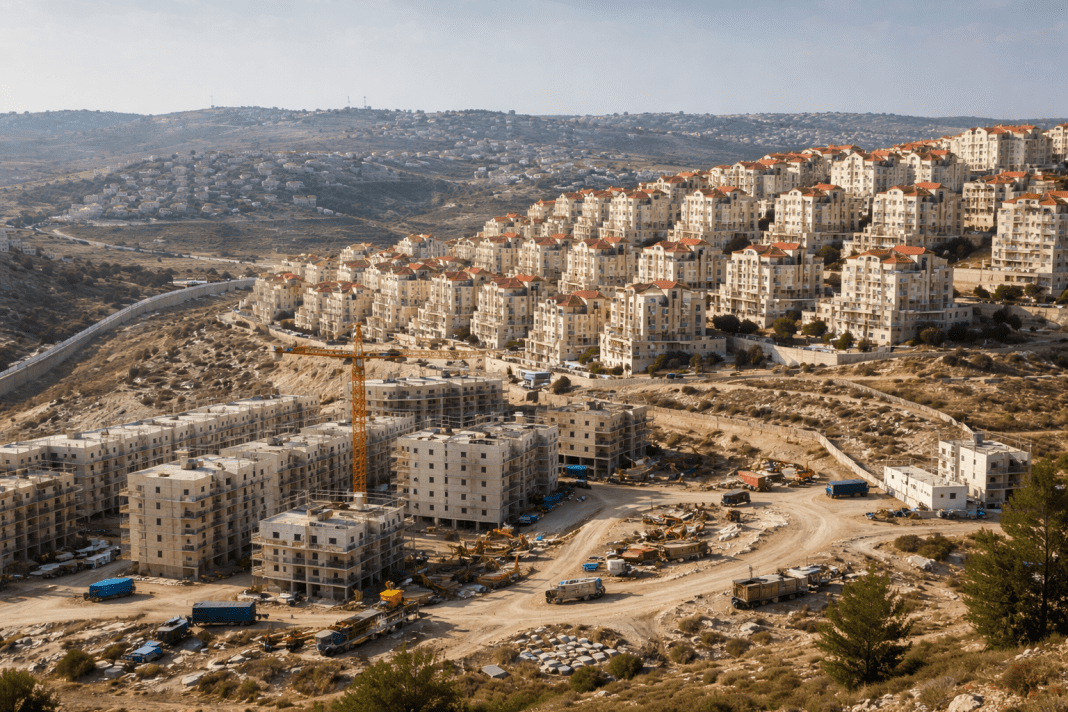


Israel has moved quickly to advance a plan to build more than 3,000 new homes in a sensitive area of the occupied West Bank near East Jerusalem, a project that could soon begin and that many say would split the territory in two and further isolate Palestinian communities, despite widespread international opposition and claims that it breaks international law.
A Project That Changes the Map of the West Bank
The area chosen for this settlement is a narrow strip of land between Jerusalem, Bethlehem, and Ramallah, making it one of the most sensitive and important parts of the West Bank. Building a large settlement there would not just add new homes but would change how the whole region works. Palestinians would have to make longer and more difficult journeys because authorities could block or control roads and separate communities that were once connected.
The plan would also further isolate East Jerusalem, which Palestinians claim as the capital of a future state, making daily life even harder for people living there. Supporters say the project strengthens control over the area, while critics warn that once builders construct thousands of homes and new roads, reversing the changes will be almost impossible.
Sirens & Shelter: Yemen’s forces claim ‘Palestine-2’ strike near al-Quds, drone hit on Haifa
For years, leaders only discussed the plan, but now they are moving it forward quickly. The government has set aside money, local authorities have stepped in, and officials are completing legal steps that usually take much longer, showing that the project is no longer just an idea but is becoming reality.
International Law and Growing Global Anger
International law considers settlements in occupied territory illegal, and many countries have repeated this position for decades. They say such construction breaks rules that protect people living under occupation and prevent permanent changes to the land before a political solution is reached.
In this case, more than 20 countries, including close allies of Israel, have spoken out against the decision and warned that it could increase violence and instability in an already tense region. International courts and human rights groups have also criticized the project, saying the occupation itself violates international law.
Belgium announces recognition of Palestine with conditions and sanctions on Israel
Despite these warnings, authorities have continued planning at a fast pace. Once officials choose the companies, they can sign contracts quickly, followed by building permits that often move faster when political leaders strongly support the project. Observers say the shortened timeline suggests a push to make the settlement a reality as soon as possible.
This is not an isolated move. In recent years, settlement activity across the West Bank has steadily increased, with new settlements approved and older ones expanded. Monitoring groups say the total number of settlements has risen sharply, changing the landscape of the occupied territory.
Life on the Ground and Rising Tensions
For Palestinians living in the West Bank, the impact of settlement expansion is part of daily life. It often means losing access to land, facing more checkpoints, and living with stricter limits on movement. In some places, authorities have forced families to leave their homes, while in others, new construction has surrounded villages and changed how people live and travel.
At the same time, violence in the West Bank has increased. Soldiers and settlers have clashed more often, and they have killed or injured many Palestinians. Fighting has also driven large numbers of people from their homes, making the humanitarian situation even more serious and uncertain for many communities.
Pro-Palestine protest blocks access to Edinburgh defense factory linked to F-35 jets
Human rights groups say authorities are failing to punish harmful actions, creating a growing sense of impunity. This feeling of impunity creates fear and anger and makes everyday life more unstable for ordinary people trying to work, study, and raise families.
The new settlement project fits into this wider pattern of expanding control. It is not only about building houses and roads, but also about control of land, movement, and resources. In recent years, even areas where settlements were once removed have seen a return of military forces and new plans for settlers to come back. Today, the number of settlements is much higher than it was a few years ago, and approved plans will increase it even further, reshaping the land step by step and deepening a long-running conflict.