


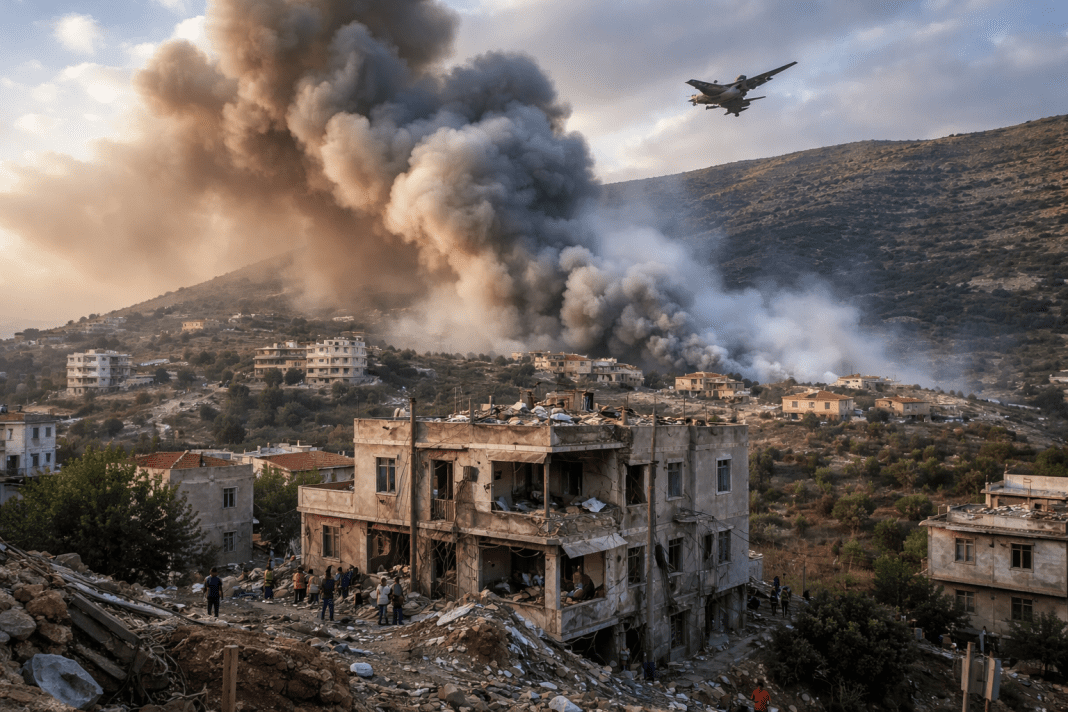


Israel launched a series of airstrikes on southern and eastern Lebanon on Thursday, raising tensions once again in an already volatile region. Lebanese state media reported multiple strikes across mountainous and rural areas, while the Israeli military said it specifically targeted Hezbollah infrastructure, including a military compound used for training and operations.
These airstrikes come despite a ceasefire agreement signed in November 2024, which was supposed to end more than a year of hostilities between Israel and Hezbollah. However, Israel has continued its military presence in southern Lebanon, maintaining troops in five strategic areas. The ongoing operations highlight that the ceasefire has not fully halted military activity in the region.
The latest series of airstrikes demonstrates Israel’s ongoing efforts to weaken Hezbollah’s capabilities. While Israel claims it is targeting military infrastructure, the strikes inevitably affect surrounding communities, increasing tension and fear among civilians in the affected areas.
Widespread Airstrikes Hit Southern and Eastern Lebanon
Lebanon’s National News Agency reported that the airstrikes struck several mountainous areas in southern and eastern Lebanon. The Israeli military stated that it targeted “terror infrastructure sites in multiple areas across Lebanon,” including a military compound where Hezbollah reportedly conducts training and other operations.
Israel carries out airstrikes in southern Lebanon killing one and wounding seven
In one of the statements, the Israeli military confirmed that it struck a Hezbollah member in Taybeh, a town in southern Lebanon. Israeli forces carried out the airstrikes in quick succession, signaling their strategic focus on disrupting Hezbollah’s operational capabilities across multiple locations.
The airstrikes caused severe impact. On Tuesday, Israeli attacks killed two people, one of them about 30 kilometers (20 miles) south of Beirut. According to health ministry reports, around 340 people have lost their lives due to Israeli airstrikes in Lebanon since the ceasefire agreement went into effect.
The repeated targeting of southern and eastern areas shows that Israel is prioritizing locations it considers strategic, while also sending a message regarding the seriousness with which it views Hezbollah’s presence. Local residents have reported damage to homes and infrastructure, which adds to the growing humanitarian concerns in these regions.
International Monitoring Amid Ongoing Airstrikes
The latest airstrikes coincide with the scheduled meeting of an international ceasefire monitoring committee, which includes representatives from the United States and France. This committee was established to oversee the November 2024 ceasefire and ensure that hostilities between Israel and Hezbollah remain contained.
Israel’s Controversial Move: Captured Russian Weapons from Lebanon May Go to Ukraine
Despite these monitoring efforts, the continued airstrikes demonstrate the fragility of the ceasefire. Israel has repeatedly justified its military operations by stating that Hezbollah, backed by Iran, maintains military infrastructure in southern Lebanon. Meanwhile, Lebanese authorities have expressed concerns that the airstrikes are endangering civilians, destroying property, and exacerbating tensions in the region.
The persistence of these airstrikes also highlights the ongoing security challenges in Lebanon. Even as international observers attempt to enforce the ceasefire, Israel’s military actions, including repeated strikes on key Hezbollah positions, indicate that the situation remains highly volatile. The military presence in southern Lebanon, combined with continuous air operations, underscores the fragile nature of peace and the potential for renewed clashes.
Civilian Impact and Regional Tensions
The recent wave of Israeli airstrikes has had a significant impact on civilians in Lebanon. Local reports indicate that homes, farms, and public infrastructure have been damaged, adding to the hardships of people living in these areas. The psychological toll on residents, particularly in towns near the strike zones, is also considerable, as families face uncertainty and the threat of sudden attacks.
Health officials in Lebanon continue to report casualties resulting from the airstrikes, with hundreds of people already killed since the ceasefire began. Hospitals in affected areas are under pressure, providing care for those injured in the attacks while trying to manage limited resources.
6 Days to Deadline: Lebanon Demands Israeli Withdrawal or Faces Escalation
While the Israeli military stresses that its operations are targeting Hezbollah and its facilities, the ongoing airstrikes have kept tensions high in southern Lebanon. The situation remains delicate, as ongoing impacts affect both military and civilian areas, showing that instability persists in the region despite international monitoring efforts.
Israel’s airstrikes on Lebanon mark the latest chapter in a long-standing conflict. With international observers working to enforce the ceasefire, the continued attacks and military operations show that peace remains fragile and the risk of escalation continues.