


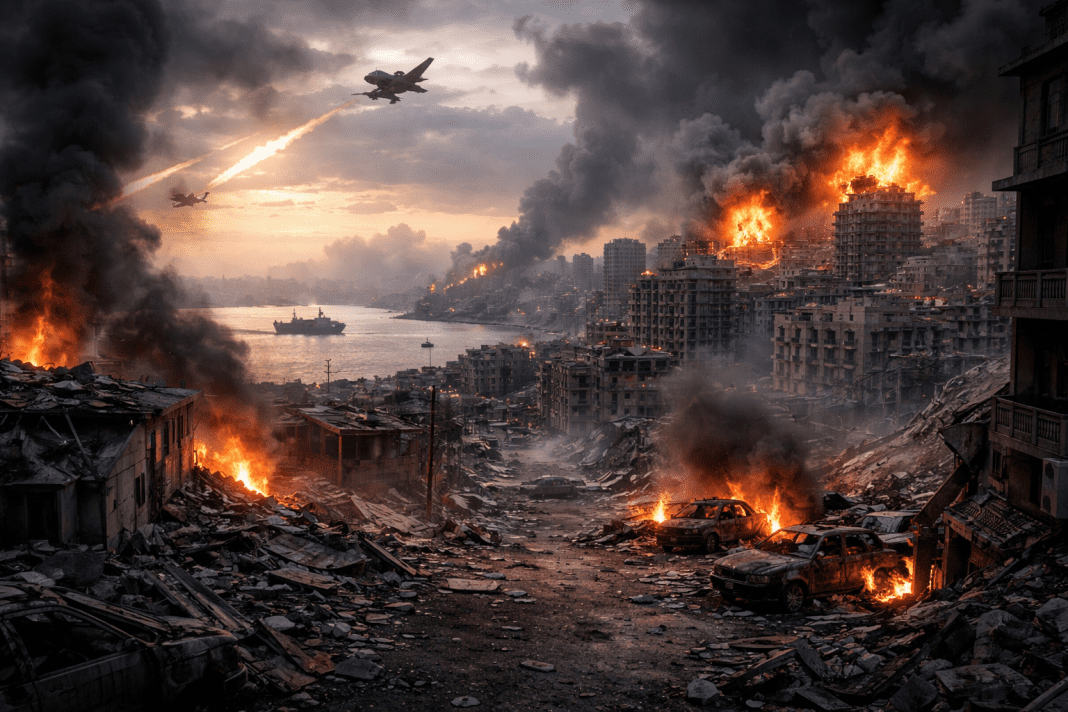


A fragile cease-fire between the United States and Iran is already under strain. Confusion over its scope, especially regarding Lebanon, has created uncertainty. Continued violence in Lebanon has further increased tensions. Unclear terms about Lebanon and other key regions have made the situation more complex.
Ceasefire Agreement Faces Immediate Strain
A fragile cease-fire between the United States and Iran came under pressure almost immediately after it was announced. Confusion quickly arose over what the agreement actually covered. While both sides agreed to pause direct conflict, there was no clear understanding of whether the deal included other regions linked to the wider tensions.
The main disagreement focused on Lebanon. One side said the cease-fire extended to the situation there, including ongoing fighting involving armed groups. The other side rejected this, insisting the agreement applied only to direct tensions between the two countries.
The ceasefire under threat: New waves of drones reported over Kuwait and the UAE
This difference in interpretation created uncertainty on the ground. Military actions continued in areas that some believed should have been protected under the cease-fire. Instead of easing tensions, the deal became a source of fresh disputes. At the same time, strong warnings signaled that failure to reach a final agreement could lead to a return of large-scale conflict.
Heavy Strikes in Lebanon Add to Tensions
The situation became more serious after large-scale airstrikes were carried out in Lebanon, marking a sharp escalation in the conflict. More than 100 targets were hit, including residential and commercial buildings in the capital. These strikes were among the most intense in recent weeks, leaving widespread destruction and raising concerns about regional stability.
Local officials reported heavy casualties following the attacks. Many people were killed, while hundreds more were injured. Entire neighborhoods were badly affected, with buildings either damaged or destroyed. The scale of the damage disrupted daily life and increased fears that the conflict could spread further.
The strikes also placed strong pressure on the fragile cease-fire agreement. If Lebanon was meant to be included, these attacks could be seen as violations. If it was not included, the fighting could continue without technically breaking the deal, creating confusion about whether the cease-fire was holding.
Civilians suffered the most during the violence. Many families were forced to leave their homes in search of safety, while others struggled to find shelter. The ongoing attacks worsened the humanitarian situation and added to the challenges faced by people already affected by the conflict.
Wider Regional Risks and Strategic Concerns
Concerns continued to grow beyond Lebanon as tensions spread to other parts of the region. Reports suggested increased activity near a key strait that plays a crucial role in global shipping. This waterway is especially important because it connects major international trade routes used for transporting oil and other goods across continents.
There were rising fears that if the conflict expanded further, these routes could be disrupted. Any military action or blockage in such a strategic area could directly affect oil shipments and global trade flows. This risk added another layer of uncertainty to an already tense situation, drawing attention from countries that depend heavily on these routes.
A ceasefire on Truth Social and sirens on the ground: The chaotic new phase of the Iran conflict
At the same time, several allied groups across the region were closely monitoring the developments. These groups, which receive support through funding, training, and equipment, have played a significant role in the broader conflict. Concerns grew that if some groups continued to face attacks while others were protected under the cease-fire, it could send a signal of weakness and strain regional alliances.
There were also reports of incidents within Iran, including drone sightings and defensive responses. Alongside this, diplomatic efforts continued quietly, with repeated calls for calm and clearer terms. However, ongoing confusion about the cease-fire made the situation unstable and difficult to manage.