




The ongoing war between Israel and Iran has drawn global attention to the role of air defence systems. As missile attacks and drone strikes increase, countries are closely watching how modern defence technology performs in real combat.
One of the most well-known systems in the world is the Iron Dome used by Israel. It is designed to intercept rockets and short-range missiles before they hit cities. However, during the recent intense exchanges with Iran, reports have shown that even advanced systems can face challenges when attacks come in large numbers at the same time.
Israel-Iran Conflict Highlights Limits of Air Defence Systems
Missile-heavy warfare has become a defining feature of modern conflicts. Instead of only relying on fighter jets or ground troops, countries are now launching waves of ballistic missiles, cruise missiles, and armed drones. When dozens of threats approach at once, even powerful air defence networks can become stretched.
India delays new S-400 missile order while Russia uses export variants in Ukraine conflict
This situation has sent a strong signal to many nations. The message is clear: no single defence system is enough on its own. Countries must build layered protection with multiple types of systems working together.
India has been closely observing these developments. The changing face of warfare, especially in West Asia, has prompted serious discussions in New Delhi. With tensions rising in different parts of the world, protecting airspace has become a top priority.
India Approves Five More Russian S-400 Air Defence Systems
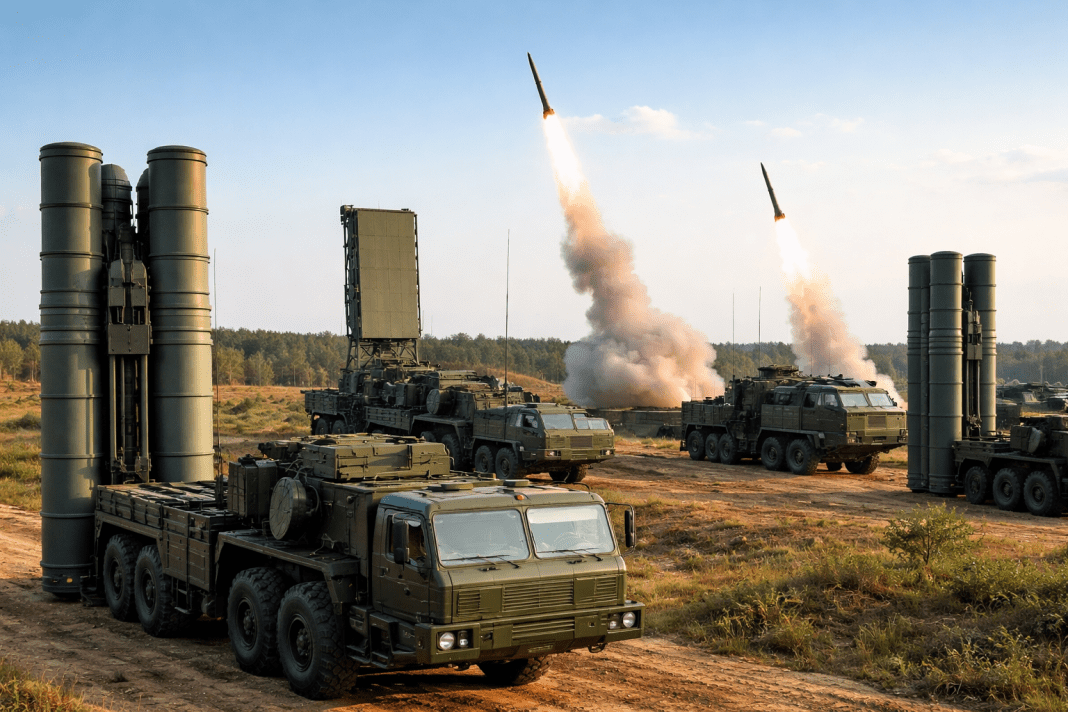
India has taken a major step to strengthen its air defence network. The Defence Procurement Board has approved a proposal from the Indian Air Force to buy five more units of the Russian S-400 air defence system.
The S-400 is considered one of the world’s most advanced long-range air defence platforms. It can track and intercept multiple aerial threats at the same time, including fighter jets, cruise missiles, ballistic missiles, and some types of drones.
India had already inducted five S-400 systems under an earlier agreement. With this new approval, the total number could rise to ten, significantly boosting the country’s long-range air defence coverage.
The proposal will now go to the Defence Acquisition Council for final clearance. Once approved, the procurement process will move forward officially.
Also known as Triumf, the S-400 can detect targets up to 600 kilometres away and intercept threats at distances of up to 400 kilometres, depending on the missile used. It is designed to handle multiple incoming targets during large-scale attacks.
The decision follows lessons from recent operations and reflects concerns over missile-heavy conflicts worldwide, highlighting India’s focus on strengthening readiness against modern aerial threats.
Building A Layered Security Grid Against Missiles And Drones
Modern warfare is changing rapidly. Battles are no longer limited to fighter jets and traditional air strikes. Drones, loitering munitions, and long-range missiles are now widely used. These weapons can move quickly, fly at low altitudes, and sometimes avoid radar systems, making them harder to stop.
To counter these threats, defence planners support a layered air defence approach. This strategy uses multiple systems that cover short, medium, and long ranges. If one system fails to intercept a target, another layer can step in to stop it.
Along with its long-range S-400 systems, India is working to strengthen short-range protection. Plans include acquiring systems like the Pantsir-S1, designed to defend against low-flying aircraft, drones, and precision-guided weapons. The Pantsir-S1 combines missiles and anti-aircraft guns on one platform, allowing it to respond quickly to nearby threats and protect critical sites such as airbases.
By integrating long-range and short-range systems, India aims to create a multi-level security grid. This move comes as missile and drone use increases globally, highlighting the need for stronger protection of cities, military bases, and key infrastructure.