


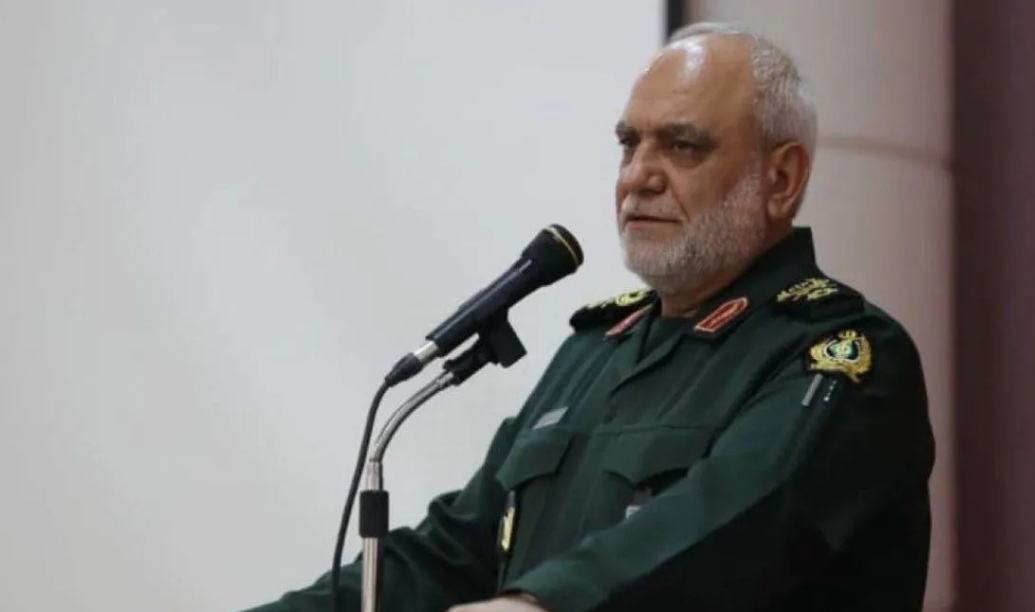


A major escalation has hit the Middle East after early morning air strikes on Tehran killed Iran’s top intelligence chief, Majid Khademi, according to the Islamic Revolutionary Guard Corps (IRGC). The attack has intensified the ongoing Iran-Israel conflict, which has already seen repeated targeted strikes on senior officials. Iranian authorities blamed “American-Zionist forces” for the operation, while tensions continue to rise across the region.
High-Profile Killing Amid Intensifying Strikes Involving Majid Khademi
In a major escalation of tensions, early morning air strikes on Tehran on April 6, 2026 killed Majid Khademi, the intelligence chief of the Islamic Revolutionary Guard Corps (IRGC), according to the IRGC itself. The IRGC described the attack as a “criminal terrorist operation” carried out by “American-Zionist forces,” a term it uses to refer to alleged coordination between the United States and Israel.
Majid Khademi played a key role in Iran’s intelligence network, handling counter-intelligence and national security planning. His death represents a major setback for Iran’s internal security structure. Reports suggest that the strikes formed part of a broader campaign that targeted senior Iranian officials in an effort to weaken command and response capabilities.
Leaked audio claims Mojtaba Khamenei escaped airstrike that killed Ali Khamenei by minutes
Iranian state media, including the Tasnim News Agency, reported that the strikes also hit civilian areas, raising concerns about public safety in densely populated parts of Tehran. Israeli leadership, including Prime Minister Benjamin Netanyahu, stated that these operations aim to reduce perceived security threats from Iran.
Civilian Impact and Urban Disruption
The strikes on Tehran caused widespread disruption across the city. According to Islamic Republic of Iran Broadcasting, some missiles hit areas near university facilities, damaging key infrastructure and leading to gas outages in several districts.
Residents reported waking up to loud explosions in the early hours. In many neighbourhoods, the strikes cut off essential services such as heating and cooking gas, creating panic among families, especially in densely populated residential areas.
Iranian officials accused the attackers of deliberately targeting civilian spaces to spread fear and weaken public morale, saying the aim was to “break the resolve” of the population. They claimed the strikes hit both residential zones and intellectual centres.
Larijani’s death could shatter Iran’s strategic ties with China and Russia
Israeli authorities, however, defended the operations, saying their forces targeted locations linked to military activity that posed security threats. Both sides continue to present conflicting accounts of what they hit and why.
The situation highlights the risks civilians face in modern urban warfare, where separating military targets from everyday life becomes difficult. Authorities placed hospitals and emergency services on high alert, while officials reported significant disruption, even as casualty figures remain unclear.
Pattern of Targeted Killings and Rising Conflict
The death of Majid Khademi is not an isolated incident, but part of a continuing pattern of targeted killings in the ongoing conflict between Iran and Israel, which intensified in mid-2025. These operations have increasingly focused on senior officials, aiming to weaken leadership structures and limit the ability to coordinate military responses effectively.
Majid Khademi had only recently taken over as intelligence chief after Israeli airstrikes killed his predecessor, Mohammad Kazemi, in a similar attack last year. Analysts often describe this repeated targeting as “decapitation strikes,” a strategy that removes key decision-makers and disrupts command systems. Such strikes create uncertainty within leadership ranks and affect operational planning.
Senior IRGC spokesperson Ali Mohammad Naini reportedly killed in airstrike amid rising tensions
Over the past year, attackers have reportedly killed several high-ranking Iranian officials, including military commanders and government figures, in cities such as Isfahan and Tehran. Similar operations have also taken place beyond Iran’s borders, including in Beirut, showing how the conflict has spread across the region.
These repeated strikes have driven rising tensions, as each attack often triggers threats of retaliation and fuels a cycle of escalation. The latest developments emerged while mediators reportedly discussed a ceasefire proposal facilitated by Pakistan. One key aim was reopening the Strait of Hormuz, though tensions remain high.