


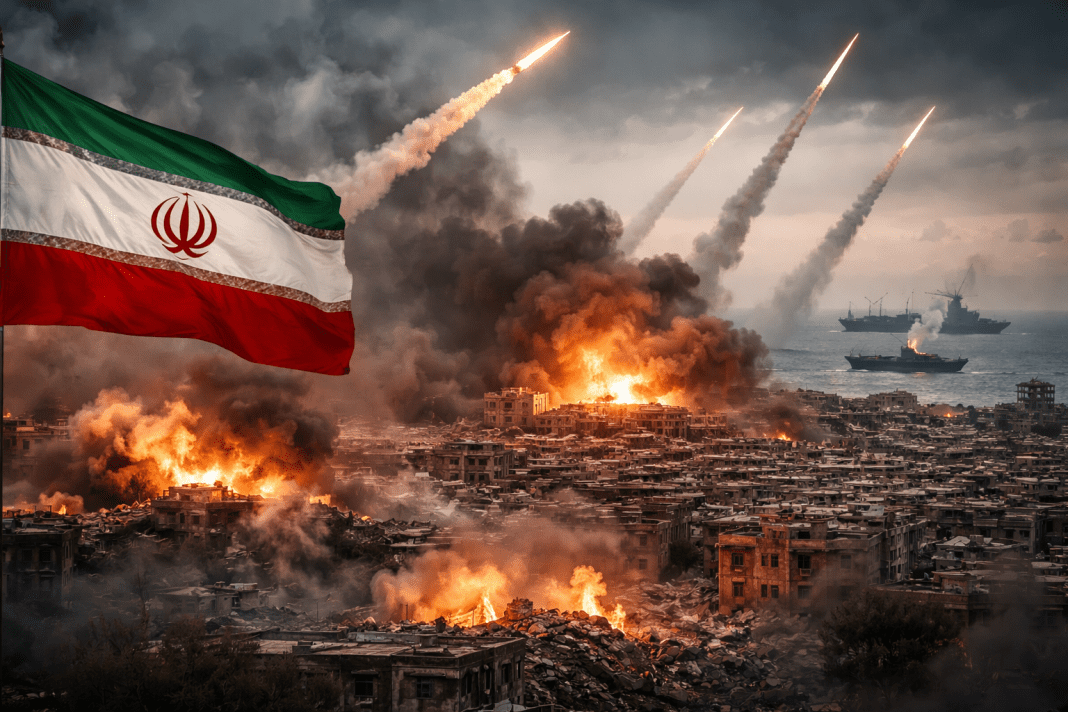


The war involving Iran, the United States, and Israel has entered a tense phase as fighting continues across the region. Iranian President Masoud Pezeshkian said Tehran is ready to end the conflict only if the international community meets three conditions. In a post on X, he demanded recognition of Iran’s rights, payment for war damage, and firm international guarantees to prevent future attacks. He presented these conditions as Tehran’s main requirements for ending the conflict.
Iran Announces Three Conditions to End the War
President Masoud Pezeshkian said Iran believes the war could end if the international community meets three major demands. The first of these conditions is recognition of what Tehran calls its “legitimate rights,” a phrase Iranian leaders often use to describe the country’s right to pursue peaceful nuclear technology and maintain independent security policies.
The second demand is financial compensation for damage caused during the conflict. Iranian officials say the fighting has damaged many civilian areas and infrastructure facilities since it began. The third demand is firm international guarantees to ensure Iran will not face similar military attacks in the future. According to Tehran, these conditions are necessary to ensure long-term stability and security.
US and Israel signal diverging war aims in Iran conflict as strikes expand beyond nuclear targets
In a message on X, Pezeshkian said he discussed the conflict with leaders from Russia and Pakistan. He said Iran prefers a political solution rather than continued military action, though officials have not yet explained how reparations or international guarantees would work.
What Iran Means by “Legitimate Rights”
One of the most debated parts of Iran’s statement is its demand for recognition of what it calls “legitimate rights.” Iranian leaders say the term mainly refers to the country’s right to develop a peaceful nuclear program. Officials in Tehran argue that the international community should allow nuclear technology for civilian uses such as energy production, medical research, and scientific development under international agreements.
However, Western countries including the United States and Israel say Iran could eventually use its nuclear program to develop nuclear weapons. Iran denies these claims and says its nuclear activities are peaceful. Iranian officials also say “legitimate rights” include maintaining independent security and defense policies without outside interference, an issue that has fueled diplomatic tensions for more than two decades.
Iran detains dozens of alleged spies linked to US and Israel amid ongoing regional tensions
War Enters Twelfth Day as Strikes Continue
The conflict itself has intensified in recent days as both sides continue military operations.
Iranian officials say the fighting has affected thousands of civilian locations since it began on February 28. They add that attacks have targeted nearly 10,000 civilian sites and killed more than 1,300 civilians. Overnight strikes reportedly hit key locations, including Mehrabad International Airport in Tehran, while Iran has launched retaliatory missile attacks on Israeli targets and American military positions across the Gulf region.
The conflict has also affected neighboring countries, with missile interceptions reported across several Gulf states as defense systems attempt to stop incoming projectiles. Commercial ships near the Strait of Hormuz have faced security threats during the fighting. The vital shipping route plays a key role in global oil and gas transport, raising concerns among governments and businesses worldwide.
Growing Political Pressure as US Responds to Iran’s War Conditions
As the conflict continues, political pressure is rising inside the United States. Debates have intensified in Washington, D.C. about the strategy behind the military operations and the possible long-term consequences of the war. Lawmakers and policy analysts are discussing how the conflict is being handled and what impact it may have on regional stability.
Donald Trump gives mixed signals on Iran war timeline as markets watch rising oil prices
Meanwhile, US President Donald Trump said American forces may have already struck most of their intended targets inside Iran. Trump claimed there was “nothing left” for US forces to hit and suggested the conflict could end whenever Washington decides to stop its military campaign.
Despite these remarks, the war remains active. Governments, military forces, and international observers continue to monitor developments across the region as both sides launch strikes and retaliatory attacks in one of the most tense geopolitical crises in recent years.