


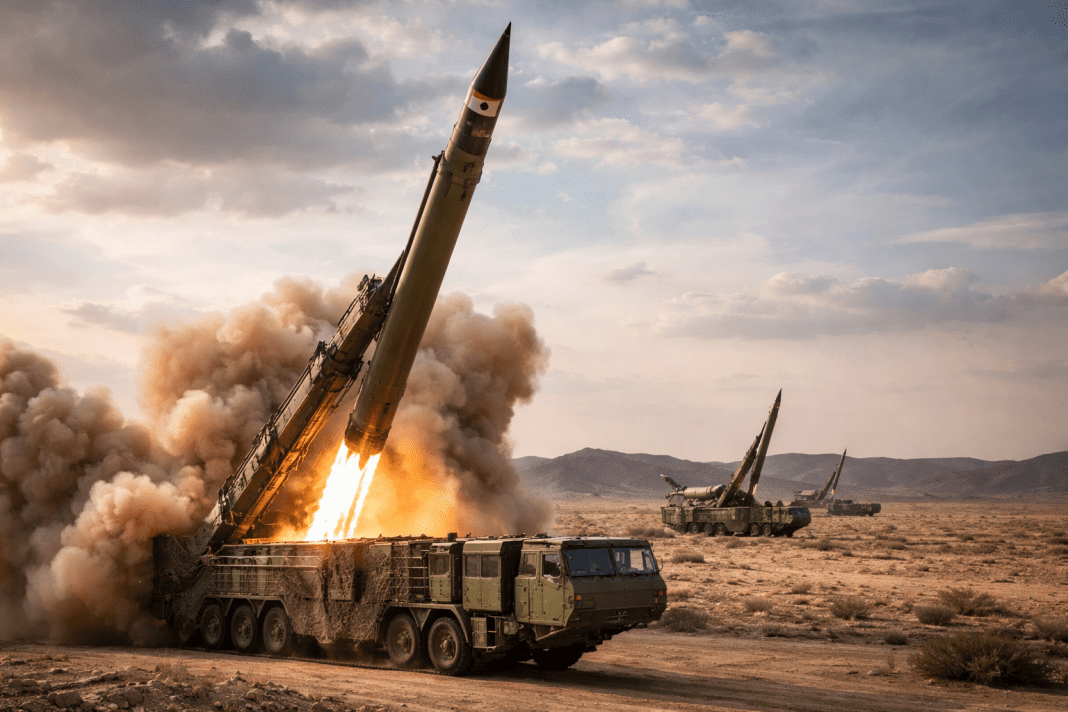


Iran has significantly stepped up efforts to upgrade its ballistic missile arsenal, with reports pointing to increased cooperation with Russia. The moves come amid fears of a potential strike by foreign powers, including the United States or Israel. Experts say these missile upgrades aim to make Iran’s missiles faster, more powerful, and harder to intercept.
Iran Advances Missile Technology Rapidly
Among the missiles now posing a threat to Israel is the Shahab series, including Shahab-3 and the Kheibar Shekan. The Kheibar Shekan is based on North Korean technology and can travel around 2,000 kilometers. This range puts all of Israel within reach. Reports suggest its warhead carries between 700 and 1,000 kilograms of explosives, making it a formidable weapon.
Iran has also been working on other missile systems as part of its ongoing missile upgrades. The Fattah 1 and Fattah 2 missiles are described as having near-hypersonic capabilities. They can maneuver sharply, even outside the atmosphere, and carry warheads weighing around 500 kilograms. The Sejjil missile series uses solid fuel and is designed for quick launches from bunkers. Its warhead ranges from 500 to 1,000 kilograms, giving it significant destructive power.
U.S.–Iran talks resume in Oman as missile dispute threatens fragile nuclear diplomacy
One of the most powerful in Iran’s inventory is the Khorramshahr missile. Iranian sources report it carries a very heavy warhead, averaging around 1,500 kilograms, and is among the most accurate in the country’s arsenal. Social media images have even shown missiles with inscriptions such as “Death to Israel,” highlighting the message Tehran intends to send.
Steps to Modernize and Harden the Arsenal
Since Operation Rising Lion, Iran has focused on restoring and modernizing its missile capabilities. A major part of these missile upgrades involves switching from liquid-fueled missiles to solid-fueled ones. Solid fuel is faster to launch, reducing preparation time from hours to just minutes. It also leaves a smaller intelligence footprint, making it harder for other countries to detect missile activity in advance.
Iran is also ramping up the production of key missiles such as Kheibar and Fattah as part of ongoing missile upgrades. Technological improvements are being applied to increase accuracy, while satellite-based intelligence is being integrated to improve targeting. Reports suggest some missile systems are being moved underground, including launch sites, to shield them from detection or air strikes.
Mobile launchers are another focus of Iran’s missile upgrades. These are vehicles that can carry and launch missiles from different locations, making them much harder for intelligence agencies to locate and target in real time. The upgrades aim to ensure that even after potential damage from strikes, Iran can still launch missiles effectively.
Russian cooperation has reportedly played a key role in these missile upgrades. Tehran is said to be working with Moscow to integrate advanced radar systems, expand production lines, and enhance missile survivability. The partnership could make Iran’s missiles harder to intercept, complicating air defense efforts by other countries.
Range, Firepower, and Accuracy of the Missile Upgrades
Iran has been upgrading its missile arsenal with a focus on three key areas: range, firepower, and accuracy. Missiles like the Shahab series and Kheibar Shekan can reach up to 2,000 kilometers, putting all of Israel within reach. Warheads vary from 500 to 1,500 kilograms, allowing for different levels of damage depending on the missile type.
Accuracy has also improved through missile upgrades, with the Khorramshahr missile considered one of the most precise in Iran’s arsenal. The Fattah series features advanced maneuvering technology, making interception more difficult and increasing the chances of a successful strike.
Iranian drone technology reshapes the air war as Ukraine’s skies face constant pressure
Solid-fueled missiles such as the Sejjil allow for quick launches with minimal warning, while mobile launchers can move to multiple sites, complicating efforts to locate and target them. Iran is also developing underground bunkers and protected launch sites as part of these missile upgrades to shield its missiles from detection and attack.
These missile upgrades, supported by Russian cooperation, enhance Iran’s ability to maintain a credible deterrent and respond rapidly to potential threats. The combination of long-range missiles, heavy warheads, improved accuracy, mobile launchers, underground sites, and advanced radars shows a comprehensive missile upgrade program. Iran’s Shahab, Kheibar Shekan, Fattah, Sejjil, and Khorramshahr missiles together form a versatile and powerful arsenal ready for rapid deployment.