


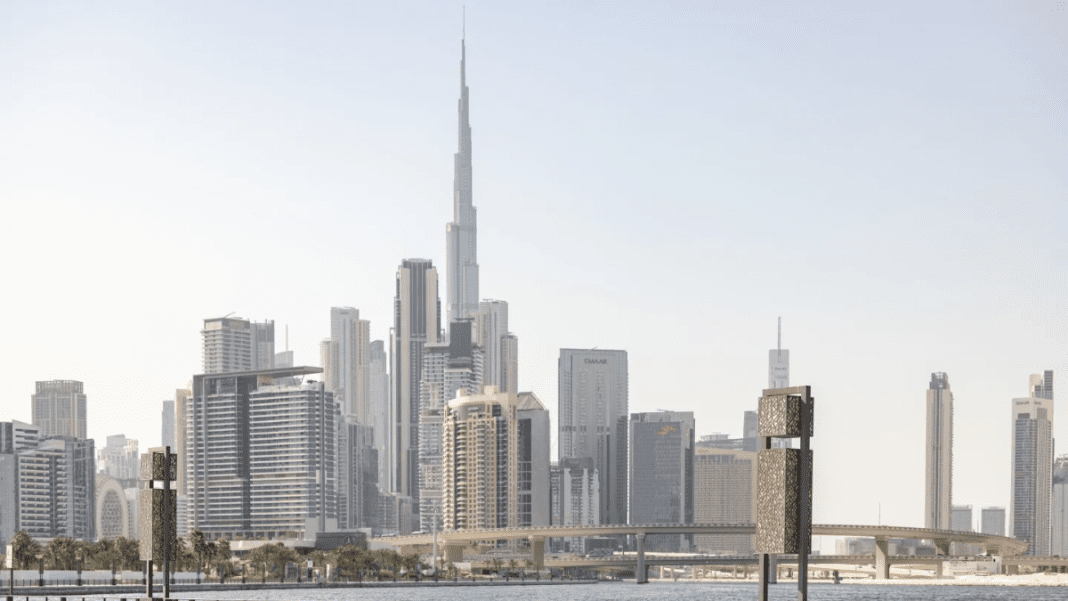


The Gulf region has faced a wave of missile and drone attacks, causing panic and disrupting daily life. Iran launched strikes across cities like Dubai, Doha, and Manama, creating explosions, smoke, and shaking buildings. Debris fell near landmarks, including areas around the Burj Khalifa, though officials say the tower itself was not hit. Airports closed temporarily, flights were canceled, and residents rushed to shelter.
Shocking Missile Strikes Shake Gulf Cities
Social media has been flooded with videos showing explosions near the Dubai skyline, sparking fears that the Burj Khalifa, the world’s tallest building, was directly hit. Fact-checkers and official sources have confirmed that the tower itself remains safe. Most footage appears to show debris from intercepted missiles or AI-generated clips rather than a real strike. Still, the blasts near major landmarks have left residents and tourists deeply alarmed.
The missile and drone attacks have caused injuries and fatalities as debris fell in populated areas. Daily life across the Gulf has been disrupted, with schools and offices closing and streets largely empty as people stay indoors for safety. The explosions have created chaos, with sirens blaring and smoke rising across the cities.
Airports in Dubai, Abu Dhabi, and Doha were temporarily shut down, leaving travelers stranded and flights delayed or canceled. Tourism and business have been heavily affected, with hotels and attractions evacuating visitors while emergency services work tirelessly to respond to incidents caused by falling debris..
Missile Technology and Regional Tensions
Iran’s missile capabilities have drawn global attention during the recent surge in attacks. Experts say many strikes are launched from underground facilities, known as “missile cities,” which let projectiles be fired without the usual pads or equipment. This makes the attacks hard to detect and highly unpredictable. The current wave follows days of regional military escalation, including Kurdish ground offensives into Iran and increased monitoring by the U.S. and allied forces.
The attacks have also rattled global energy markets. Gulf countries that supply gas and oil face instability, with Qatar declaring a state of emergency and halting production. Russia has warned it may cut gas exports to Europe, raising fears of a wider energy crisis.
B-1B Lancer bombers strike deep inside Iran in long-range missile operation
Even though many missiles have been intercepted, debris from these interceptions still poses risks in urban areas. Residents and authorities must stay vigilant as explosions near cities continue to threaten safety and infrastructure.
The scale and precision of Iran’s strikes show a willingness to target high-value locations in multiple countries. While the Burj Khalifa remains unharmed, the blasts near iconic landmarks highlight the seriousness of the ongoing conflict.
Daily Life, Civilian Safety, and Effects Near the Burj Khalifa
For residents, the missile strikes have turned daily life into a constant challenge. As a result, many people in affected cities are staying indoors for long periods, avoiding streets where debris from intercepted missiles has fallen. Meanwhile, schools, offices, and entertainment centers remain closed as authorities assess the situation. Consequently, the fear and uncertainty have shaken public confidence, with many worried about the possibility of further attacks.
At the same time, emergency services are working around the clock to respond to fires, debris incidents, and injuries caused by falling fragments. Additionally, the temporary closure of airports has disrupted international travel, and hotels and commercial areas continue to evacuate visitors. Furthermore, businesses face challenges from disrupted logistics, decreased tourism, and heightened security alerts, forcing some to adjust operations.
Middle East on edge as UAE draws red line and US warships move closer to Iran
Across the Gulf, tension is high as authorities try to restore calm. Although official reports deny that key landmarks like the Burj Khalifa were directly hit, the damage caused by intercepted missiles highlights the region’s volatility.
Meanwhile, residents continue to monitor news and alerts closely, hoping for a pause in the attacks. At the same time, governments are working to strengthen defenses as the crisis serves as a reminder of how modern conflicts can reach urban centers, affecting civilian life, travel, and economic stability at once.