


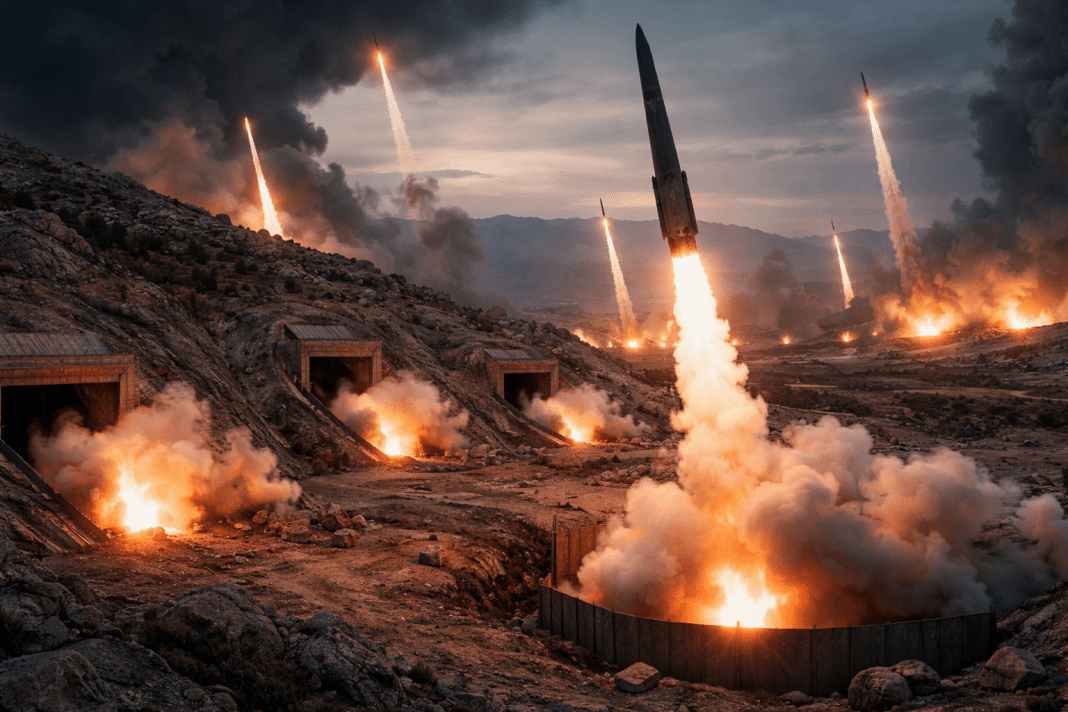


Tehran has escalated military operations by deploying ballistic missiles from hidden underground facilities. These so-called “missile cities” are designed to launch projectiles without being detected by traditional surveillance. This advanced method allows Iran to prepare and fire ballistic missiles without early warning, making it extremely difficult for opposing forces to respond in time.
U.S. Faces Domestic Limits Amid Rising Ballistic Missiles Strikes
The recent surge in ballistic missile attacks on Israel has intensified regional tension. Some of the ballistic missiles reportedly targeted highly sensitive sites, including the Dimona nuclear reactor, raising fears of potential escalation. Authorities in Israel are scrambling to protect both military and civilian areas as they monitor these new threats.
At the same time, U.S. military operations face internal obstacles. Congress has voted to block the President from ordering additional strikes, limiting the options available to commanders in the field. This move comes even as the U.S. has already lost nearly $2 billion in equipment during ongoing operations, complicating military planning.
The combination of external threats and domestic restrictions has created a delicate situation for the United States. While tensions rise in the Middle East, officials must balance limited resources and political constraints, making it harder to respond quickly to evolving threats. The growing threat of ballistic missiles adds another layer of pressure on international and regional security efforts.
Regional Escalation and International Tensions
The conflict is spreading beyond Iran and Israel. Iraqi Kurdish forces have reportedly launched a ground offensive into Iranian territory. This adds a new dimension to the fighting, as multiple countries and groups become involved, increasing the risk of a wider confrontation.
Meanwhile, the global energy market is under severe stress. Qatar declared a state of emergency and halted all gas production, causing worldwide concern about fuel supplies. Energy prices are highly sensitive to geopolitical tensions, and this sudden stop in production has sent shockwaves through markets around the world.
International support for military operations is showing cracks. Spain has officially denied claims that it is cooperating with the White House on military initiatives. This denial signals fractures in the coalition supporting actions in the region, raising questions about coordination among allied nations.
Russia is also playing a significant role in the crisis. Reports indicate that Russian forces are preparing to seize Iranian nuclear sites after losing communication with Tehran’s nuclear leadership. At the same time, Russia has threatened to halt gas supplies to Europe, adding another layer of tension to the energy crisis and geopolitical uncertainty.
Domestic and Global Repercussions
Trust in U.S. institutions is being tested. Reports about pre-war oil investments and the deletion of tens of thousands of pages of files related to high-profile investigations have fueled public concern. These issues add to the perception that domestic priorities may be influencing foreign policy decisions.
Iran appears to be preparing for a long-term conflict. The use of concealed missile cities allows the country to maintain a sustained ballistic missile capability while avoiding early detection. This approach significantly raises the stakes, as opponents may have little time to respond to ballistic missile launches, increasing the risk of sudden escalation.
The combination of ballistic missiles, ongoing regional offensives, and disruptions in global energy production has created a highly unstable situation. Nations around the world are monitoring events closely, and military planners are on high alert as the region faces multiple simultaneous threats.
Iran launches missile strikes across Gulf cities as authorities deny Burj Khalifa was hit
Despite growing tension, there is little clarity on coordination among international allies. Disputes over military cooperation, energy policy, and strategic priorities have emerged, highlighting the complex web of interests involved in the conflict.
The situation continues to evolve rapidly. Iran’s advanced ballistic missile technology, the expansion of military operations by regional actors, and disruptions in global energy markets make the current crisis particularly unpredictable. Authorities in affected countries remain on high alert, working to protect both military assets and civilian populations from potential attacks.