




Iran charters flight from Kochi to repatriate IRIS Lavan crew as bodies of IRIS Dena sailors return home
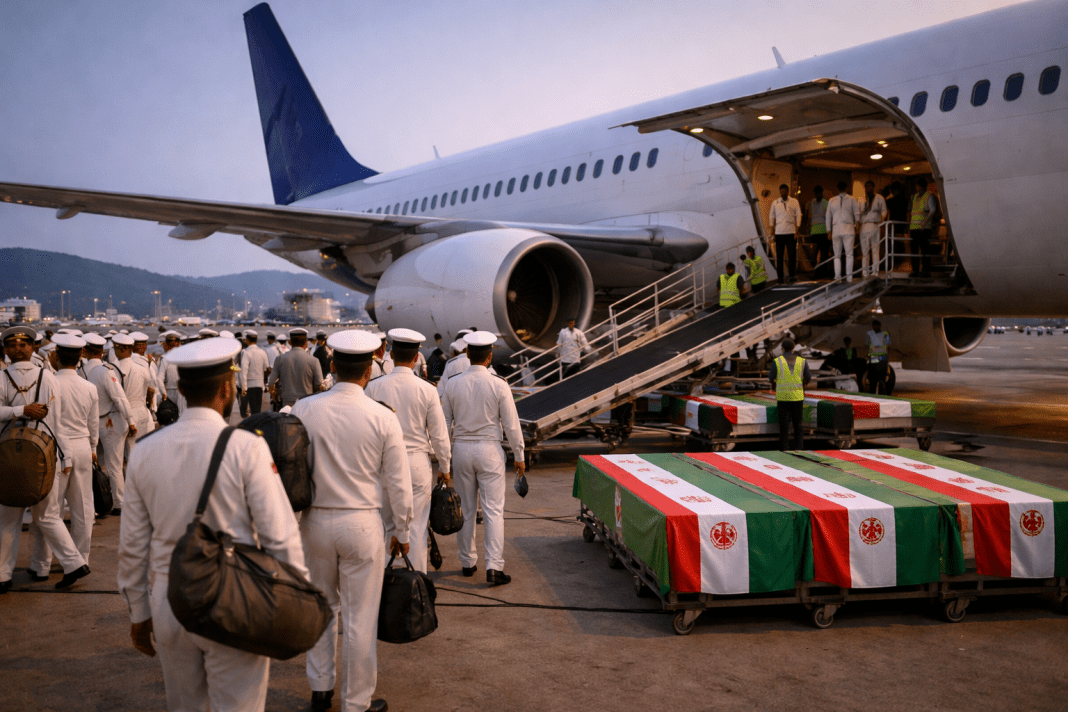
In a development drawing attention across the Indian Ocean region, Iran has arranged a special charter flight from Kochiin Kerala, India to repatriate crew members of the Iranian naval warship IRIS Lavan, while also transporting the bodies of sailors killed aboard another Iranian warship, IRIS Dena. The aircraft departed late Friday carrying non-essential members of the Lavan’s crew as well as the remains of Iranian sailors recovered after the sinking of IRIS Dena near Sri Lanka, according to officials familiar with the situation. The development comes amid heightened regional tensions involving the United States and Iran following reports that IRIS Dena was torpedoed by a U.S. submarine in international waters earlier this month.
According to people familiar with the repatriation effort, the chartered aircraft—believed to have originated from Turkey—first traveled to Colombo in Sri Lanka to collect the bodies of sailors who died when IRIS Dena sank on March 4. The plane then continued to Kochi before departing again for Armenia, from where the crew members and remains are expected to be transported overland back into Iran.
Repatriation of crew and casualties
Iranian authorities are reportedly repatriating non-essential personnel from the IRIS Lavan, which docked at Kochi earlier this month. The warship has a crew complement of about 183 sailors, though a smaller group of essential personnel will remain aboard to maintain and secure the vessel while it remains at port.
The repatriation operation also includes the remains of dozens of sailors from IRIS Dena, which sank off Sri Lanka’s southern coast. Sri Lankan officials said the bodies had been recovered following extensive search and rescue efforts in the region.
According to reports from local media in Sri Lanka, around 45 bodies were transported from Galle National Hospital to Mattala Rajapaksa International Airport before being airlifted out by the chartered aircraft arranged by Iran.
Sri Lankan authorities said that a total of 84 Iranian sailors were recovered after the sinking of IRIS Dena. Additionally, 32 crew members were rescued alive and are currently being cared for at a Sri Lankan naval facility.
Warships in regional waters
The events surrounding IRIS Lavan and IRIS Dena are part of a larger movement of Iranian naval vessels in the Indian Ocean region earlier this month. According to Indian officials, Iran requested permission for three warships operating in nearby waters to dock at Indian ports.
The vessels included IRIS Dena, IRIS Lavan, and IRIS Booshehr.
On March 1, the Indian government granted permission for the ships to dock on humanitarian grounds. However, only IRIS Lavan ultimately arrived at Kochi on March 4. The warship’s crew members were accommodated at naval facilities operated by the Indian Navy.
IRIS Booshehr instead docked at Colombo, where its 204-member crew was moved to a Sri Lankan naval facility for temporary accommodation.
India calls docking decision humanitarian
India’s External Affairs Minister Subrahmanyam Jaishankar later said the decision to allow IRIS Lavan to dock in Kochi was taken on humanitarian grounds.
Speaking about the matter, Jaishankar described the move as “the right thing to do,” emphasizing that the government’s priority was ensuring the safety and welfare of sailors caught in the unfolding crisis.
Officials noted that accommodating foreign naval crews during emergencies is consistent with international maritime norms and humanitarian practices.
Ongoing discussions over remaining sailors
Meanwhile, Sri Lankan authorities and officials from the Embassy of Iran in Colombo are continuing discussions regarding the remaining Iranian sailors currently under Sri Lankan care.
The Government of Sri Lanka has announced that the rescued sailors will receive one-month free visas and access to necessary facilities while arrangements are made for their eventual repatriation.
The situation remains fluid as diplomatic and logistical coordination continues between India, Sri Lanka, and Iran.
Regional implications
The sinking of IRIS Dena and the subsequent movement of Iranian warships and crews across ports in South Asia has drawn international attention, particularly because of the strategic importance of the waters surrounding Sri Lanka and India.
The Indian Ocean region is a vital maritime corridor for global trade and energy shipments, and naval incidents in these waters often attract close monitoring from regional and global powers.
For now, the charter flight departing Kochi marks a significant step in Iran’s effort to bring home its sailors and those lost in the naval incident, while authorities in India and Sri Lanka continue to manage the humanitarian and diplomatic aspects of the unfolding situation.