


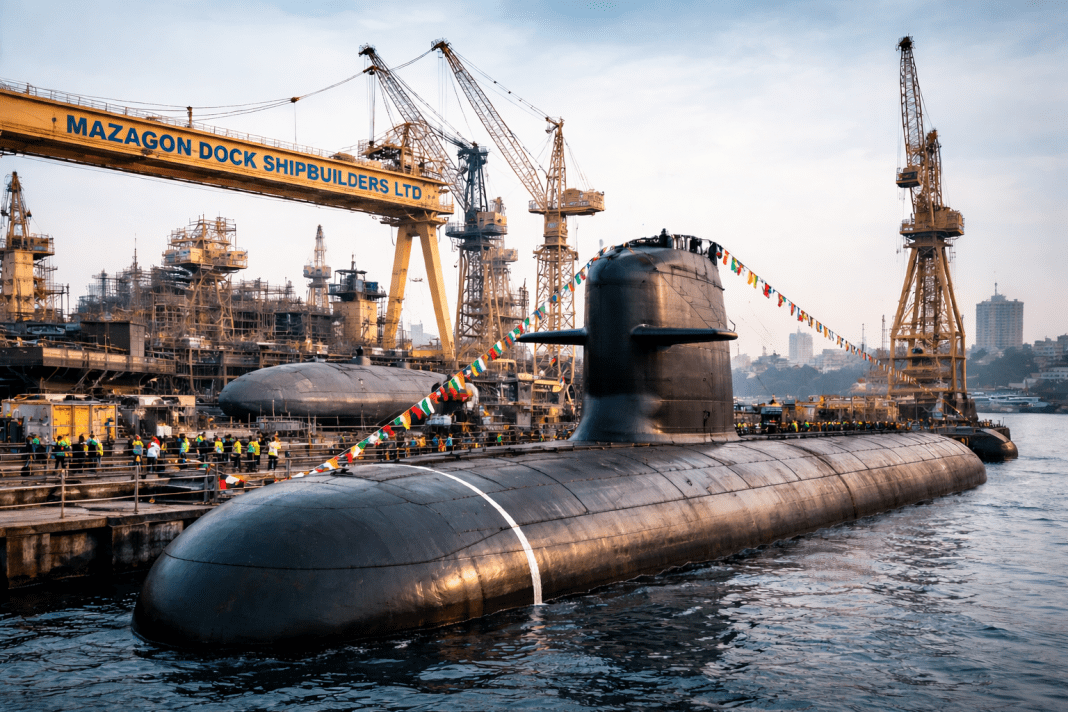


India is all set to finalize a landmark submarine deal with Germany worth around $10 billion to build next-generation conventional submarines. The agreement comes at a crucial time when India’s naval capabilities are in urgent need of modernization. Beyond strengthening defense, the deal will create jobs, boost local industry, and bring advanced technology to India, marking a significant step in the country’s defense growth.
India and Germany finalized the Intergovernmental Agreement (IGA), clearing the way for officials to sign the main contract. German officials plan to visit India by the end of March to formalize the agreement. Once signed, the project will begin the construction of state-of-the-art submarines that will become an essential part of India’s naval fleet.
Key Details of the Submarine Deal
Under this massive agreement, Mazagon Dockyards Limited (MDL), India’s leading shipbuilding company, will collaborate with Germany’s Thyssenkrupp Marine Systems (TKMS) to build the new submarines. MDL’s bid, which received approval from a technical oversight committee in January 2023, will now move forward into full-scale production.
The IGA provides several important assurances for the project. These include technology transfer, personnel training, and streamlined administrative clearances to ensure smooth execution. By partnering with TKMS, India will gain access to cutting-edge submarine technology while simultaneously creating skilled employment opportunities across multiple sectors in the country.
The $10 billion project aims not only to construct submarines but also to strengthen India’s industrial ecosystem. Using German technology and expertise, India will become a hub for submarine construction, maintenance, and potentially regional exports. The collaboration also highlights India’s growing ability to undertake complex defense projects domestically, reducing dependency on foreign suppliers over time.
Advanced Technology to Boost Naval Strength
The new submarines will feature Air-Independent Propulsion (AIP) systems, a technology that allows submarines to stay underwater for up to two weeks without surfacing. This capability greatly improves stealth and combat effectiveness, making it harder for adversaries to detect the vessels.
DRDO tests full-scale scramjet in Hyderabad, backing India’s push toward hypersonic cruise missiles
These submarines represent a significant upgrade over India’s current fleet. The aging Kilo-class submarines are being retired, while only six Kalvari-class submarines have been added over the past twenty years. By introducing advanced AIP submarines, the deal addresses a long-standing shortage of underwater platforms in the Indian Navy, ensuring the country can maintain a strong and modern submarine force.
In addition to improving combat readiness, the project positions India as a strategic partner for Germany in the defense sector. By producing these submarines locally with German support, India could also play a role in exporting advanced naval technology to other countries in the region, further expanding its influence and industrial capability.
Strategic Importance of the Submarine Acquisition
The deal comes at a critical time for India’s Navy, which is facing an urgent need to replace older vessels. With the retirement of Kilo-class submarines, India’s underwater fleet had been shrinking, creating potential gaps in national security. The new submarines will help fill these gaps with improved stealth, endurance, and firepower.
The partnership with Germany ensures not just the transfer of technology but also long-term support in maintenance and personnel training. This will enable India to operate and sustain these sophisticated submarines efficiently for years to come.
India unveils LRAShM hypersonic missile at Republic Day parade to boost naval deterrence
Mazagon Dockyards’ collaboration with TKMS is also expected to generate significant employment opportunities in shipbuilding, engineering, technology, and logistics. The project strengthens India’s industrial capabilities while enhancing defense readiness, reflecting the country’s commitment to modernizing its naval forces and achieving self-reliance in defense manufacturing.
This $10 billion submarine agreement marks a milestone in India’s defense modernization journey. With advanced AIP submarines, strategic collaboration with Germany, and a boost to domestic industry, the deal is set to transform India’s underwater warfare capabilities while also supporting broader economic and industrial growth.