


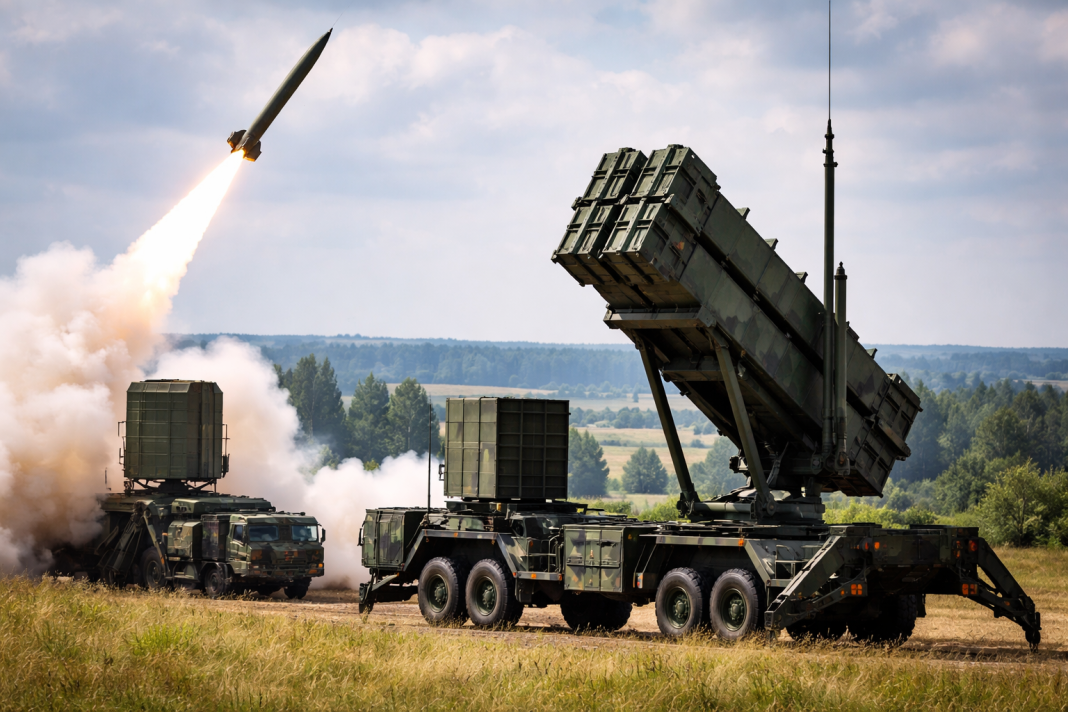


Germany has confirmed that it no longer has air defense missiles available in its own military stockpiles to send directly to Ukraine. The statement highlights how deeply European reserves have been stretched after years of support for Ukraine’s air defense during the ongoing war.
Urgent Alert: Germany Says Its Air Defense Missiles Are Exhausted
Germany has confirmed that its national supply of air defense missiles is fully depleted, meaning it can no longer transfer weapons directly from its own warehouses to Ukraine. The statement comes as Ukraine warns it is running dangerously low on interceptor missiles used to stop incoming rockets and drones.
Air defense missiles are highly advanced systems. They are designed to detect, track, and destroy airborne threats before they reach cities, power plants, or other critical infrastructure. These systems play a key role in protecting civilians and limiting large-scale damage during sustained attacks.
EU weighs single hypersonic missile program as France and Germany vie for dominance
Germany has already delivered a large amount of air defense equipment over time. However, officials stressed that there are now no missiles left in national reserves that can be sent immediately. Even missiles used in advanced air defense systems are unavailable for direct transfer.
The situation highlights how years of intense conflict have strained European military stockpiles, which were originally designed for short-term emergencies rather than prolonged warfare.
Missiles Now Sent Directly From Factories to Ukraine
Although Germany’s military warehouses are empty, missile support for Ukraine has not stopped. Instead of drawing from national reserves, newly manufactured air defense missiles are now being sent directly from production lines to Ukraine.
This system is funded by several European partners, with Germany covering a large share of the cost. Under this arrangement, missiles are produced specifically for Ukraine and do not enter German military storage. Once completed, they are delivered straight to Ukrainian forces.
Officials said this approach makes continued support possible even when stockpiles are exhausted. However, it comes with challenges. Producing advanced interceptor missiles takes time because they require specialized materials, careful engineering, and strict testing. As a result, deliveries can be slower than transferring missiles already in storage.
Europe races against time to close deep-strike missile gap as Russia rearms
Germany has stressed that it has already provided everything it could without weakening its own national defense. All missiles that could be spared from existing reserves were previously supplied.
This factory-to-frontline method is increasingly common across Europe, as more countries rely on industrial production rather than stored weapons. While it keeps assistance flowing, it also shows how dependent Europe has become on defense manufacturing capacity as Ukraine continues to face intense missile and drone attacks on its cities and critical infrastructure.
Europe Urged to Increase Air Defense Support
Germany has urged other European countries to step up their support for Ukraine’s air defense, stressing that the burden should not rest on just one or two nations. Officials warned that missile stockpiles across Europe are shrinking, making shared responsibility more important than ever.
Germany continues to fund a large share of the military assistance Ukraine receives, particularly for air defense systems. Officials said helping Ukraine protect its airspace is not only about supporting Kyiv, but also about safeguarding Europe’s wider security. Unchecked missile and drone attacks could destabilize the region and pose broader risks beyond Ukraine.
Ukraine war transforms Europe’s security as NATO and Russia slide into prolonged power confrontation
European partners are being encouraged to increase funding, supply more equipment, and boost defense production. This includes speeding up missile manufacturing, expanding factory capacity, and improving coordination so deliveries reach Ukraine without delay.
The situation also exposes a wider issue for Europe. Many countries are now reassessing how many air defense missiles they keep in reserve and how quickly they can replace them. Years of limited defense spending left stocks smaller than current security challenges demand.
For Ukraine, interceptor shortages remain critical. During heavy attacks, missile supplies are used rapidly, leaving cities increasingly exposed when air defenses run low.