


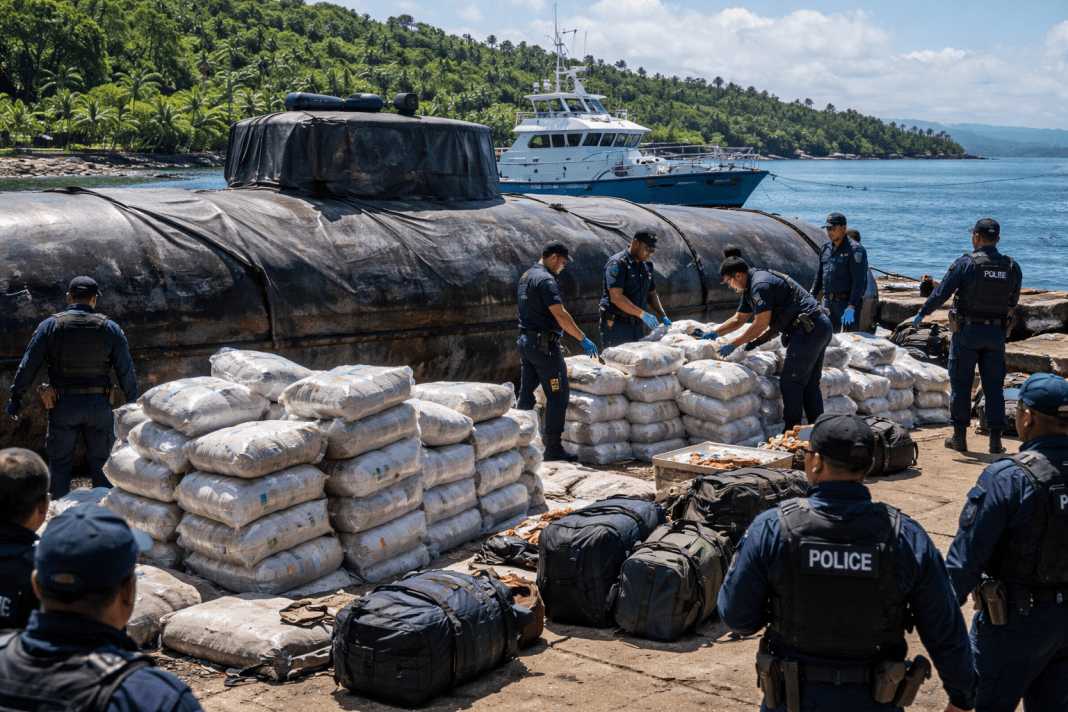


In a dramatic and alarming development, authorities in Fiji have intercepted a suspected narco-submarine carrying more than two tonnes of cocaine, reportedly bound for Australia. The seizure has caused major concern across the Pacific region, underlining the growing threat of international drug trafficking and the sophisticated methods used by criminal networks.
Massive Cocaine Haul in Fiji Nets Six Arrests
Australian media outlets, including MSN News, reported that the operation took place at Vatia Wharf in Tavua, in Fiji’s northwest, on Friday. During a carefully coordinated raid, police discovered 130 sacks of suspected cocaine on board the vessel, marking a major interception in the region.
The seizure has stunned both local authorities and international observers, highlighting the scale of the operation and the ongoing challenges posed by transnational drug trafficking. Officials say the haul represents one of the largest drug busts in Fiji in recent years.
Australian police find no evidence of wider terrorist network after Bondi Beach attacks in Sydney
Six men were arrested in connection with the case. Two are local Fijians, while the remaining four are foreign nationals reportedly from Ecuador. Experts estimate that the street value of the cocaine could exceed A$2 billion if sold in Australia, underscoring the enormous impact of the seizure on regional drug markets.
Narco-Submarine Used to Smuggle Drugs Across the Pacific
Investigators believe a narco-submarine transported the massive drug shipment. International drug cartels commonly use these semi-submersible vessels to move large quantities of illegal substances undetected, allowing them to travel long distances under the radar of maritime patrols and surveillance systems.
Authorities said the submarine likely crossed the Pacific from another continent and arrived in Fiji last year before local law enforcement intercepted it. Sources within the Australian Federal Police (AFP) confirmed that the shipment was primarily intended for the Australian market, with some of the cocaine allegedly destined for New Zealand.
Australia tightens espionage checks — applicants with India links face harshest AUKUS vetting yet
“The AFP, through its international network, will continue to work closely with our Pacific partners to combat criminal activity, including drug trafficking,” an AFP spokesperson stated. “We are actively engaging with the Fiji Police Force regarding this investigation.”
The use of narco-submarines has become an increasing concern for law enforcement agencies worldwide. These vessels are difficult to detect, allowing traffickers to transport massive amounts of illegal drugs without raising immediate suspicion. This case demonstrates the importance of international cooperation in tracking and stopping drug shipments before they reach consumer markets.
Fiji Police Lead Joint Operation with International Support
The Fiji Police Force confirmed the arrests and provided additional details about the operation. Police Commissioner said the raid involved multiple units, including the Criminal Investigations Department (CID), the Serious Organised Crime and Intelligence Department (SOCID), and the Western Division Taskforce.
“Our officers arrested four South American nationals and two locals in an early morning drug raid in Vatia waters,” the statement read. “They also seized more than 100 bags containing parcels believed to be cocaine.”
Commissioner emphasized that the operation was a result of extensive collaboration between Fijian authorities and international law enforcement agencies. The coordinated effort allowed police to track the vessel, plan a precise interception, and safely seize the cocaine.
Australia’s F-35 fleet reaches full combat readiness after two decades of development
Investigations are continuing as authorities work to trace the origins of the shipment and uncover any wider networks involved in this transnational drug operation. The arrests and seizure serve as a stark reminder of the ongoing threat posed by drug trafficking in the Pacific region, where criminal networks exploit remote maritime routes to move drugs undetected.
The operation also highlights the critical role of cooperation between countries in tackling organized crime. Without the combined efforts of Fijian and foreign law enforcement agencies, intercepting a shipment of this magnitude would have been far more difficult. The case underscores the need for constant vigilance and shared intelligence to prevent large-scale drug smuggling across international waters.