


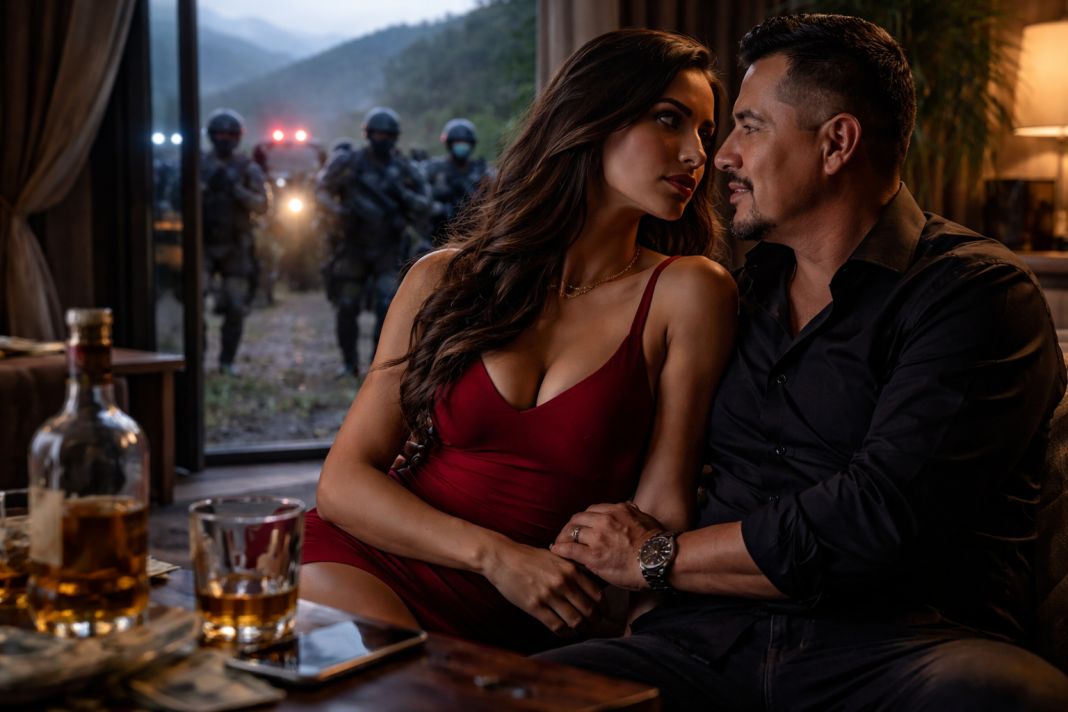


Mexican authorities have confirmed that a romantic partner played a key role in locating Nemesio Rubén Oseguera Cervantes, known as El Mencho. He led the Jalisco New Generation Cartel for years. Officials say they tracked the movements of a woman who was with him. That tracking led forces to his hideout in Tapalpa, Jalisco.
President Claudia Sheinbaum addressed the nation after the operation. She said Mexico remains under control. She confirmed that authorities acted on intelligence gathered from surveillance linked to Oseguera Cervantes’ romantic partner. That intelligence narrowed the search area. It pointed to a compound in the mountains of Jalisco.
Tapalpa sits south of Guadalajara. It has long been associated with cartel activity. Therefore, security forces considered it high risk. Once the location was verified, Mexican special forces moved quickly. They launched a targeted operation on Sunday.
When troops approached the compound, a gunfight broke out. Officials say Oseguera Cervantes tried to escape. He was injured during the exchange of fire. Authorities transported him toward Mexico City for medical treatment. However, he died on the way.
Mexico on fire after El Mencho killed, cartel gunmen paralyze Jalisco
The defense secretary described the clash as very violent. At least eight cartel members died during the raid. Three Mexican officials were also killed. The confrontation marked one of the most significant blows against CJNG leadership in recent years.
A Personal Link That Changed the Operation
Authorities did not reveal the identity of the woman involved. However, they confirmed that tracking her location helped them find the cartel leader. This detail has drawn attention across Mexico. It shows how personal relationships can intersect with national security operations.
Cartel leaders often rely on secrecy and trusted inner circles. They avoid public exposure. They limit communication. Yet they maintain close personal ties. In this case, officials say proximity created vulnerability.
Security forces used intelligence tools to monitor movements connected to the woman. Over time, patterns emerged. Those patterns led investigators to the property in Tapalpa. After verification, forces prepared the raid.
The United States supported the operation with intelligence assistance. American officials confirmed they shared information with Mexico. The cooperation reflects ongoing efforts to combat drug trafficking networks that impact both countries.
CJNG remains one of Mexico’s most powerful criminal organizations. It has been linked to the trafficking of methamphetamine and fentanyl into the United States. Therefore, Oseguera Cervantes was considered a high-value target for both governments.
After the raid, the focus shifted to stabilizing the region. Authorities increased patrols across Jalisco. They also reinforced security in nearby cities, including Guadalajara and Puerto Vallarta.
Violence Erupts Across Jalisco and Beyond
The death of El Mencho triggered immediate retaliation. Within hours, roadblocks appeared in multiple states. Most incidents occurred in Jalisco. Armed groups set vehicles on fire. They blocked highways. They targeted infrastructure.
Smoke rose from burning buses in Puerto Vallarta. Travelers faced sudden disruptions. Several international airlines canceled flights on Sunday. As a result, passengers were stranded across western Mexico.
Security officials reported attacks on gas stations and banks. They detained dozens of individuals in connection with the unrest. Authorities also confirmed that more than 30 suspected cartel members were killed in subsequent confrontations. In addition, 27 Mexican security personnel died while responding to the outbreak of violence.
The federal government deployed additional forces to restore order. By Monday, officials said most roadblocks had been cleared. President Sheinbaum stated that peace and security remain the top priority. She expressed condolences to the families of fallen officers. She also praised the armed forces for their actions.
Meanwhile, the U.S. Department of State issued a shelter-in-place advisory. The alert covered Jalisco, Michoacán, Guerrero, Nuevo León and Tamaulipas, including the city of Reynosa. The advisory remained in effect as authorities assessed the situation.
Officials expect flight operations, especially in Puerto Vallarta, to normalize quickly. However, analysts warn that the power vacuum inside CJNG could create further instability. Leadership changes often trigger internal struggles. Therefore, security forces remain on alert.
The operation in Tapalpa represents a major development in Mexico’s fight against organized crime. It also highlights how intelligence methods continue to evolve. In this case, a personal connection helped authorities locate one of the country’s most wanted men.
El Mencho built his reputation on secrecy and force. Yet officials say a relationship exposed his position. The consequences reshaped security conditions across Jalisco and beyond.
Mexico now faces the challenge of preventing further violence. At the same time, authorities aim to consolidate this tactical success. The coming weeks will test whether the state can maintain control after the fall of one of its most powerful cartel leaders.