
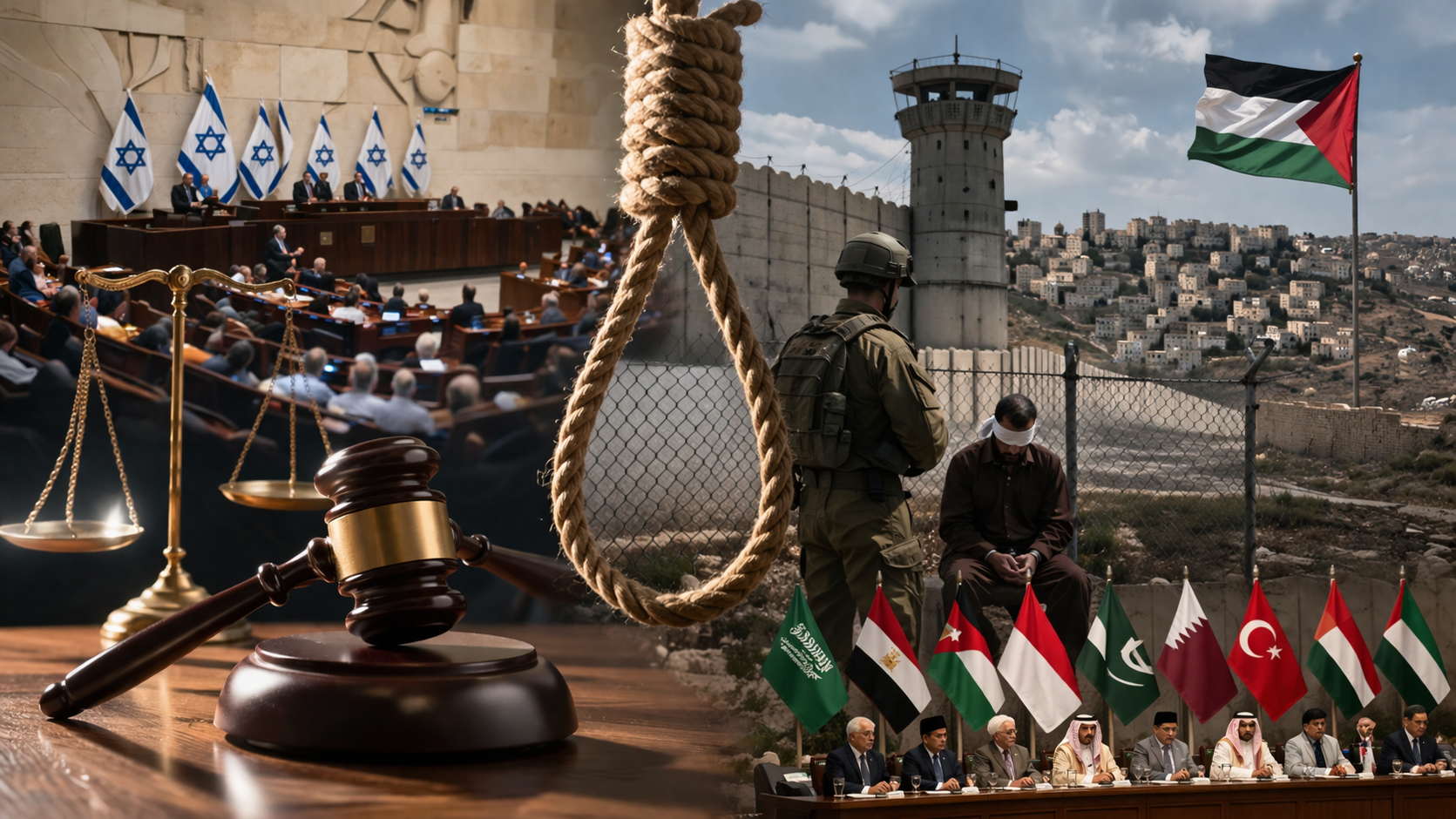
A new Israeli law introducing the death penalty for certain Palestinians has triggered strong international reactions and debate. While Muslim-majority countries have jointly condemned the move. They called it discriminatory and destabilizing. Other global powers and organizations have also raised concerns. These concerns focus on its legal and human rights impact. The issue has added to ongoing tensions in the occupied Palestinian territories.
Joint Condemnation from Muslim-Majority Countries
Key Muslim-majority countries have strongly condemned Israel after its parliament approved a new law introducing the death penalty for certain Palestinians in the occupied West Bank. The joint statement was issued by the foreign ministers of Saudi Arabia, Egypt, Jordan, Indonesia, Pakistan, Qatar, Türkiye, and the United Arab Emirates (UAE). All expressed serious concern over the development.
The countries said the law is deeply troubling. It could further raise tensions in an already fragile region. They described the measure as unfair and discriminatory. This is because it specifically targets Palestinian prisoners tried in Israeli military courts. According to the statement, such a system of applying different legal standards can increase mistrust. It can also worsen instability on the ground.
Yemen’s Houthis announce Palestine-2 missile fired at Tel Aviv in unprecedented escalation
The ministers warned that the decision could escalate tensions further. They called it a “dangerous escalation.” They also highlighted that the timing is sensitive. This is due to rising violence in the occupied West Bank in recent years. They urged attention to its wider impact.
What the Israel Death Penalty Law Says
Israel’s parliament passed a new law late Monday. It introduces the death penalty for Palestinians convicted by Israeli military courts. These cases involve deadly attacks classified as “acts of terrorism.” Under the law, the death sentence can be applied as a default punishment. This applies to those found guilty in such cases.
The law is significant because Palestinians in the occupied West Bank are usually tried in Israeli military courts. They are not usually tried in civilian courts. Critics say this creates a separate legal system for Palestinians. They say it may lead to harsher treatment compared to others. In contrast, Israeli civilian courts work differently. Judges can choose between life imprisonment or the death penalty. This applies to those convicted of intentional killing against the state. However, such cases are extremely rare.
Sirens & Shelter: Yemen’s forces claim ‘Palestine-2’ strike near al-Quds, drone hit on Haifa
Israel has used the death penalty only twice in its history. The first execution took place in 1948 for high treason, and the second in 1962, when Nazi war criminal Adolf Eichmann was hanged. Because of this, the new law stands out in Israel’s modern legal history.
The West Bank has been under Israeli occupation since 1967 and has seen repeated cycles of violence. Tensions increased sharply after the Hamas attack on southern Israel on October 7, 2023, which triggered wider conflict in Gaza and rising unrest in the West Bank.
International Reaction and Rising Concerns
The new Israeli law introducing the death penalty for certain Palestinians has triggered strong international reactions beyond the joint statement by Muslim-majority countries.
The United Nations criticized the legislation, raising concerns about human rights and fair legal standards. The European Union also opposed the move, saying it may conflict with international legal principles and protections. In contrast, the United States took a different stance, supporting Israel’s sovereign right to decide its own laws, highlighting a clear diplomatic divide among global powers.
Human rights organizations and international observers have also expressed concern about how the law may be applied in practice. A key issue is the military court system in the occupied West Bank, where Palestinians are usually tried, unlike Israeli civilians who go through a different legal process. Critics say this creates unequal legal treatment.
Pro-Palestine protest blocks access to Edinburgh defense factory linked to F-35 jets
Supporters within Israel argue the law is meant to deter deadly attacks and applies only to those convicted of serious terrorism-related crimes. However, opponents warn it could deepen divisions and increase tensions in an already volatile region.
The debate has become part of a wider global discussion on justice, security, and human rights in the occupied Palestinian territories, with governments and legal experts closely monitoring the situation.