


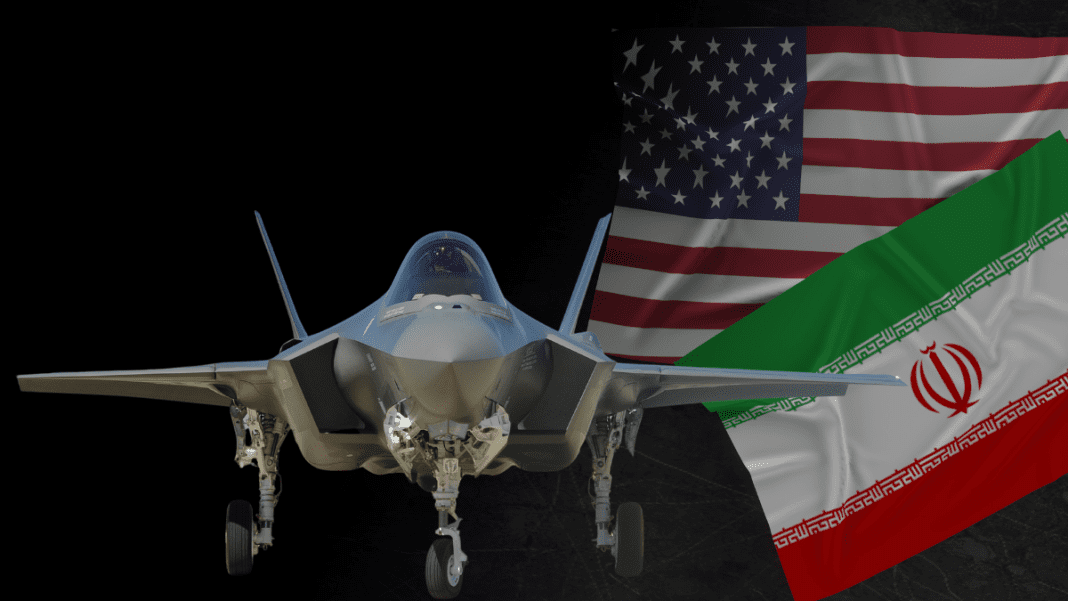


Tensions between the United States and Iran have sharply escalated amid reports of fighter jet losses, conflicting military claims, and stalled ceasefire talks. While both sides continue to exchange accusations over battlefield incidents, diplomatic efforts to ease the crisis have reportedly failed, keeping the region highly unstable.
Trump’s First Reaction After US Fighter Jet Loss
US President Donald Trump has made his first public remarks after reports that a US military fighter jet was lost amid rising tensions in West Asia. His comments came as military operations and diplomatic efforts continue at the same time.
When asked whether the incident involving a fighter jet would affect talks with Iran, Trump dismissed the concern. He said, “No, not at all. No, it’s war. We’re in war,” suggesting that negotiations are still ongoing despite the conflict.
Iran claims a second US F-35 stealth jet was shot down over its central region
Trump did not share details about recovery efforts related to the fighter jet, calling them sensitive and still ongoing. He also criticized media reporting, saying it does not fully reflect the seriousness of the situation. His statement is the first official response from US leadership on the reported loss of a fighter jet.
What Tehran and US Reports Claim About Downed Aircraft
The situation has become increasingly complex due to conflicting claims involving fighter jets from both the United States and Iran. Iranian sources say their forces shot down a US F-35 stealth fighter jet and also claim that they captured a pilot. The United States has not confirmed any such loss, and no independent verification supports these claims.
Separate reports suggest that forces hit a US F-15E Strike Eagle fighter jet during ongoing operations in the region. According to these accounts, the engagement damaged the aircraft and forced both crew members to eject in mid-air before it went down. However, US defense authorities have not confirmed the exact location, timing, or cause of the incident.
Experts warn that a quick end to the Iran war could leave the West at a disadvantage
US special forces are believed to have rescued one crew member shortly after the ejection in the operational area. The second crew member’s status, however, remains unknown, with no verified information released about whether they were located or recovered. Search and recovery efforts are reportedly continuing under sensitive operational conditions, but authorities have not provided further updates.
In addition, Iranian officials have claimed further successful strikes against US fighter jet assets, adding to the confusion surrounding recent events. These claims have not been independently verified by US or international sources. With both sides presenting conflicting narratives, the situation remains highly tense, uncertain, and rapidly evolving, as reports of aerial activity and engagements continue to emerge from the region.
Diplomatic Breakdown and Failed Ceasefire Talks
Diplomatic efforts aimed at reducing rising tensions involving fighter jet incidents between the United States and Iran have reportedly stalled, according to multiple news reports. Attempts to establish a ceasefire have not made progress, as both sides continue to disagree on key conditions linked to fighter jet operations and wider military activity in the region.
Regional mediation efforts were reportedly underway to bring both countries back to the negotiating table, but these talks have reached an impasse. Reports suggest that disagreements over military actions involving fighter jets and broader security concerns have prevented any meaningful breakthrough. As a result, planned discussions have either been delayed or cancelled.
Rafah crossing reopens under ceasefire, but only a handful of Palestinians are allowed to move
Meanwhile, military activity involving fighter jets continues across sensitive areas in West Asia. Both the United States and Iran are reportedly maintaining operational readiness, with continued deployments and monitoring of airspace. These ongoing fighter jet movements have added further pressure on already strained diplomatic channels.
The sustained presence of fighter jets in the conflict zone has also made communication between the two sides more difficult. With tensions remaining high, both countries are relying heavily on official statements, indirect messaging, and third-party mediation rather than direct engagement. The situation remains unresolved, with fighter jet operations continuing to play a central role in the escalation and shaping the broader security environment in the region.