


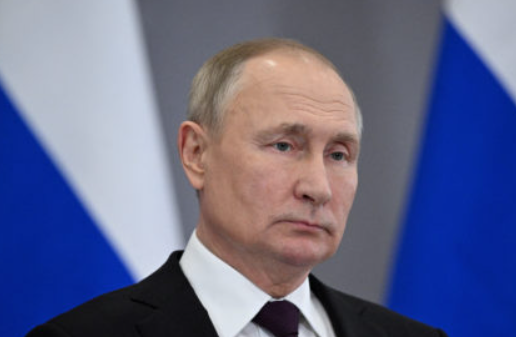


In a surprising development, U.S. intelligence, including the CIA, has assessed that Ukraine did not target a residence used by Russian President Vladimir Putin in a recent drone attack, contradicting claims made by the Kremlin. This revelation comes as the ongoing conflict in Ukraine continues to draw global attention, with allegations and counterclaims swirling around high-level officials.
CIA Briefs Trump on False Allegation
According to U.S. officials, CIA Director John Ratcliffe informed former President Donald Trump on Wednesday that the agency did not believe Ukraine had attempted to strike Putin’s residence. This assessment directly contradicted what Putin had reportedly told Trump during a Monday phone call.
Earlier, Russia had publicly alleged that Ukrainian forces had attempted an attack near Valdai, a region in northwestern Russia where Putin’s residence is located. During a news briefing, Trump said he was “very angry” after hearing about the reported attack and described the incident as “not good.”
Kyiv rejects Moscow’s claim of drone strike on Putin’s home, calls it pretext for escalation
However, he also acknowledged the possibility that the report could be false, saying, “It’s possible it didn’t happen. But President Putin told me this morning it did.” Shortly after, Ratcliffe’s briefing appears to have influenced Trump’s perspective, as he later shared a New York Post editorial on Truth Social suggesting that Putin’s claim was likely untrue.
The Post’s editorial argued that “any attack on Putin is more than justified” but emphasized that the drone strike itself “likely never happened.” Ukrainian President Volodymyr Zelensky had vigorously denied any involvement in such an attack, and Kremlin spokesman Dmitry Peskov said Russian authorities had no evidence to support the claim.
Russian Claims and Drone Launch Details
Despite the U.S. intelligence assessment, Russian authorities maintained that an attack had occurred. Moscow’s defense ministry said Ukrainian forces launched 91 drones from northern Ukraine toward Putin’s residence. The ministry added that its defenses intercepted over half of the drones several hundred kilometers away and shot down the rest over Novgorod between 3 a.m. and 8:30 a.m. local time on Monday.
Trump slams Putin after night of chaos in Ukraine: “He just wants to kill”
The ministry also released a map purporting to show the flight paths of the drones and their interception points. However, it did not explain how it knew the drones were specifically targeting the Valdai residence. Analysts outside Russia, including European officials, expressed skepticism over the claims, calling them either misleading or a possible distraction from ongoing diplomatic talks.
The European Union’s foreign policy chief, Kaja Kallas, described the allegation as a “deliberate distraction,” noting that such claims could be aimed at undermining peace efforts while avoiding blame for any failures in diplomacy.
Context Amid Peace Talks
The timing of Putin’s claim raised further questions. The allegation came a day after Trump hosted Zelensky at Mar-a-Lago, where they discussed ongoing efforts to negotiate an end to the war in Ukraine. Some observers suggested that the Russian leader’s statement could have been intended to derail these discussions or to exert pressure on the United States and its allies.
The U.S. intelligence report, as presented by the CIA, contradicted the Kremlin’s narrative and highlighted the challenges of distinguishing fact from disinformation during the war. Sources told reporters that the CIA found no credible evidence that Ukraine targeted Putin, signaling that the Russian allegation may have been fabricated or exaggerated for political purposes.
Russia unveils ‘Skyfall’—Putin confirms test of nuclear-powered missile capable of flying for days
Following the briefing, Trump appeared to adopt a more cautious approach, sharing the editorial suggesting that Russia, rather than Ukraine, was obstructing peace efforts. The Wall Street Journal was the first to report the CIA’s assessment, underscoring the divide between official U.S. intelligence findings and claims made by the Russian government.
The controversy comes amid intensified diplomatic activity, with multiple nations watching closely as the U.S. and other international actors continue to explore pathways for conflict resolution. Meanwhile, the ongoing military situation in Ukraine has seen frequent drone activity, but experts emphasize that verifying the intended targets of these attacks is often difficult, given the fog of war and the spread of propaganda from all sides.