


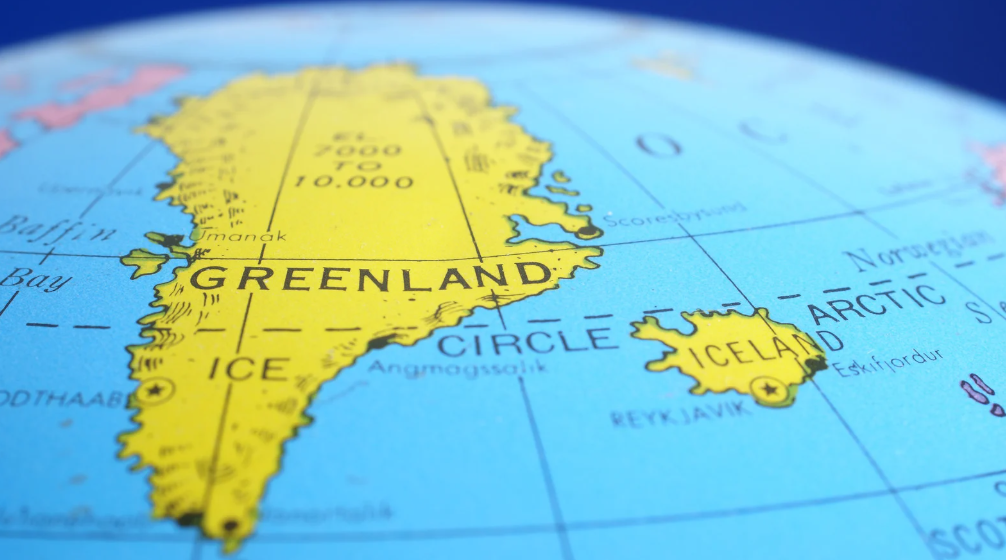


China appears to see a chance in Greenland, particularly because of its rare earths, but not in the way U.S. President Donald Trump imagines. The Arctic island, a Danish territory, has suddenly become a center of international attention after Trump openly discussed acquiring it. While Trump frames his Greenland plans as a move to counter China and Russia, experts say Beijing is watching the situation differently, with a focus on strategic resources like rare earths.
Trump’s Greenland Gambit Sparks Global Attention
Donald Trump has long suggested that Greenland, the world’s largest island, could be an asset for the United States. On social media, Trump insisted that world peace depends on securing Greenland, claiming China and Russia are eyeing it. He warned that Denmark alone cannot protect the territory from foreign influence.
However, European officials see the plan differently. Kaja Kallas, the European Union’s foreign affairs chief, suggested that Trump’s moves risk dividing NATO, the alliance of Western countries. Analysts in Europe and Asia alike have questioned the rationale behind the U.S. leader’s push for Greenland.
China Courts Greenland with Arctic Support—Eyes Deepening Ties with Denmark in Wind Tech and Trade
A close-up image from protests shows demonstrators holding a poster with Greenland colored like the U.S. flag and a black cross through it. The words “our land, not yours” capture the local resistance to Trump’s idea. Observers say that, for many countries, Trump’s bold moves reflect a disregard for international norms and alliances.
China Eyes Rare Earths and Arctic Influence
In Beijing, Trump’s Greenland strategy is viewed as evidence that the U.S.-led world order is in flux. Professor Wang Wen from Renmin University explains that many Chinese citizens see the U.S. actions as bullying and hegemonic. “Trump’s occupation of Greenland would signify NATO’s collapse, which would please Chinese observers,” Wang said.
Allies caution that even hinting at force over Greenland could undermine NATO
Yet, Chinese experts stress that the U.S. taking Greenland is not a major concern for Beijing. According to Andrew Small, director of the Asia program at the European Council on Foreign Relations, Chinese strategists have long been more worried about the strength and coordination of U.S. alliances than about the island itself. “The unraveling of U.S. alliances offers China more benefits than the actual possession of Greenland,” Small added.
China officially opposes attempts to violate the sovereignty of other nations. Guo Jiakun, a spokesperson for China’s foreign ministry, urged the U.S. to avoid using the “China threat” as an excuse for imposing tariffs on European countries. Still, Chinese interest in Greenland is real but carefully measured, especially because of its rare earths.
China’s Arctic Moves, Rare Earths, and Greenland Investments
China has pursued Greenland for years, mainly for economic and strategic reasons. Between 2012 and 2017, Chinese investment in the island accounted for over 11% of its GDP, largely due to Greenland’s rare earths. These minerals are vital for electronics, renewable energy, and high-tech industries, making Greenland a strategic target for China.
Access to rare earths, however, has been limited. In 2018, Denmark blocked a Chinese state-owned company from expanding Greenlandic airports, reportedly under U.S. pressure. A Chinese firm was also prevented from buying an abandoned naval base two years earlier. These moves, along with Greenland’s own policies, restricted China’s ability to secure rare earths and maintain a stronger presence in the region.
Greenland may not be for sale, but Bill Gates is already betting on its rare-earth wealth
China’s 2018 Arctic policy white paper called itself a “near-Arctic state” and emphasized plans for a “Polar Silk Road,” part of the Belt and Road Initiative. In 2025, a Chinese container ship traveled from Ningbo to the UK via the Northern Sea Route, cutting shipping time in half. The route relies on cooperation with Russia, highlighting the strategic importance of Greenland’s location for trade and access to rare earths.
Chinese companies have struggled to turn Greenland’s mining projects into profitable ventures. A 6.5% stake in the Kvanefjeld rare earths project is one of the few remaining Chinese interests, though the project has been inactive since uranium mining was banned in 2021. Analysts say China’s focus remains on accessing rare earths while navigating global alliances rather than controlling Greenland itself.