


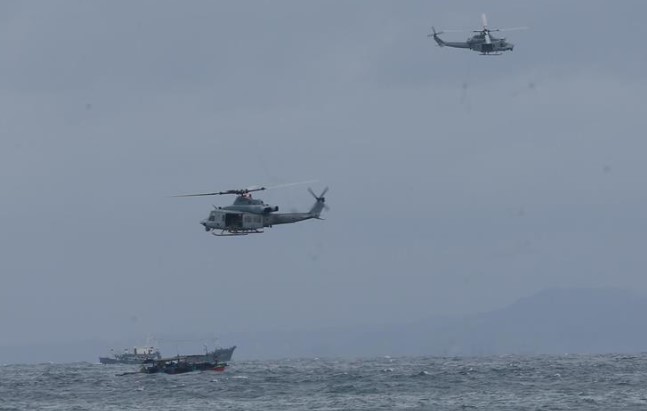


China has launched one of its largest-ever military exercises around Taiwan, firing rockets toward the island and surrounding it with ships and aircraft in a powerful show of force. The war games, called “Justice Mission 2025,” involve live-fire drills across several sea and air zones around Taiwan and along China’s coast, using real weapons to practice a possible blockade. Taiwan confirmed that debris from the war games entered nearby waters but said it is monitoring the situation closely and does not want to escalate tensions.
Massive War Games Surround Taiwan
The war games involve a wide mix of military forces, including rockets, bombers, warships, and submarines. China has also deployed new amphibious assault ships designed to carry troops, tanks, and helicopters for landings on enemy shores. The military operated these ships alongside aircraft and naval vessels, forming a ring around Taiwan during the war games.
Military officials said the exercises include attacks on targets at sea and in the air, as well as anti-submarine operations. These drills allow forces to practice locating and striking enemy submarines, a key part of controlling surrounding waters. The exercises also focus on coordination between air and sea forces, showing how different units would work together in a real conflict.
China fires YJ-20 hypersonic ‘carrier-killer’ from Type 055 warshipamid Taiwan tensions
Authorities reported live-firing in five main zones around Taiwan. Some of these zones overlap with waters that Taiwan considers close to its coastline, raising concern on the island because the areas are important for fishing, shipping, and national security.
Taiwan confirmed that live-firing took place north of the island and said fragments from the drills entered nearby waters. However, officials have not confirmed rocket launches in every declared zone. The situation remains tense, with military units on both sides staying alert as the exercises continue.
War Games Simulate Blockade and Impact Shipping
A key aim of the war games is to simulate a blockade of Taiwan by restricting ships and aircraft from entering or leaving the island. Such a scenario is serious because Taiwan relies heavily on sea and air routes for trade, food, energy, and daily supplies. The exercises aim to test how forces could limit access to the island during a crisis.
The Taiwan Strait, which separates Taiwan from mainland China, ranks among the world’s busiest trade routes, carrying trillions of dollars in goods each year. During the war games, authorities closely monitored movement through this vital waterway. The drills also affected airspace over Taiwan, which links East and Southeast Asia.
China imposes sanctions on 20 US companies linked to Taiwan weapons deal
During the war games, authorities adjusted several flight routes used by Taiwan to avoid live-fire zones. Officials said that while the changes disrupted local air traffic, most international flights continued by using alternative routes that stayed clear of the exercise areas.
At sea, Chinese coastguard vessels sailed close to Taiwan’s waters during the war games, prompting Taiwanese coastguard ships to shadow them. Both sides used careful maneuvering, leading to tense but controlled encounters without direct clashes. China also highlighted major ports in northern and southern Taiwan as key points in the blockade simulation, underlining their importance to the island’s economy.
Rising Military Activity and Strong Messaging
The current war games rank as the largest in recent years and stand out for their wide coverage and closeness to Taiwan. Military officials said they added extra live-fire zones, expanding the areas affected by the drills.
China deploys jets and rockets in Taiwan Strait exercises as US arms sale raises concern
Strong messaging has accompanied the war games, with state media releasing images and videos of advanced warships, aircraft, and a large amphibious assault ship capable of launching helicopters and armored vehicles. These visuals highlight the scale of the exercises.
An animated video showing drones and unmanned systems attacking the island was also released. While symbolic, it reinforces the message of technological readiness displayed during the war games.
Taiwan reported a sharp rise in military aircraft and naval vessels operating near the island, placing its forces on alert. Despite the intensity of the war games, Taiwan said it remains focused on defense and does not seek escalation.