


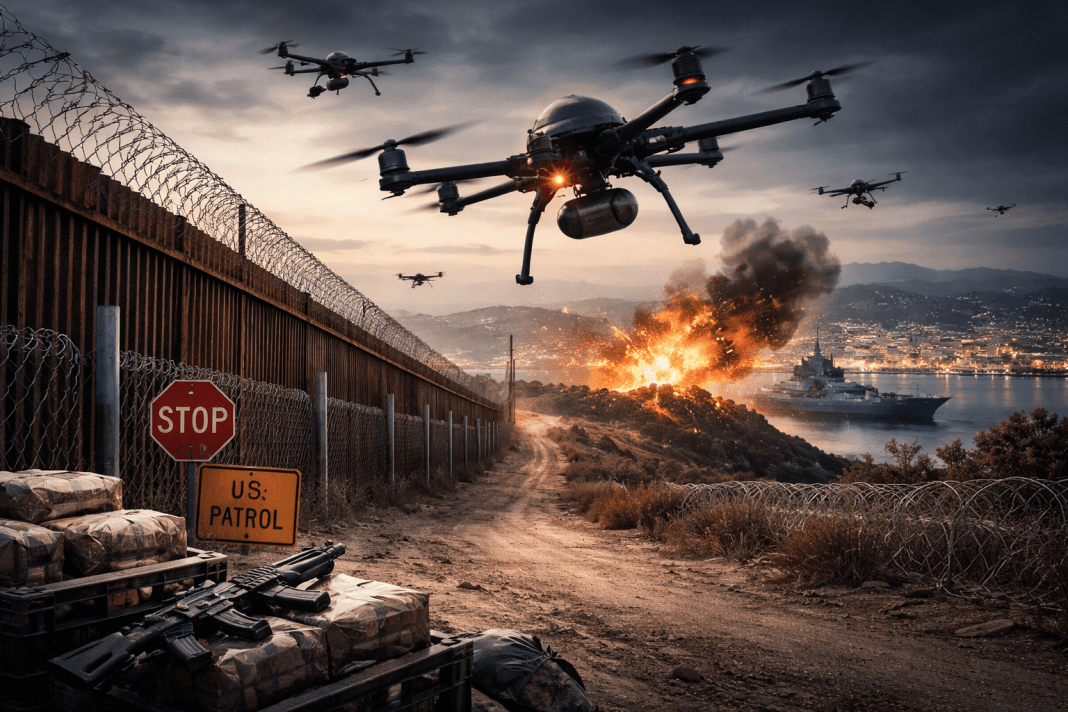


The state of California is now on edge after intelligence reports suggested a potential, unprecedented collaboration between Mexican drug cartels and Iran. The alert comes amid a swirl of violence and tension, following the death of top cartel leader Nemesio “El Mencho” Oseguera Cervantes and the launch of US military operations against Iran. Experts warn that this dangerous overlap could pose a real threat to the US mainland.
California on Edge After El Mencho’s Death and US-Iran Tensions
On February 22, 2026, Mexican special forces, with help from US intelligence, killed Nemesio “El Mencho” Oseguera Cervantes, the leader of the powerful Jalisco New Generation Cartel (CJNG). His death sparked violent reprisals across more than 20 Mexican states, as rival gangs and loyalists clashed in a sudden surge of chaos. The attacks showed how deeply the cartel had embedded itself in Mexico and how much influence El Mencho wielded.
At nearly the same time, the US launched “Operation Epic Fury” against Iran. Intelligence officials are concerned that Iran, with its long-standing networks in Latin America, could link up with the enraged CJNG. Both parties now share a common motive: revenge against the United States.
Mexico on fire after El Mencho killed, cartel gunmen paralyze Jalisco
Experts warn that such a partnership could increase threats along the US-Mexico border. Southern California, with its major cities and military bases just across from cartel territory, could face unprecedented security challenges if the CJNG receives external support.
Cartels Already Flying Deadly Drones
Contrary to what some may think, Iran wouldn’t need to teach the cartels new attack methods. The Jalisco New Generation Cartel (CJNG) is already highly skilled in drone warfare. Over the past five years, the cartel has led the way in “narco-drone” operations, using kamikaze drones equipped with grenades and improvised explosives.
The CJNG has a specialized “Drone Operators” unit that has carried out dozens of successful attacks against rival gangs and even Mexican military forces. This unit is well-trained and experienced, giving the cartel a serious advantage in precision attacks.
US urges Israel to pause strikes on Iran oil infrastructure citing risks to global energy supply
Experts also note that cartel operatives have studied advanced drone tactics abroad. This includes training in Ukraine, where they observed drones being used against Russian military equipment. These lessons have made CJNG drones more precise and deadly.
In late 2025, the cartel demonstrated its capabilities. A drone carrying explosives struck a state prosecutor’s office in Tijuana, just one mile from California. With their lethal skills and established smuggling routes, the CJNG could potentially target Southern California if they receive support from external powers like Iran.
Iran’s “Ghost Proxy” Strategy
From Iran’s perspective, working with the Jalisco New Generation Cartel (CJNG) is strategically smart. Sending Iranian ships or troops directly to the US would be extremely risky and likely intercepted by the US Navy. Quietly funding cartel factions to launch drone attacks provides a safer alternative. This approach allows Tehran to strike US infrastructure while keeping a layer of plausible deniability.
The US border is already struggling to manage airspace near Mexico. In the 2025 fiscal year, US Customs and Border Protection detected over 34,000 drone flights within 500 meters of the border. Most of these drones are used for drug smuggling and reconnaissance, often bypassing radar and radio-frequency jammers. If Iran supplies explosive payloads, the CJNG could use its established drone routes to strike Southern California without detection.
Trump, Pezeshkian and Netanyahu reveal sharply different visions for ending the Iran war
El Mencho’s death has created a power vacuum in the cartel, making it more open to external funding. Tehran, despite sanctions, has covert financing networks capable of supporting the cartel. Paying the CJNG to carry out drone strikes would benefit both sides: the cartel would gain needed funds, and Iran could attack US soil indirectly.
With major California cities and military bases, including the San Diego Naval Base, just minutes from cartel-controlled areas, the southern border has become more than a smuggling problem—it could be a frontline in a foreign proxy conflict.