US President Donald Trump recently caused a storm of controversy after he suggested that NATO troops, including British soldiers, “stayed a little back” from front-line combat during the 20-year war in Afghanistan. His comments, made during an interview, triggered strong reactions from British politicians, military veterans, and the public.
Trump said, “They’ll say they sent some troops to Afghanistan … and they did, they stayed a little back, a little off the front lines.” The remarks came amid already tense relations between the US and NATO over the Greenland issue.
NATO’s Role in Afghanistan: Facts and Figures
The war in Afghanistan lasted from 2001 to 2021 and involved numerous NATO member countries. The United States led the coalition, but other nations, including the United Kingdom, Germany, Canada, and France, contributed troops, resources, and support.
Trump criticises UK over Chagos deal and says move supports case for US role in Greenland
Official statistics show that NATO forces experienced significant casualties during the conflict. The US suffered about 2,461 deaths. The United Kingdom reported 457 military personnel killed in action. Overall, allied forces accounted for 1,160 deaths, making up roughly a third of the total fatalities in the war. In total, 3,486 NATO troops lost their lives over two decades.
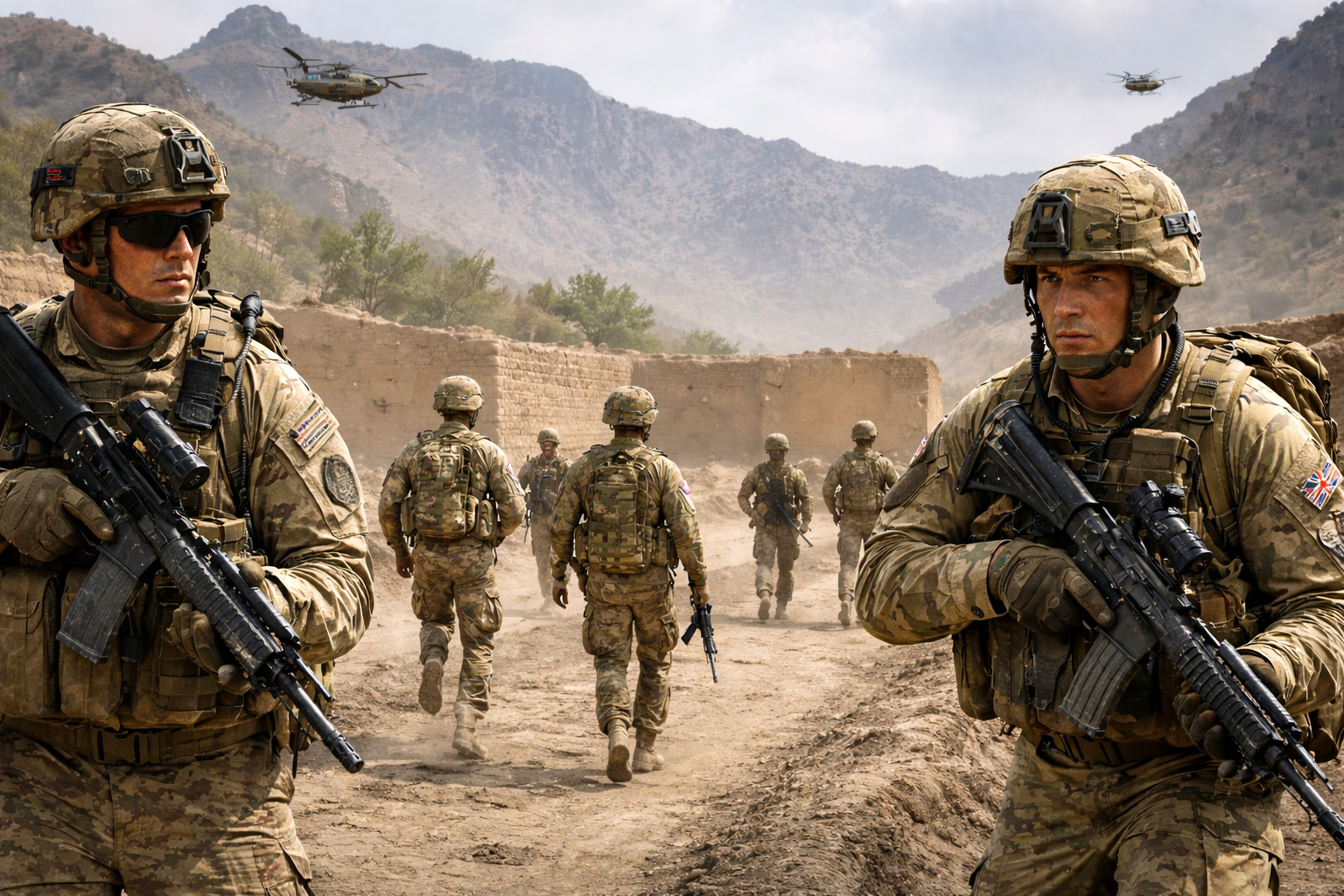
NATO forces were not confined to safe zones or rear positions. Soldiers from multiple countries, including the UK, Canada, and Germany, were deployed to some of the most dangerous regions in Afghanistan, including Helmand Province and Kandahar. Many operations involved direct combat with Taliban forces, patrols in hostile areas, and risk of ambush or roadside bombs.
Veterans have strongly criticized Trump’s statements. Conservative MP Ben Obese-Ject, a former captain in the Royal Yorkshire Regiment who served in Sangin, Afghanistan, described the claim as “sad to see our nation’s sacrifice, and that of our NATO partners, held so cheaply.” He highlighted the shared hardships between British troops and US Marines during the conflict.
Political Backlash and Public Response
Trump’s comments drew immediate backlash from politicians across the UK. Liberal Democrat leader Ed Davey pointed out the 457 British deaths and called out Trump for questioning the soldiers’ courage. In a social media post, Davey reminded people that Trump avoided military service five times during the Vietnam era, leading many to question his understanding of frontline duty.
Labour MP Dame Emily Thornberry called the remarks an insult. Speaking to the BBC, she said, “How dare he say we weren’t on the front line? How dare he? We have always been there whenever the Americans have wanted us; we have always been there.”
Trump threatens NATO with ultimatum: no unity, no sanctions on Russia
The controversy also reignited discussions about Trump’s past avoidance of military service. During the Vietnam War, Trump received deferments for education and was eventually diagnosed with bone spurs in his heels. Critics have long debated whether this diagnosis justified his exemption.
The backlash was not limited to politicians. Veteran groups and serving military personnel condemned the statements. Many pointed out that NATO soldiers often faced the same dangers as their US counterparts, with soldiers frequently engaged in high-risk combat missions, airstrikes, and joint operations with coalition forces.
FACT CHECK: Were NATO Troops “Staying Back”?
Independent reports and official military accounts show that NATO troops were actively involved in frontline combat. British soldiers, for example, were deployed in Sangin, one of the most dangerous areas in Helmand Province. Canadian troops faced repeated attacks in Kandahar, while German forces conducted counterinsurgency operations in northern Afghanistan.
The term “staying back” is misleading. While some NATO units had roles in logistics, training, or reconstruction, a significant portion of allied forces were in combat positions and faced constant threats from Taliban insurgents. NATO soldiers often operated alongside US forces in joint patrols, firefights, and security operations, disproving the claim that they avoided the frontlines.
NATO allies limit intelligence sharing with US over Trump Greenland threats
Moreover, NATO’s collective security principles meant that member nations shared the risks and responsibilities of the war effort. The coalition structure required cooperation and active deployment in high-risk areas, making Trump’s generalization about “staying back” inaccurate.
Public records, military statistics, and firsthand accounts indicate that NATO soldiers, including British troops, were fully engaged in frontline combat in Afghanistan. Claims that they avoided danger do not align with documented evidence or the experiences of those who served.