


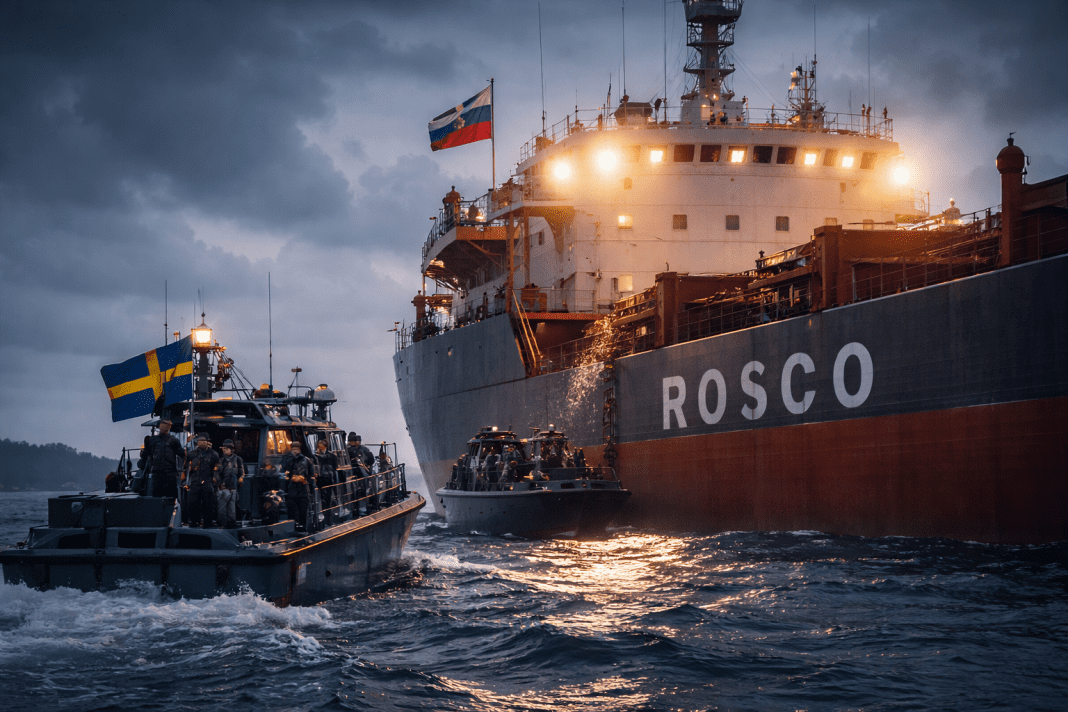


Swedish authorities have boarded and sanctioned a Russian freighter anchored off the southwestern coastal town of Höganäs, highlighting the increasingly tense maritime enforcement environment surrounding Russia-linked shipping in European waters. The vessel, identified as the Adler, was inspected shortly after 01:00 on Sunday by Sweden’s customs authority with support from the Swedish Coast Guard and national police, following its unscheduled anchoring in Swedish territorial waters due to reported engine trouble.
The operation underscores how the war in Ukraine and the widening web of Western sanctions against Russia continue to reshape maritime security dynamics in the Baltic and North Seas. Even routine incidents such as mechanical failures are now subject to heightened scrutiny when they involve sanctioned entities, especially in sensitive maritime corridors bordering NATO and European Union states.
According to Swedish customs officials, the Adler had anchored in Swedish waters on Friday after departing the Russian port of St Petersburg on December 15. The vessel’s presence quickly drew attention because its owners are listed under European Union sanctions, automatically triggering legal obligations for inspection and enforcement under EU restrictive measures.
Sanctions Enforcement Meets Maritime Security Reality
Martin Höglund, spokesman for the Swedish customs authority, confirmed that inspectors boarded the ship overnight to conduct a full customs inspection, including a review of its cargo. While authorities declined to disclose whether any prohibited goods had been found, Höglund said the operation was ongoing, indicating the seriousness with which Sweden is treating the case.
Ukraine hits Russian-linked oil tanker in Mediterranean, signaling dramatic expansion of war’s reach
The Adler is a 126-metre roll-on, roll-off container carrier, according to ship-tracking service Marine Traffic, and remains anchored off Höganäs in southwest Sweden. Its owners, M Leasing LLC, are listed under both European Union and United States sanctions regimes, placing the vessel squarely within the scope of transatlantic enforcement efforts aimed at limiting Russia’s access to logistics, revenue, and military-related supply chains.
According to OpenSanctions, a widely used database compiling sanctions and watchlists, the Adler and its ownership structure are suspected of involvement in weapons transport. While such allegations remain subject to verification through inspection and intelligence coordination, they elevate the geopolitical significance of the incident far beyond a routine port-state control check.
For Sweden, the case reflects the growing operational burden placed on customs and maritime authorities as sanctions enforcement moves from legal frameworks into day-to-day security operations. The Baltic Sea region, already under intense military and intelligence focus following Russia’s invasion of Ukraine, has become a frontline for sanctions compliance, where shipping routes, ports, and anchorages are closely monitored for violations.
Baltic Tensions and the Broader Geopolitical Signal
The boarding of the Adler comes at a time of heightened alert across Northern Europe, where governments are increasingly wary of hybrid threats, sanctions evasion, and covert logistics networks operating under commercial cover. While Swedish authorities have not linked the incident to broader security concerns, the presence of a sanctioned Russian vessel near Swedish shores inevitably carries strategic implications.
Lukashenko confirms Russia deploys Oreshnik missiles to Belarus amid Ukraine talks
Sweden’s cooperation between customs, coast guard, and police services reflects an integrated approach to maritime governance that blends trade regulation with national security. This model has become more prominent across the EU as sanctions against Russia expand beyond financial institutions to include shipping companies, insurers, port operators, and logistics providers.
The lack of clarity regarding the Adler’s intended destination further adds to the uncertainty surrounding the vessel’s mission. Höglund confirmed that authorities currently have no information on where the ship was ultimately headed, a detail that may become central to determining whether sanctions breaches occurred or were intended.
From a geopolitical perspective, the incident highlights how sanctions are no longer abstract policy tools but tangible mechanisms shaping the movement of ships, goods, and personnel. Every port call, anchorage, and mechanical failure involving sanctioned entities now carries diplomatic and legal consequences, particularly in strategically sensitive regions like the Baltic Sea.
For Russia, such enforcement actions demonstrate the tightening constraints on its maritime operations, even outside declared conflict zones. For European states like Sweden, they underscore the fine balance between upholding international law, ensuring maritime safety, and managing escalation risks in an already volatile regional security environment.
As inspections continue, the Adler case serves as a reminder that the geopolitical impact of the Ukraine war extends far beyond the battlefield. It now plays out in customs inspections, shipping registries, and coastal anchorages, where every sanctioned vessel becomes a test of enforcement credibility, regional stability, and the resilience of the global sanctions regime.