


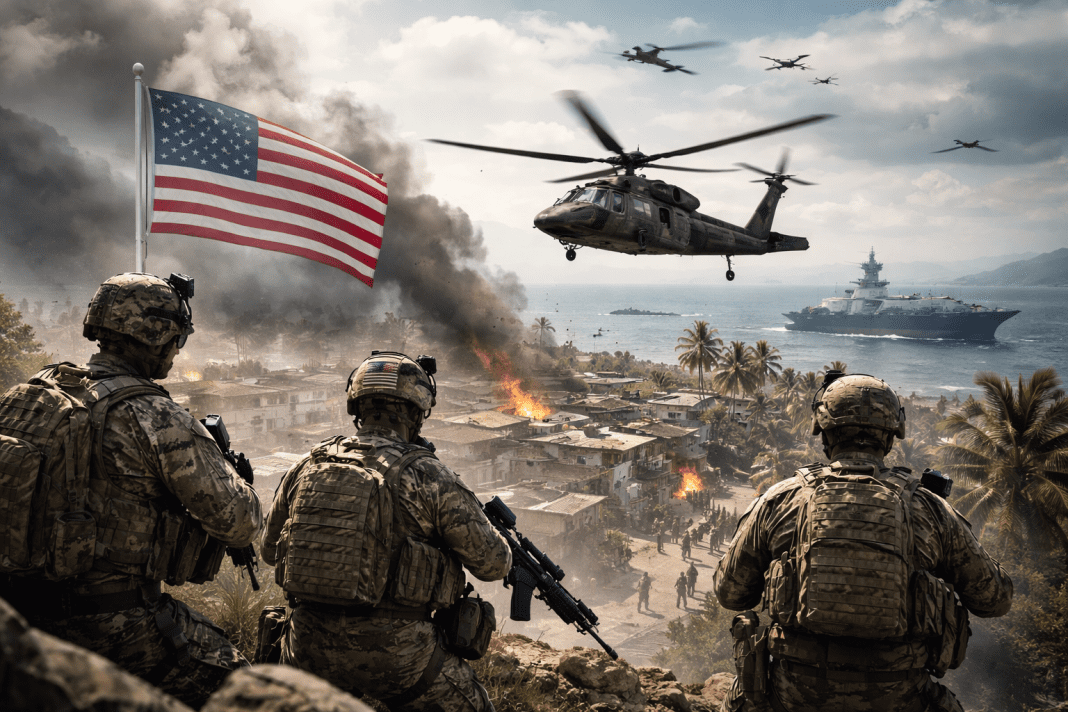


When America engages in military operations abroad, it rarely calls them “war.” Instead, leaders use words that sound less frightening and more technical. This careful choice of language has been a hallmark of America’s foreign policy for decades. Recent statements about Venezuela show that this tradition is still very much alive.
By describing military actions as “missions,” “operations,” or even “law enforcement,” the government can carry out serious interventions without triggering the legal and political consequences that come with a formal declaration of war. These words may seem simple, but they change how the public perceives America’s military activity.
From Police Actions to Rescue Missions America Has Carried Out
The practice of renaming war-like activities has deep roots in America’s history. During conflicts in the 20th century, leaders often avoided the word “war” to sidestep legal or political requirements. One famous example occurred during the Korean conflict, when officials described military engagement as a “United Nations Police Action.” This phrasing suggested that America was acting in partnership with other nations and not starting a war on its own.
Similarly, early involvement in Southeast Asia was never called a war at first. Instead, it was presented as a “military assistance advisory mission.” The language implied that America’s forces were simply helping, rather than taking the lead in combat. By softening the terminology, the government avoided the intense scrutiny that a formal declaration of war would demand.
The trend continued in later decades. Military interventions were packaged with language that emphasized protection and morality. For example, one intervention in a Caribbean nation in the 1980s was described as a “rescue operation” to safeguard American students. In reality, the action involved the overthrow of a government, but the choice of words focused attention on safety rather than politics or conflict. Another intervention in Central America was given a heroic-sounding title that suggested a fight for democracy. This kind of naming made America’s military activity sound like a moral mission rather than an attack.
Clinical Words for Modern Conflict
As warfare evolved, so did the vocabulary. Modern operations use terms that sound neutral or technical, removing the emotional weight that the word “war” carries. During interventions in North Africa in the 2010s, phrases like “kinetic military action” replaced direct references to combat. The words suggest motion and energy, but avoid the violence and human cost implied by traditional terms.
This linguistic approach makes operations easier to support politically and socially. By framing action as “kinetic” or “military assistance,” leaders shift attention away from the reality of conflict. This approach also allows America to carry out missions without triggering debates about war powers or congressional approval.
3 executives linked to spyware consortium Intellexa removed from US sanctions list
The strategy is visible today in discussions about Venezuela. Instead of calling actions there a war, officials describe them as “law enforcement operations” or “counter-narcotics missions.” The language paints a picture of officials executing a warrant rather than invading another country. By framing the capture of foreign leaders or interventions in criminal networks as a policing activity, America positions itself as a global sheriff maintaining law and order.
Even when the operations involve military forces or armed engagement, the terminology emphasizes legality, morality, or technical execution rather than combat. This careful choice of words helps avoid public concern and keeps political focus away from the gravity of America’s action.
The Power of Words in Diplomacy
This history of linguistic choices shows that words matter in diplomacy and military operations. How a mission is described can affect public perception, media coverage, and legal requirements. A military campaign called a “rescue mission” or a “law enforcement action” sounds different from one called a war, even if the reality on the ground is similar.
The use of sanitized terms allows America to act decisively abroad without facing the immediate scrutiny that comes with open conflict. From early police actions to modern counter-narcotics missions, the vocabulary has been crafted to protect both legal frameworks and public support.
In essence, what America calls its operations is carefully chosen to control the narrative. The words help frame the mission, justify intervention, and manage political risk. While the tactics, troops, and strategy may change, the language remains a constant tool in shaping how Americans—and the world—understand military actions abroad.