
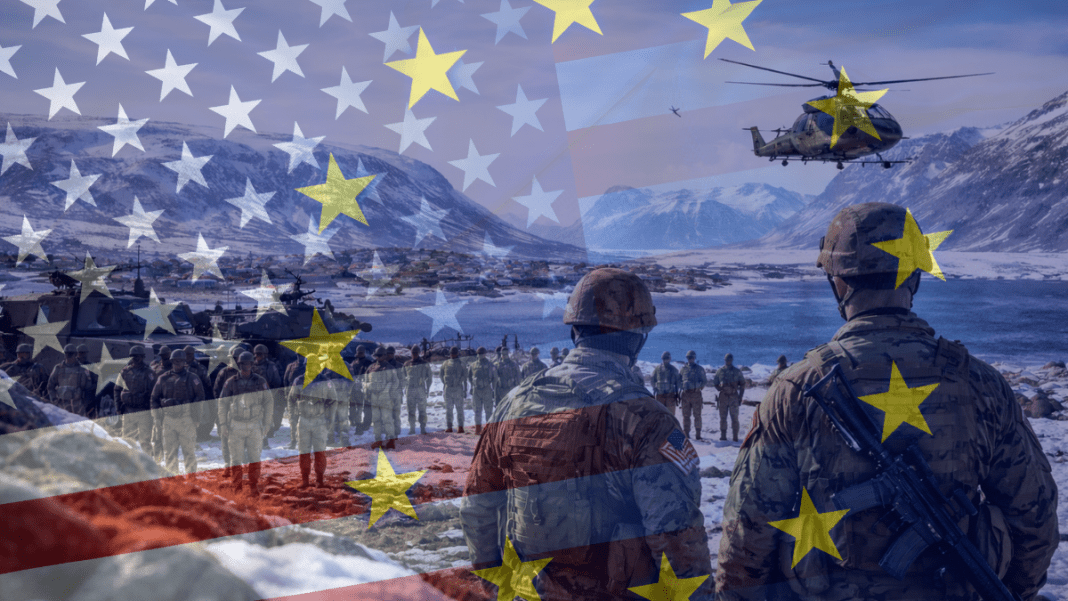

NATO allies are reportedly holding back critical intelligence from the United States, sparking concerns about trust and cooperation within the Western alliance. Sources say this unprecedented move is linked to President Donald Trump’s repeated threats to take over Greenland, a Danish territory. Officials warn that such actions could weaken NATO and put European security at risk.
Growing Tensions Between the US and European Allies
For more than 70 years, the “special relationship” between the United States and the United Kingdom has been a cornerstone of global security. Through cooperation in wars, counterterrorism, and secret intelligence operations, both countries have built a system of trust that extends to other NATO allies.
However, Trump’s ambitions to acquire Greenland for what he called national security reasons are reportedly shaking that trust. NATO sources told The i Paper that intelligence sharing has slowed, and officials are now wary of sharing sensitive information with the US.
Denmark bolsters Greenland security with military deployment amid Arctic and NATO tensions
One senior NATO insider said: “It is creating tensions and distrust between European and US colleagues. American colleagues have come to me and said sorry; one even apologised on behalf of his nation.”
Staff no longer talk openly because they fear Trump could misuse intelligence for his Greenland plans. “We used to get beers together, but now it’s really strange,” said the source, who served alongside Americans in Iraq and Afghanistan. “This is very disruptive because it is so unrealistic and surprising.”
Some NATO staff reportedly feel betrayed by the US, a country they once admired. Delegations from countries including the UK, Norway, Sweden, France, Germany, the Netherlands, and Finland have visited Nuuk, Greenland’s capital, to plan an allied military presence to counter Trump’s threats.
Trump has not ruled out seizing Greenland by force and has warned he might impose tariffs on NATO allies who oppose him.
Historical Intelligence Ties Strained
The US-UK intelligence relationship dates back to World War II. In 1941, the secret Sinkov Mission involved sharing information about Japanese and German ciphers at Bletchley Park, even before the US officially joined the war. Over the decades, intelligence sharing has expanded through the UKUSA Agreement, known as “Two Eyes,” and the Five Eyes alliance, which includes Australia, Canada, and New Zealand.
UK intelligence officials worry that Trump’s actions may cause them to no longer treat the US as a “Two Eyes” partner and instead see it as just part of Europe, a source told The i Paper. The source described the situation as “unprecedented,” noting that political turmoil in Washington could affect long-term intelligence cooperation.
Dr. Dan Lomas, a security and intelligence expert at the University of Nottingham, said that Trump’s approach has already caused a “destabilising effect” on trust between intelligence agencies. “It will force the UK to strengthen its partnerships with European allies in response,” he added.
Rory Cormac, a professor of international relations at the University of Nottingham, compared the strain to the 1956 Suez Crisis, a period when US-UK relations were similarly under pressure. Cormac said people should always take claims of specialness with a pinch of salt, but he called this the biggest test of the UK-US intelligence relationship in recent years.
NATO Allies Take Precautionary Measures
NATO staff are increasingly cautious because they fear politicians could misuse sensitive information. Some European officials say the US no longer acts as a fully reliable partner, so they are limiting intelligence sharing.
UK Labour leader Sir Keir Starmer stressed the importance of continued intelligence cooperation. “We are involved on a daily basis,” he said. “It is the closest relationship between any two countries in the world – and that keeps us safe in ways that I can’t explain to you.”
Germany warns Arctic security must be handled through NATO, not unilateral action
Despite Trump’s threats, European allies are showing unity in their response. Delegations visiting Greenland are preparing to show a military presence to make it clear that they will block any attempt to seize the territory unilaterally. NATO officials stressed that maintaining trust and communication is critical, even as US actions strain long-standing partnerships.
Sources from both sides of the Atlantic describe the situation as a rare low point in transatlantic relations. They warn that the fallout from Trump’s Greenland ambitions could have ripple effects across intelligence sharing, military coordination, and alliance cohesion.