


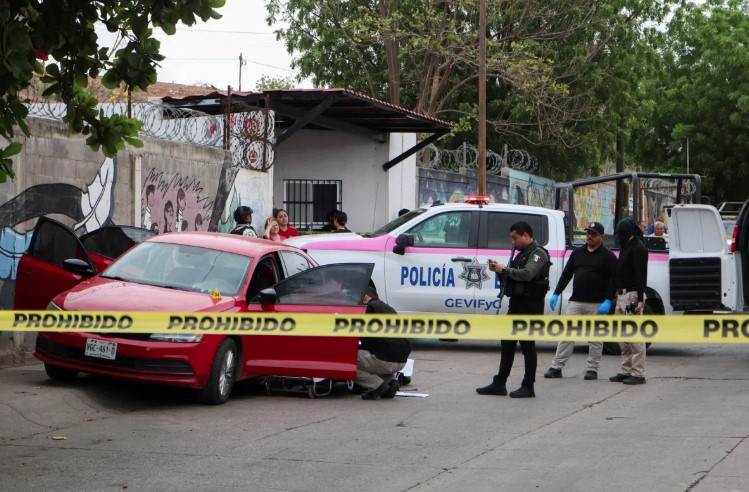


August 10, 2025, was a quiet Sunday for much of Mexico. But in Sinaloa, the northwestern state facing the Pacific, it was one of the darkest days in recent history. On that single day, 17 people were killed—one murder every 85 minutes.
The bloodiest day of 2025 in Sinaloa
According to Mexican government figures, this marked the most violent day of the year in Sinaloa, surpassing all other states across the country. The killings were the latest in a wave of bloodshed that has followed the capture of Ismael “El Mayo” Zambada, a man long described by authorities as one of the leaders of the Sinaloa Cartel. His arrest has unleashed a conflict between rival groups that has pushed the state into chaos.
Since El Mayo’s arrest on July 25, 2024, homicides in Sinaloa have surged by more than 400%, according to an analysis of public data reviewed by CNN. This dramatic rise shows how the region has been thrown into an internal cartel war, trapping ordinary citizens in the middle.
🔥 Cross-border crackdown — 26 Mexican cartel kingpins flown to U.S. in major security deal
The analysis also highlights discrepancies in crime statistics. Figures reported by the Sinaloa Prosecutor’s Office, federal authorities, and independent monitoring groups such as the Armed Conflict Location & Event Data (ACLED) project do not always match. Historically, Mexican authorities have been accused of underreporting violence in the region, creating further distrust. U.S. defense and law enforcement officials, according to sources, also question the accuracy of Mexico’s homicide figures.
An internal war ignited by betrayal in Sinaloa
The arrest of El Mayo in El Paso, Texas, triggered the violent war now engulfing Sinaloa. After his capture, the Sinaloa Cartel split into rival factions. His followers, the Mayitos, began clashing with the Chapitos, the sons and allies of Joaquín “El Chapo” Guzmán, turning once-sporadic fights into daily battles for control.
Victoria Dittmar of InSight Crime says the conflict worsened because of the unusual circumstances of El Mayo’s arrest. In a letter through his lawyer, Zambada claimed he was tricked by Joaquín Guzmán López and lured to the U.S. under the pretense of a real estate deal, only to be handed over to authorities. Guzmán López’s team denies this account.
Both men now face charges in the U.S. Eastern District Court of New York and have pleaded not guilty. Meanwhile, the cartel’s split has left Sinaloa divided, with open fighting in the streets of Culiacán and other cities, disrupting daily life and spreading fear.
By September 2024, violence surged sharply. ACLED data showed daily deadly incidents, prompting Governor Rubén Rocha Moya to cancel school classes and Independence Day celebrations. Social media and verified footage show shootouts in daylight, clashes with security forces, and burning vehicles, turning urban areas into active battlegrounds.
Daily life under fire in Culiacán
Behind the statistics are people living in fear. In Culiacán, the state capital, violence has reshaped daily life. Shop and restaurant owners have closed or limited their hours, and even large businesses struggle to operate safely.
Sonia, a small business owner whose family ran a restaurant for decades, had to shut it down. She spoke anonymously to CNN, fearing for her safety. “Some days, maybe one customer came, if any. People don’t go out at night anymore, and even during the day, they aren’t safe,” she explained.
Like many residents, Sonia and her family imposed their own curfew. “We only go out at certain hours,” she said. “It started as a rule for safety between September and December. Nights and early mornings were most dangerous, but really, violence can happen any time. You can leave school at noon and end up in the middle of a shootout.”
🔥 Cross-border crackdown — 26 Mexican cartel kingpins flown to U.S. in major security deal
Brutality in Sinaloa is widespread. In May, a body was found hanging from a bridge with a narco-message. A month later, a human head appeared in a tourist spot, and weeks after that, police officers were injured in an ambush near Sonia’s restaurant.
For families like hers, soldiers and convoys bring little relief. Authorities often arrive hours after shootings, leaving residents feeling exposed. “It’s all for show,” Sonia said.
ACLED reports at least 571 civilian deaths in Sinaloa through July 2025, already surpassing the total for all of 2024. In comparison, three other states combined reported only 49. Despite patrols and promises, the cartel war has turned daily life into one of fear, shuttered businesses, and constant danger.