
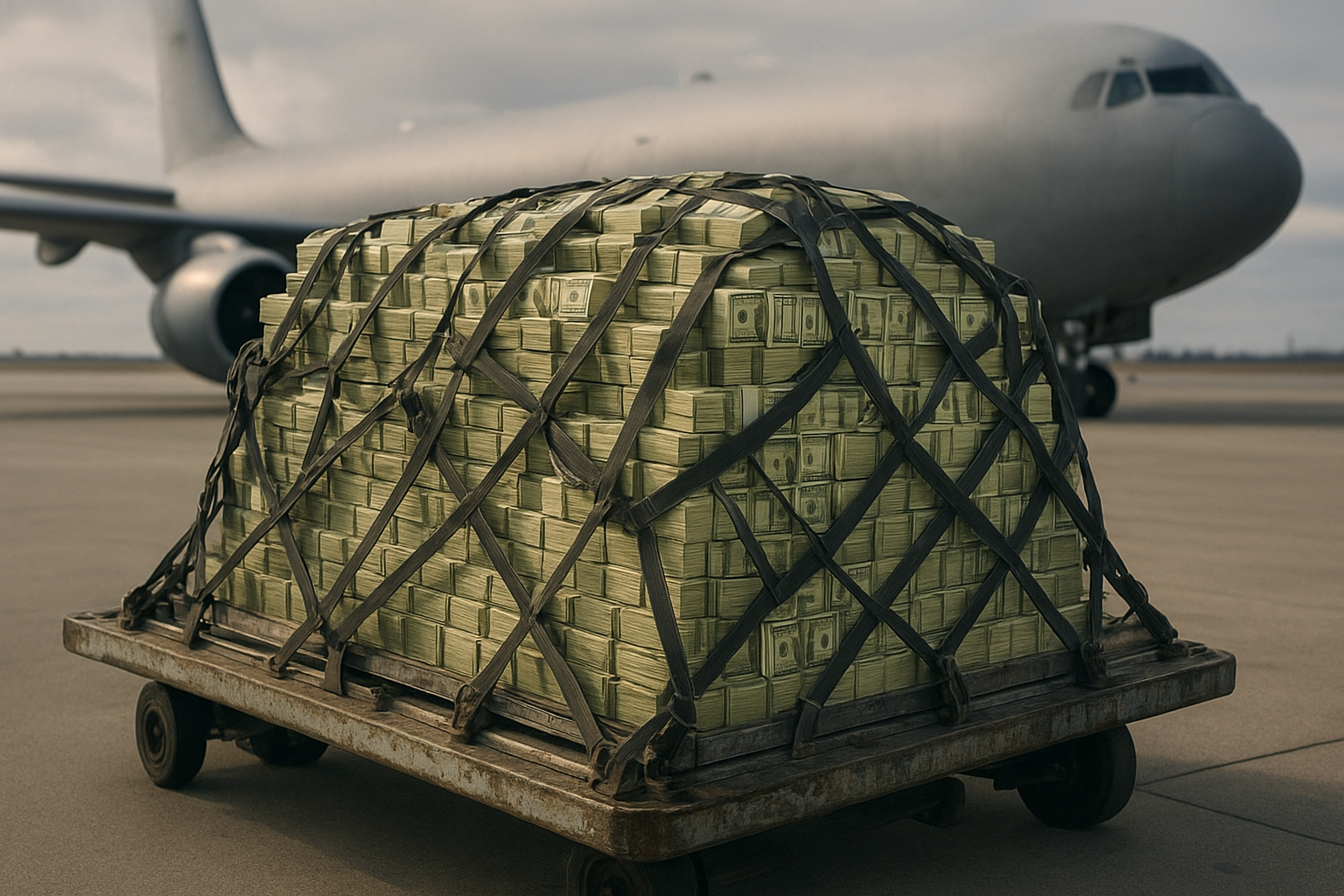
A new report claims the Trump administration sent $45 million in cash to Taliban-controlled Afghanistan. The report has triggered strong reactions from Republican lawmakers and commentators. It has re-ignited debates over how officials handle U.S. taxpayer money. The report surfaced Monday and raised fears that the Taliban may be using funds meant for Afghan civilians, leading many Americans to question why any money reaches them.
Republicans Raise Alarm Over Taliban Access to U.S. Cash
The controversy began when Amrullah Saleh, the anti-Taliban Afghanistan Green Trend leader based in Kabul, reported that $45 million in “freshly printed” cash had been flown into the country on a chartered aircraft. He claimed the group controls the Central Bank of Afghanistan. Because of this control, it could gain access to the money or benefit from it through its financial systems.
Republican lawmakers immediately reacted.
Tennessee Representative Tim Burchett was one of the first to respond. Posting on X, he wrote, “Every week. “Pass my Bill Senate!” he said. He has been pushing a bill designed to prevent any U.S. tax dollars from ending up with the Taliban, even indirectly. Burchett says the U.S. has already sent more than $5 billion to Afghanistan since the group took over in 2021. He believes much of it has slipped into their hands through taxes and fees.
Conservative commentator Robert J. O’Neil, a veteran Navy SEAL, posted a furious message asking why American taxpayers had funded the Taliban “today.” Independent journalist Ann Vandersteel added that the $45 million cash delivery was “not America First,” criticizing what she believes is a lack of transparency.
This is not the first time concerns have been raised. In 2023, John Sopko, the Special Inspector General for Afghanistan Reconstruction (SIGAR), told Congress he could not assure lawmakers that the Taliban was not benefiting from U.S. aid. His statement continues to fuel Republican arguments today.
Why Taliban Money Concerns Keep Growing
After the U.S. withdrew from Afghanistan in 2021, the Biden administration approved humanitarian funding to help ordinary Afghan citizens facing hunger, job loss, and severe poverty. This money was sent through international organizations and NGOs — not directly to the Taliban.
However, critics argue that even when the U.S. tries to bypass the Taliban, the group still finds ways to benefit. For example:
- The Taliban controls major banking systems
- The Taliban imposes taxes and fees on groups operating in the country
- The Taliban oversees airports and customs points
- The Taliban monitors NGO activities
Because of this, lawmakers like Burchett believe the Taliban could be indirectly profiting from money originally meant to help Afghan families.
The report that a chartered aircraft delivered “freshly printed” U.S. dollars into Afghanistan has intensified these fears. Lawmakers warn that if the Taliban gain access to those funds — even through taxes or banking controls — the group could strengthen its rule. They say the U.S. must prevent this at all costs.
Supporters of humanitarian aid argue that Afghan civilians, especially women and children, suffer badly. They urgently need outside help to survive. But Republican critics insist that the U.S. should not send aid in ways that could enrich the Taliban, whether intentionally or not.
Representative Burchett has also accused some NGOs of failing to protect U.S. taxpayer money. In a press release on December 4, he said that “some NGOs are continuing to rip off the American people.” He added that he hoped President Trump could fix the issue.
Reactions From Key Voices and What Officials Are Demanding Now
The rising tension has created a new wave of public statements from lawmakers, military veterans, and journalists.
Burchett is urging Congress to act quickly. His bill seeks to block all U.S. funds from going to any territory controlled by groups the U.S. considers terrorists. He argues that stronger oversight systems are overdue and that the situation proves the need for immediate action.
Ann Vandersteel drew attention by saying the Trump administration “flew $45M IN CASH to the Taliban,” which she believes misleads Americans about where their money is going.
Robert J. O’Neil’s blunt question — “Why THE F*** did we give the Taliban $45 million?” — went viral across social media platforms and further amplified public frustration.
Meanwhile, John Sopko’s earlier warning is resurfacing across news outlets. His statement — saying he cannot guarantee that the Taliban is not currently receiving U.S. money — remains one of the strongest pieces of evidence that critics use when they argue the system needs tighter controls.
As of now, the State Department has not issued an official comment on this specific $45 million report, even though reporters have already submitted requests for clarification.
What is clear is that their involvement, whether direct or indirect, is creating renewed pressure on U.S. leaders. Republican lawmakers argue that it is time to set firm rules to prevent any U.S. dollars from ending up with the group — even through humanitarian programs.
The debate continues to grow across Washington and social platforms, with many demanding answers on how U.S. aid is being supervised in Afghanistan.