


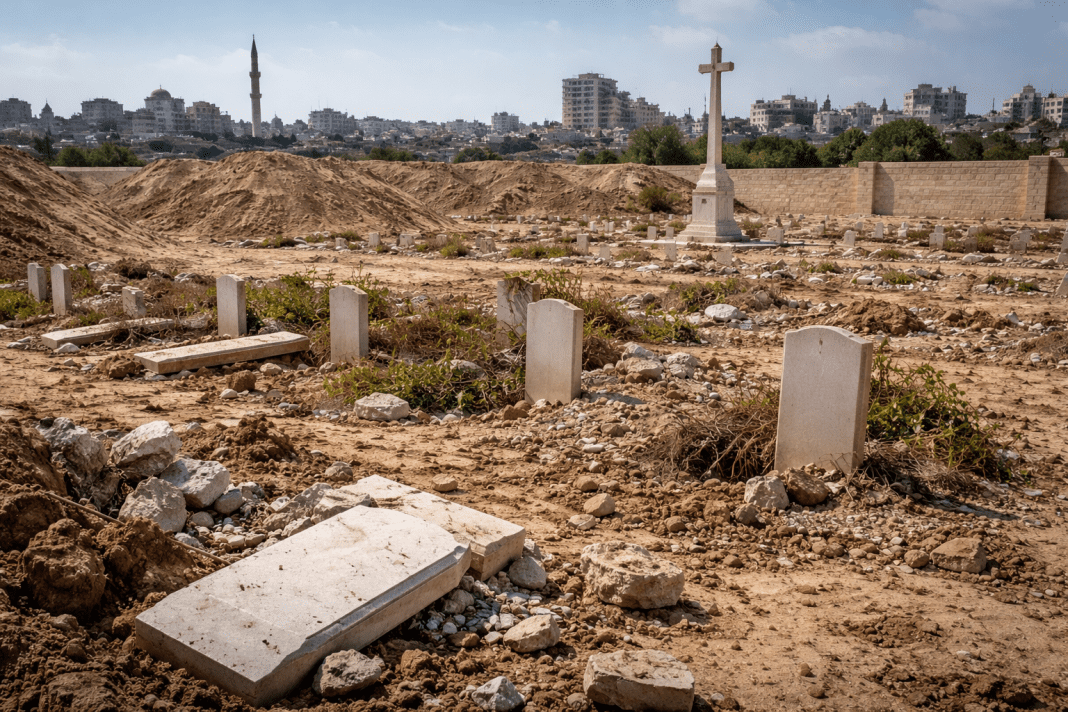


Australian Prime Minister Anthony Albanese has raised concerns with Israeli President Isaac Herzog. The issue follows reports that Australian war graves in Gaza were damaged during Israeli military operations. Satellite images and witness accounts show parts of the Gaza Commonwealth War Cemetery were bulldozed. Many Australian soldiers from the Second World War are buried at the site. The damage has caused distress among veterans’ families in Australia.
Australian War Graves in Gaza Suffer Major Damage
The Gaza Commonwealth War Cemetery is in the Tuffah area of Gaza City and holds hundreds of graves, including many belonging to Australian soldiers. Satellite images and witness accounts show that a large section of the cemetery was damaged in April and May last year.
The worst damage occurred in the southern corner, especially sections A and B, where most Australian graves are located. Headstones were destroyed, soil was pushed over burial sites, and heavy machinery flattened parts of the ground. Satellite images showed clear signs of bulldozers, with rows of headstones no longer visible.
Beyond Gaza and Lebanon: Israel confronts a growing mental health emergency in its military
Essam Jarada, the former caretaker, said two bulldozing operations cleared nearly 1,000 square metres of the cemetery. The Israel Defense Forces later said the actions were taken during military operations, claiming militants nearby posed a threat to Israeli troops.
Albanese Raises Issue Directly With Israeli President
After media reports brought the issue to light, the Australian government began diplomatic action. The Australian embassy in Tel Aviv raised concerns with Israel’s foreign and defense ministries. Prime Minister Anthony Albanese later discussed the matter directly with Israeli President Isaac Herzog during meetings in Canberra.
During the talks, Albanese stressed the importance of Australian war graves. He said repairs must be carried out as soon as it is safe. The government confirmed that Australian graves would be restored, depending on security conditions on the ground.
Gaza civil defence warns of rising risks as Israel expands strikes beyond yellow line boundary
Foreign Minister Penny Wong also addressed the issue during Senate estimates. She said all war graves where Australians are buried hold deep national importance, especially for the veterans’ community. Wong said the government had clearly communicated these concerns to Israel.
Australia’s Department of Veterans’ Affairs confirmed there was significant damage to the Gaza War Cemetery, including Australian graves. The Commonwealth War Graves Commission said it plans to secure and repair the site when conditions allow, noting that full restoration will take time due to ongoing humanitarian priorities.
Families and Politicians Demand Accountability and Answers
The damage to the Gaza War Cemetery has triggered strong emotional reactions, especially from families of Australian soldiers buried there. Wilma Spence, whose father Albert Kemp was a decorated Anzac who died during the Second World War, said she felt shocked and deeply saddened after learning that his grave was likely bulldozed. She said she has not received clear information from the Australian government about the condition of her father’s grave and was told by the Australian War Graves Commission that it could not discuss individual cases.
Spence questioned why the government did not speak out sooner or more firmly. She also asked whether Prime Minister Anthony Albanese had requested Israel to fund the restoration of the damaged cemetery. She said the lack of public statements made her feel ignored during a painful period for her family.
Australia vows to restore war graves in Gaza after reports of damage during conflict
Independent Senator David Pocock raised the issue during Senate estimates, calling the bulldozing of Australian war graves unacceptable. He said war graves are sacred and must be respected under international law. Pocock questioned why the Commonwealth War Graves Commission should pay for repairs and argued that responsibility should lie with those who caused the damage. He also said the full extent of disturbed graves remains unclear.
The cemetery lies in a heavily contested area of Gaza, but witnesses say the worst damage came from deliberate earthmoving rather than shelling. Families continue to seek clear answers and accountability.