


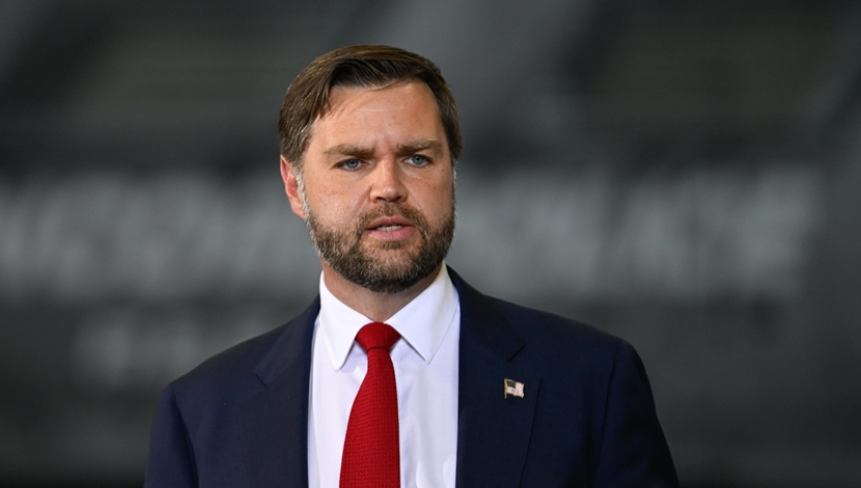


The United States has intensified efforts to ease tensions with Iran amid a fragile ceasefire and ongoing regional instability. Vice President J.D. Vance has been sent to lead crucial talks in Pakistan, highlighting the urgency of the situation as diplomatic and military pressures continue to rise.
Vance Takes Charge of Delicate Diplomatic Mission
U.S. Vice President J.D. Vance has departed for Islamabad, Pakistan, to lead crucial talks with Iran as tensions from a six-week conflict remain high. The move comes under the direction of President Donald Trump, who has chosen Vance despite his cautious views on foreign military involvement. His selection signals a push toward diplomacy at a critical moment.
Vance has repeatedly expressed concerns about long and unpredictable wars, warning against deep military entanglements. Now, he is taking on a central role in efforts to ease tensions. Pakistan has offered Islamabad as a neutral venue after announcing a temporary two-week ceasefire to support dialogue between the two sides.
Is the ceasefire holding? Confusion grows as heavy strikes continue in Lebanon
Vance will be joined by U.S. envoy Steve Witkoff and Jared Kushner. Kushner has previously participated in indirect discussions with Iranian officials, focusing on nuclear activities, missile development, and Iran’s involvement in regional conflicts across West Asia.
Ceasefire Under Pressure Amid Rising Regional Tensions
The diplomatic mission begins under uncertainty, as the ceasefire meant to pause hostilities appears fragile and at risk of collapsing. There has been no clear confirmation on when U.S. and Iranian delegations will arrive in Islamabad, adding to the tension. Although Pakistan has eased visa rules for journalists and officials, authorities have not shared timelines due to security concerns.
Meanwhile, the situation on the ground remains tense. Reports say Israel has faced rocket attacks from Lebanon, affecting cities like Tel Aviv and Ashdod. These attacks are linked to ongoing clashes between Israel and Hezbollah, a group backed by Iran, raising fears of further escalation in the region.
These developments are complicating peace efforts. Iranian officials have warned that continued Israeli military actions could disrupt the dialogue process. The violence has created doubts about whether conditions are suitable for meaningful negotiations between the two sides.
Iran’s ambassador to Pakistan briefly confirmed a delegation’s arrival but later withdrew the statement after renewed violence. The gap between U.S. and Iran demands remains wide, making progress uncertain.
Trump’s Strong Warnings Add Urgency to Talks
As diplomacy unfolds, Donald Trump has issued strong public warnings directed at Iran. He has raised concerns about Iran’s actions in the Strait of Hormuz, a key global oil route. Trump accused Iran of failing to uphold the terms of the ceasefire, particularly in allowing oil shipments to pass freely, and warned against reports suggesting that Iran might be charging fees to ships traveling through the strait.
According to Trump, such actions would violate the agreement and could escalate tensions further. In a series of statements shared on his social media platform, he emphasized that oil would continue to flow “with or without” Iran’s cooperation. These remarks have added pressure to the already delicate situation and highlight the urgency behind sending Vice President J.D. Vance to lead the talks, as the U.S. administration seeks to prevent further escalation.
Was Pakistan the messenger or was China the author? The mystery behind the U.S.-Iran ceasefire
The conflict, which began on February 28, has already involved extensive military operations. Thousands of targets inside Iran have reportedly been struck during the campaign. The ongoing tensions have also raised concerns globally, particularly around energy supplies and regional stability, as disruptions in key oil routes could impact multiple countries.
Pakistan’s role as host has drawn international attention. By facilitating dialogue in Islamabad, it is attempting to create a space for both sides to address their differences, even as the situation remains volatile. As the talks begin, the world watches closely, with the fragile ceasefire and rising tensions contributing to the high stakes of this diplomatic effort.