
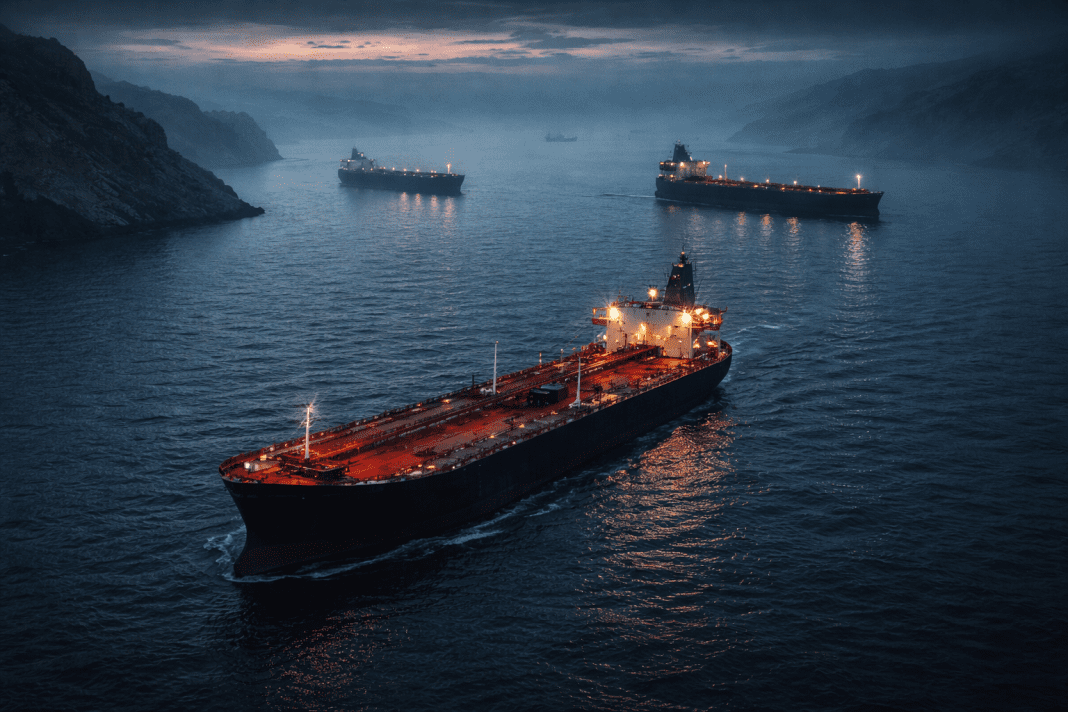

The ongoing Iran war has disrupted global oil shipping. The Strait of Hormuz has been hit the hardest. Shipping through this key route has dropped sharply. As regular tanker shipping declines, alternative networks are stepping in. These hidden channels are helping keep oil supplies moving. This has brought the shadow fleet into greater focus.
Shipping Collapse Brings Global Oil Route to a Standstill
The ongoing Iran war has severely disrupted the Strait of Hormuz, one of the world’s most critical oil routes. Shipping activity through this narrow passage has dropped by nearly 95 percent, bringing movement close to a standstill. This route is vital for global energy supplies, and the sharp decline has slowed the flow of oil across international markets.
Before the conflict, hundreds of ships crossed the strait daily, transporting crude oil and essential goods. Now, only a limited number of vessels are able to pass through safely. This sudden drop in traffic has created serious challenges for global trade and strained supply chains.
Iran moves to tighten control over Strait of Hormuz after conflict, alarming energy markets
The crisis has also impacted people at sea. Around 20,000 seafarers remain stranded on nearly 2,000 ships stuck near the region. With tanker availability falling and shipments delayed, the global energy system is under growing pressure as fewer vessels are able to deliver oil where it is needed.
Shadow Fleet Steps In as Conventional Shipping Fails
As traditional shipping operations struggle during the ongoing crisis, a different kind of fleet has stepped in to fill the gap. Known as the “shadow fleet,” these vessels operate outside standard regulations and are now playing a major role in transporting oil. Their presence has grown rapidly as regular tanker movement becomes increasingly difficult due to safety risks and restrictions in key routes.
These ships are often older tankers that do not strictly follow international maritime rules. They are widely used to move oil in ways that bypass restrictions and avoid close monitoring. With major shipping lanes either blocked or considered unsafe, this hidden network has become an important channel for oil transport across affected regions, helping keep supplies flowing despite disruptions.
India seeks safe passage for oil tankers through Strait of Hormuz amid rising Middle East tensions
To avoid detection, many of these vessels rely on secretive tactics. One of the most common methods is switching off tracking systems, which makes it difficult for authorities to follow their movements. Satellite observations have shown ships loading oil at terminals and then disappearing from tracking systems, only to reappear later near their destinations after completing long, unmonitored journeys.
As more conventional tankers remain stranded or unable to operate freely, demand for these shadow vessels has increased significantly. This surge in demand has allowed them to expand their operations, travel across long distances undetected, and strengthen their position in global oil trade despite the ongoing conflict and tight restrictions.
Oil Flow Continues Through Hidden Channels
Despite a sharp drop in overall shipping activity, oil exports have not stopped. Instead, they continue through hidden and less regulated channels outside traditional systems. Several tankers linked to Iran have reached key Asian routes in recent weeks, with many concealing their positions during transit. This highlights how important covert methods have become in keeping oil supplies moving.
Traffic through the Strait of Hormuz remains heavily reduced, with only a small number of ships crossing compared to normal levels. Among them are limited oil tankers, showing how restricted movement has become. To avoid risks, some vessels have adopted unusual strategies, including changing their identification or altering reported details to pass safely.
Russian oil revenues jump $1.3 billion as Strait of Hormuz crisis shifts global supply
At the same time, shifts in enforcement have helped sustain these operations. Concerns over rising oil prices and supply shortages have led to reduced pressure on certain shipments. This has allowed millions of barrels of oil to move through unofficial routes.
As a result, large volumes of oil are still reaching global markets through alternative systems. The shadow fleet has become increasingly important, helping maintain supply while traditional shipping remains disrupted.